- La Camera says Saudi Arabia is moving quickly to expand solar and wind power as global energy priorities shift
RIYADH: Saudi Arabia is accelerating its transition to renewable energy, expanding its solar and wind sectors while strengthening its position in the global energy market, Francesco La Camera, director general of the International Renewable Energy Agency, has said.
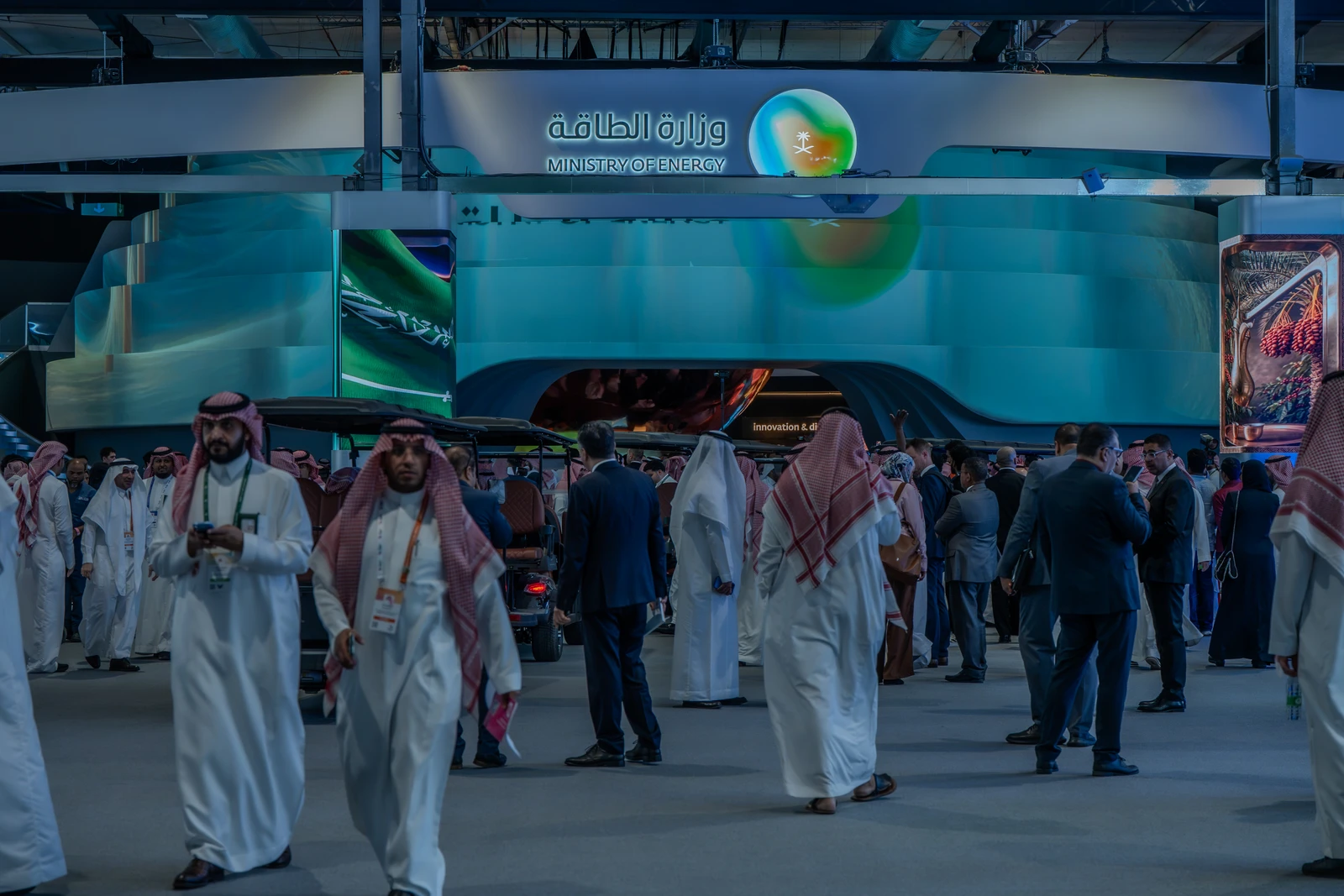
Speaking to Arab News on Monday at the 25th WPC Energy Congress in Riyadh, La Camera said the Kingdom’s progress extended beyond its domestic energy ambitions.
“Saudi Arabia has been leading the way in renewables in this region, not only domestically but also in the international context,” he said.
“I think that they’re moving fast with solar and wind as well as green hydrogen”, he added, highlighting the Kingdom’s efforts to diversify its energy mix.
According to the Saudi Arabia Renewables Tracker, published by the King Abdullah Petroleum Studies and Research Center, the Kingdom’s cumulative operating renewable-energy capacity has increased more than 63-fold since 2020 to 19.3 GW in 2026.
The expansion supports Saudi Arabia’s Vision 2030 goals of increasing power generation capacity and adopting cleaner technologies, including carbon-capture readiness. The Kingdom aims to reach 100-130 GW of renewable energy capacity by 2030 and achieve net-zero emissions by 2060.
La Camera, whose organization has 174 member countries and promotes renewable energy worldwide, expressed confidence in Saudi Arabia’s potential to expand renewable electricity generation by 2030, citing its favorable natural conditions and competitive production costs.
“This is a place where the insolation is very, very good. They are already able to produce electricity at a very low cost, 1.1 cents per kilowatt-hour,” he said.
“This is one of the most competitive costs in all over the world.”
Beyond environmental considerations, La Camera said renewable energy was increasingly being viewed as a strategic asset for national energy security, particularly amid recent global and regional disruptions.
“Usually, the world has been seeing renewables as a clean solution, mainly referring to the fight against climate change,” he said.
“I think more recently, and also the last crisis, has given another, let’s say, aspect to renewable energy. And now, as has been said in this congress, renewables are more seen as a way to energy security.”
“Renewables are becoming considered not only a clean solution but also a way for energy security and competitiveness, because renewables are the cheapest way to produce electricity today,” he added.
He said this shift reflected a broader reassessment of electricity production and supply, as countries increasingly considered the strategic and economic advantages of renewable energy alongside conventional sources.
For Saudi Arabia, one of the world’s leading oil producers, the transition presents an opportunity to build on its established position in global energy markets while adapting to changing consumption patterns and the growing role of renewables.
Asked whether the Kingdom could achieve the same international recognition for renewable energy as it has for oil, La Camera said the global energy system was undergoing a fundamental transformation, although fossil fuels would remain part of the energy mix for years to come.
“It’s clear that a new energy system is coming, and the system will be mainly based on renewables. It doesn’t mean that oil, and especially gas, will stop today. So they will continue,” he said.
“There is a need to invest in, I would say, counteracting the depletion rates.”
He explained that continued investment in existing energy resources would remain necessary even as renewable capacity expanded, helping countries meet demand while maintaining reliable supplies.
“There is also a way to ensure that the decrease in the share of fossil fuels in the energy system happens slowly and gradually, so that renewables can take their place in satisfying the demand,” he said.
La Camera said a gradual transition could help align the evolution of the global energy system with the Paris Agreement’s goal of limiting global warming to 1.5 degrees Celsius.
He also highlighted the significance of hosting the congress in Saudi Arabia amid recent regional tensions, describing the gathering as a demonstration of international support for the Kingdom.
“It’s important for many aspects. First of all, because it’s happening these days when Saudi Arabia is under attack in some way,” he said.
“So this is also expressing the solidarity of the whole world with Saudi Arabia.”
He added that the congress provided an opportunity for oil and gas companies to reassess their investment needs and strategic priorities as the global energy landscape evolves.
La Camera said Saudi Arabia’s national energy strategy already reflected an understanding of the sector’s key developments, including electrification, renewable energy technologies and supply-chain challenges.
“If you look at the national strategy, you see how much attention is already there for electrification,” he said, adding that supply-chain challenges were also being addressed.
“All these elements are already very well focused in the strategy of this country.”
He also acknowledged Saudi Arabia’s longstanding contribution to global energy supplies and its role in supporting economic growth and prosperity.
“Naturally, they have these resources. They made all of us richer and wealthier in the past and recent years ” he said.
His remarks underscored the challenge facing the global energy sector: expanding renewable energy while maintaining reliable supplies from conventional sources, with Saudi Arabia seeking to retain its influence across both.