RIYADH: Across the Middle East and North Africa, homegrown fintechs are addressing financial exclusion from two entirely different starting points, and two platforms illustrate that divide well: Valu in Egypt, and Arib in Saudi Arabia.
Valu is an Egyptian buy now, pay later and consumer finance platform that gives customers a revolving credit limit for purchases across retail, healthcare, education, and other categories.
Arib is a licensed Saudi digital financing broker that lets customers compare and access financing options from multiple banks and finance companies through a single online journey.
In Egypt, where a large share of adults have never held a bank account, platforms like Valu are building credit access from the ground up.
In Saudi Arabia, where consumers are already banked and digitally fluent, the challenge is helping them navigate an increasingly crowded field of financing options.
Egypt’s inclusion gap
In Egypt, the obstacle was never demand for credit. It was infrastructure.
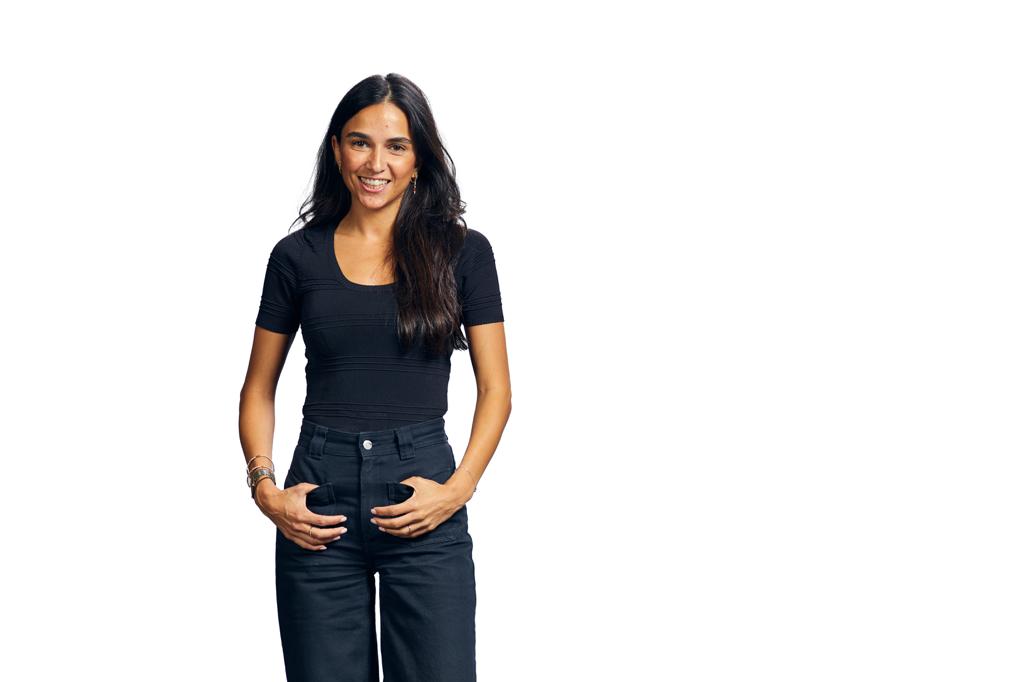
In an interview with Arab News, Yara El Abd, chief investment and investor relations officer at Valu noted that “a large proportion of Egyptian adults have never held a formal bank account, which means they have no credit bureau footprint, no transaction history with a licensed financial institution, and no collateral trail that a traditional lender would recognize.”
That gap, she added, is felt most acutely by women, whose lower participation in formal finance reflects products and onboarding processes that were never designed with them in mind.
Valu’s response was to build underwriting around the customer relationship rather than the individual purchase, approving customers for a revolving credit limit upfront rather than assessing them only at the point of a transaction.
That model draws on behavioral and income signals at origination instead of requiring prior banking history, letting customers build a formal credit record with Valu directly.
According to the official, of Valu’s more than 955,000 users, 308,000 were previously unbanked, 36 percent are women, and 31 percent live outside Greater Cairo.
Its nonperforming loan ratio stands at 1.24 percent, evidence, El Abd said, that “customers who have never had access to formal credit are not inherently higher risk; they are simply unknown to a system that never tried to know them.”
The company has since expanded well beyond retail installments into health and education financing, electric vehicle loans, e-commerce, payments, and investment products, and entered Jordan in 2026 with 50 active brands already on the platform.
The World Bank’s Global Findex Database 2025 counted Egypt among eight countries that together hold more than half the world’s 1.3 billion unbanked adults.
“Other economies such as Bangladesh, Egypt, and Pakistan, have large populations but account ownership rates of about 50 percent,” the report said.
The same paper found Egypt’s account ownership climbing sharply between 2011 and 2024.
Saudi Arabia’s access paradox
In Saudi Arabia, financial inclusion means something different.
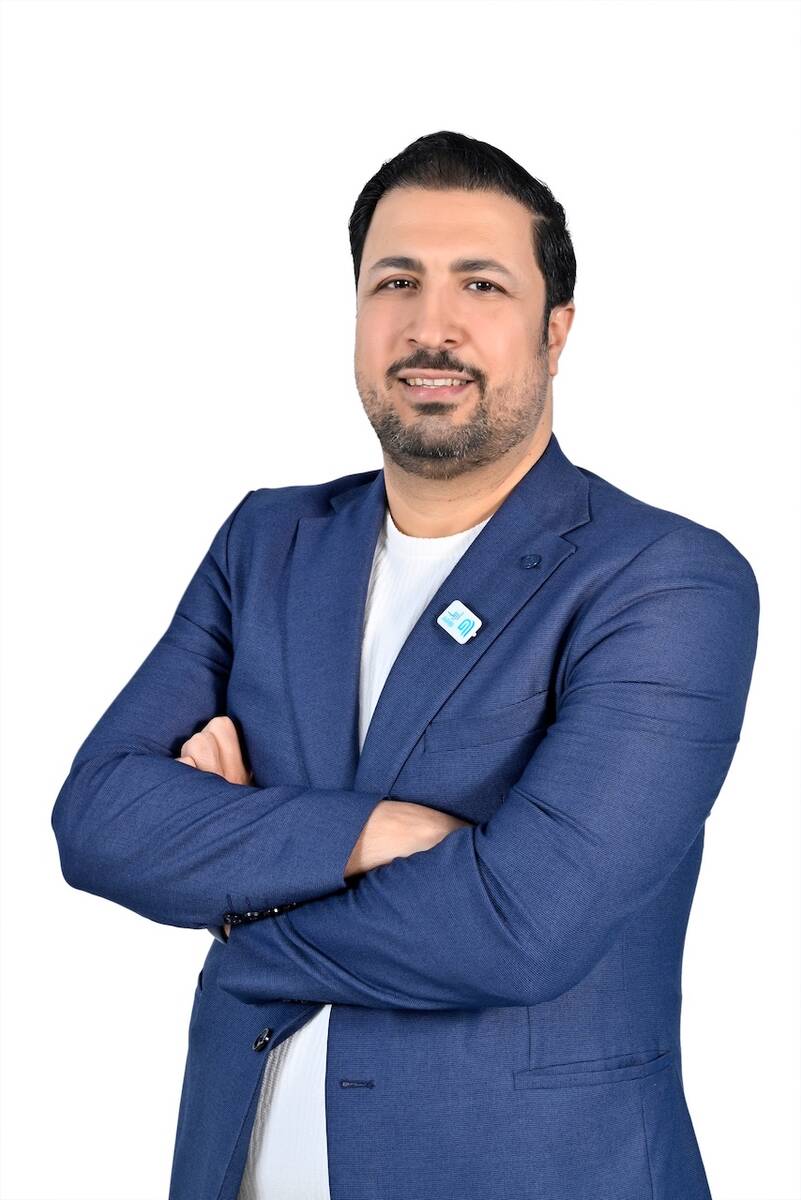
Waleed Talat, cofounder and CEO of Arib, told Arab News, that most consumers are already banked and comfortable using digital services.
“The real challenge today is whether they can easily understand their financing options and access the product that best fits their needs,” he said.
Many Saudis still default to their existing bank even when better terms exist elsewhere, or must approach multiple lenders separately and repeat the same paperwork each time.
Arib does not extend credit itself, instead it lets customers compare financing options from multiple licensed banks and finance companies through a single digital journey, while each provider retains its own credit decision.
Talat said underserved demand is concentrated among first time borrowers, customers outside the largest cities, and small and medium enterprises seeking financing that matches their size and sector.
Auto finance remains the largest category, often because financing decisions are bundled into the vehicle purchase itself, while interest is growing across personal finance, home finance, and SME lending.
Open banking is central to that experience. With customer consent, Arib verifies IBAN ownership and recent salary payments directly through bank data, removing the need for manual document uploads.
“This makes the process faster and easier for the customer, while also improving the quality and accuracy of the information shared with financing providers,” Talat added.
Figures from the Saudi Central Bank, also known as SAMA, show how fast that ecosystem is scaling. Its licensed fintech sector had grown to 281 firms as of mid-2025, drawing more than SR8.9 billion ($2.4 billion) in cumulative investment, while electronic payments now account for 85 percent of retail transactions, ahead of the Kingdom’s original Vision 2030 target.
It supports Talat’s point that the contest is no longer over access, but over which provider wins an already digitally fluent customer.
Regulation as the enabling layer
In both markets, regulators are described as partners rather than obstacles.
El Abd credited the Central Bank of Egypt’s financial inclusion strategy and the fintech License Valu obtained in early 2025 with giving nonbank lenders a clear legal structure, though she flagged thin credit bureau coverage and heavy digital KYC as continued barriers outside Cairo.
Talat credited SAMA with clear rules on customer protection, data privacy, and cybersecurity, and expects open banking to keep cutting manual steps and sharpening eligibility assessments.
The next chapter
Both executives converge on where MENA fintech goes next: closer integration between markets. El Abd expects more Egyptian fintechs to expand regionally, following Valu’s Jordan launch, while Gulf platforms look to acquire or partner with Egyptian firms for their underwriting methodologies and talent.
She also flagged gender as a persistent, underdiscussed opportunity, noting that women remain underrepresented in formal finance “in every MENA market.”
Talat sees Arib’s own next phase centered on deeper bank integrations and embedded finance, letting customers access financing at the moment of purchase on automotive, property, or merchant platforms, with regional expansion contingent on demand and regulatory readiness rather than a fixed timeline.
“The starting points may be different, but the goal is largely the same: making financial services easier to access, easier to understand, and more relevant to the customer,” Talat said.
El Abd framed it in similar terms: fintech in the Gulf and in Egypt is “essentially a market structure correction,” aimed at reaching people the traditional banking system was never built to serve.