JEDDAH: Saudi Arabia’s office market is evolving beyond traditional workplaces, with flexible space emerging as part of a broader ecosystem shaped by demand for regional headquarters, tight Grade A supply and changing tenant needs.
From multinational corporations establishing operations in the Kingdom to startups and growing businesses seeking cost-effective workplace solutions, demand for serviced offices, coworking spaces and other flexible arrangements is rising as companies increasingly prioritize agility over long-term leases.
The shift comes as Riyadh’s office market faces tight availability of premium space, with strong demand continuing to put pressure on high-quality office stock.
The capital’s prime office rents rose 3 percent to SR3,320 ($887) per sq. meter in the second quarter as limited supply and strong demand from international firms kept Grade A occupancy near full capacity, according to CBRE.
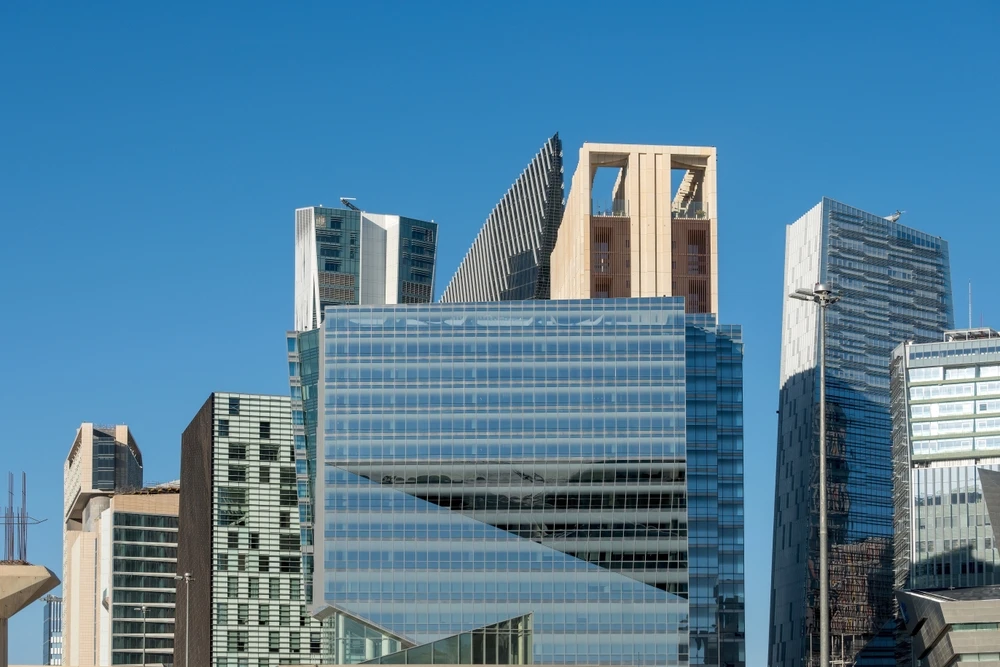
In its Saudi Arabia Real Estate Market Review for the second quarter of 2026, CBRE said demand was particularly strong for Grade A space in leading business districts such as the King Abdullah Financial District.
Changing demand
Elias Abou Samra, CEO of Rafal Real Estate Development Co., told Arab News Riyadh’s office market evolution is being driven by three factors.
“First, the massive wave of new governmental entities established under Vision 2030 mega-projects. They’ve created anchor demand that fueled market growth throughout the post-Covid years,” Abou Samra said.
Second, he added, is the Regional Headquarters Program, which has already brought over 600 companies to Riyadh. “We’re now seeing those firms stabilize and deepen their physical presence.”
The third, which he described as “overlooked,” is a generational shift in family businesses, with new leaders upgrading from Grade B and C to Grade A offices to align with international standards.
“Five years ago, demand was led by government and local firms experiencing double-digit staffing growth. Today, multinationals are driving the expansion, but the real story is the layering – government anchors, regional headquarters tenants, and modernizing family businesses are all competing for the same premium stock,” Abou Samra added.
The changing tenant mix is also reshaping expectations for office developments, with companies increasingly considering amenities and accessibility alongside the workplace itself.
“What they’re all asking for now goes beyond the four walls. Tenants want mixed-use integration — retail, food and beverage, green spaces, and even residential within walking distance. And critically, they’re prioritizing proximity to Transit-Oriented Developments,” he said.
With Riyadh Metro coming online, he added, being within 5 to10 minutes of a major transit node is becoming a non-negotiable requirement for top-tier talent retention.
Flexible workspace becomes mainstream
These changing requirements are encouraging developers to incorporate flexible workspace into commercial projects rather than treat it as an optional offering.
Abou Samra said flexible workspace is increasingly being incorporated into commercial developments from the planning stage.
He added that Rafal allocates 15 to 20 percent of the gross leasable area in new commercial projects to flexible operators.
The Rafal Real Estate Development Co. CEO said hybrid working, the speed required by international companies and lower vacancy risk for developers are driving the shift.
“The drivers are clear: hybrid work is permanent – even government entities are adopting hot-desking. International RHQ firms need to open in 30 days, not 12 months. And flexible operators absorb fit-out costs, reducing our vacancy risk,” he said.
Khaled Mohei El-Din, senior manager at Edge Innovation Center, said the flexible workspace sector has similarly moved from a niche solution toward a mainstream corporate real estate model.
“Flexible workspaces have become core to corporate real estate strategies in Saudi Arabia, moving from the margins to the mainstream,”
Mohei El-Din said demand initially came from startups and entrepreneurs before expanding to giga-project contractors, international consultancies, and multinationals, along with SMEs and scale-ups supporting the Kingdom’s transformation.
“Today, the market is more balanced, spanning multinationals expanding into the Kingdom, a growing base of SMEs and scale-ups, and businesses supporting giga-projects — reflecting the market’s growing maturity,” he added.
Looking ahead, he said, domestic demand will play a role alongside multinationals and RHQ entrants, with premium space at accessible prices becoming a factor.
RHQs accelerate demand for flexible offices
The Regional Headquarters Program is also creating demand for flexible workspace as international companies seek to establish operations quickly while determining their longer-term office requirements.
Asked how flexible offices are helping international companies, particularly those entering Saudi Arabia under the RHP, establish and expand their operations, Mohei El-Din said: “Flexible workspaces have become the preferred landing platform for international companies entering Saudi Arabia, especially RHQs, enabling operations within days without long leases or fit-outs.”
The senior manager said the model also helps companies preserve capital and scale their workspace as their workforce grows, adding that beyond speed, they support regulatory readiness, preserve capital, and provide room to scale as headcount grows.
“They also address exit-barrier concerns by providing a flexible workplace system that allows companies to focus on their core business while benefiting from a premium experience, talent appeal, and a business community for networking,” he said.
Developers seek ways to ease supply pressure
Flexible workspace is also emerging as a potential response to Riyadh’s limited availability of premium office space.
Abou Samra said Grade A occupancy in prime districts such as KAFD exceeds 90 percent, with demand being driven by both international companies and established local businesses seeking to upgrade their workplaces.
“Grade A occupancy in prime districts like KAFD is north of 90 percent, so availability is tight. But we’re not just seeing pressure from multinationals — we’re seeing a ‘flight to quality’ from existing local players,” the CEO said, adding that family offices and established businesses that were previously in mediocre spaces are now upgrading aggressively as next-generation leaders take over and demand international-grade environments.
Commenting on whether developers are increasingly considering flexible office solutions, Abou Samra said they are adopting them through coworking partnerships, subdividable spaces and converting B-grade buildings into flexible hubs.
He added that these models can ease supply pressures while giving SMEs access to premium locations and family businesses a lower-risk way to modernize their workplaces.
“Flexible models absolutely ease pressure — a building with 40 percent flex can host 1.5x more companies than traditional single-tenant leases,” he said.
More importantly, he added, flex spaces allow SMEs — which are the backbone of new Saudi sectors like tech and logistics — to access premium locations they couldn’t otherwise afford, while giving family businesses a low-risk entry point to modernize their workplace culture.
The next phase
The growing role of flexible workspace is part of a broader change in how companies evaluate office locations, with accessibility, amenities and the surrounding environment becoming increasingly important.
Abou Samra said the next phase of development will increasingly combine flexible offices with mixed-use and transit-connected projects.
“We’re seeing tenants willing to pay a premium for offices that are not just Grade A, but also part of a walkable ecosystem with metro access, gyms, childcare, and F&B — all in one masterplan.”
Looking ahead, Abou Samra said the wider location and amenities surrounding an office will increasingly influence tenants’ decisions and rental values.
“Tenants are increasingly asking: ‘How do my employees get here? Where do they eat? Where do they unwind after work?’ Developments that can answer all three will command the highest rents and lowest vacancy,” the CEO said.
He added that Rafal sees the future not as “offices versus flex,” but as an ecosystem where government anchors, RHQ players, family firms and SMEs coexist in mixed-use, transit-oriented developments, concluding that this is the real Vision 2030 story in commercial real estate.