- Mali’s armed forces, supported by Russian paramilitaries, have recaptured Kidal
- The city was previously lost to separatists five months prior
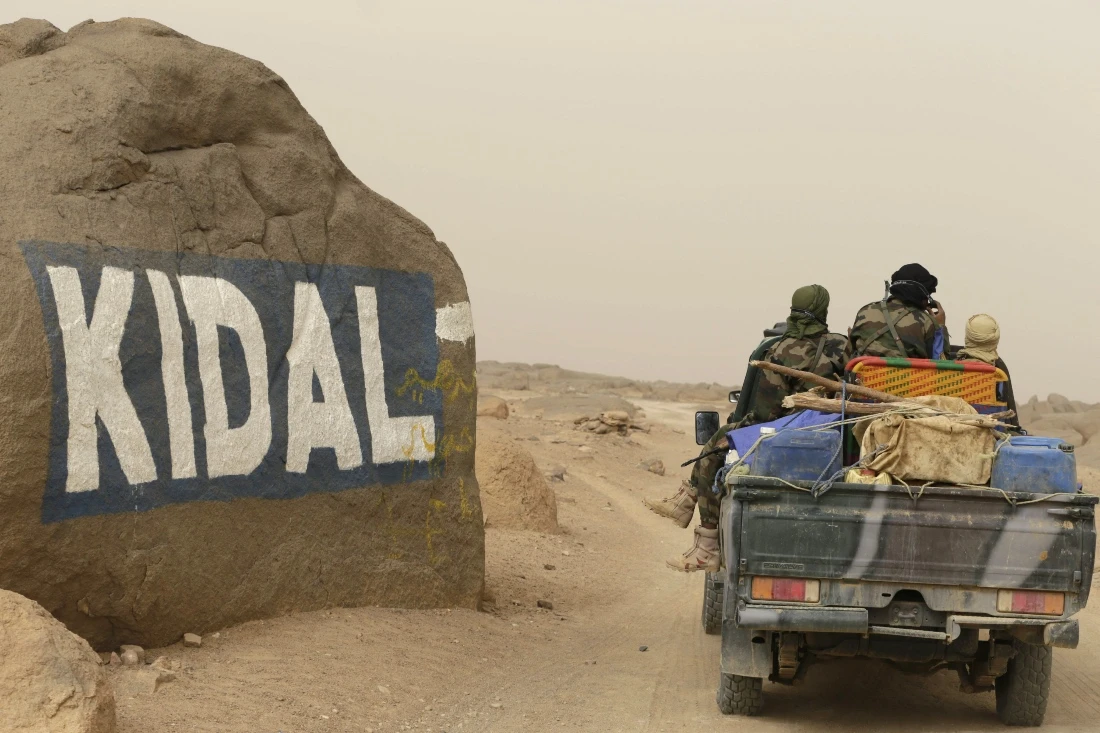
DAKAR: By retaking the strategic northern city of Kidal, Mali’s armed forces and allied Russian paramilitaries achieved a highly symbolic success, just five months after losing control of the key stronghold to separatists.
Mali reclaimed the deserted ghost town without a fight, even as it struggles to control territory elsewhere in the vast desert nation plagued by a jihadist insurgency and demands from Tuareg separatists.
So what does the capture of Kidal actually change for Mali?
A real or symbolic success?
Kidal holds immense symbolic importance for anyone seeking to establish a grip on the country’s north.
When Tuareg separatists from the Azawad Liberation Front (FLA) and their jihadist allies from the Al-Qaeda-linked Group for the Support of Islam and Muslims (JNIM) seized control of the historic rebel stronghold last April, they dealt a humiliating blow to Mali’s junta.
But the recapture of Kidal “changes nothing regarding the balance of power,” Jean-Herve Jezequel, Sahel project director at the International Crisis Group (ICG), told AFP, emphasising the “symbolic” nature of the success.
The seizure, he noted “helps fuel the idea that the regime is not as down-and-out as some have claimed.”
Hasret Kargin, a researcher specializing in the Sahel, said that while the loss of “Kidal is a setback for the FLA, this does not imply that they will be eliminated.”
It is, after all, far from the first time the city has changed hands.
Kidal had been controlled by rebel groups for nearly a decade before returning to Malian state authority in November 2023.
The Malian army’s success in retaking Kidal on Tuesday shows it is regaining standing against JNIM’s rising momentum.
The jihadists imposed a blockade on the capital last year and carried out numerous large-scale attacks across the country.
A major jihadist attack on the Dioura military camp in central Mali in September killed at least 100 Malian soldiers.
The scale was unprecedented, even though the country has been roiled by conflict since 2012.
Without a fight
The army entered Kidal on Tuesday without a fight after the FLA announced a “strategic and controlled withdrawal of its forces” from the city to “preserve human lives,” while specifying that the measure was “temporary.”
“We encountered no resistance. We did the groundwork beforehand by bombarding enemy positions and gradually loosening their grip,” a general staff officer told AFP.
On Tuesday, the army announced the launch of “large-scale air-ground operations” in the Kidal region, with an aim of “neutralising armed terrorist groups operating throughout the region” and restoring “security for the population.”
A man who had fled Kidal on Monday with his family told AFP that there was “not a soul left” in the city.
A role for Algeria
Algeria, which had long been at odds with Bamako, appears to have possibly played a role in the retaking of Kidal.
Amid a thawing of relations and the resumption of diplomatic contacts with Mali, Algiers reportedly may have asked the rebels not to resist so it could position itself as mediator, according to sources contacted by AFP.
A regional security source told AFP that “reports indeed indicate that Algiers encouraged the rebels not to fight.”
“Algiers is walking a tightrope. How can it continue to get along with the rebels while genuinely warming relations with Bamako?” the source asked.
A regional diplomatic source told AFP Tuesday that “it was entirely possible that Algiers asked the rebel groups not to respond militarily.”
What does Mali control?
Mali’s central government is struggling to maintain control over its vast territory, but retains a foothold in the cities.
In the north, Mali maintains military bases in Gao, Timbuktu and now Kidal, and controls major cities in the center and south.
In recent months the army has abandoned certain camps. More than 2,000 schools in the country’s center have also been forced to close.
Through agreements with local leaders, many rural areas in the country’s center are under jihadist control.
“What the Malian state and its partners control are the cities,” Jezequel said. “As for the rest, the countryside, the state merely passes through.”