- Medical campaign was co-funded by the King Salman Humanitarian Aid and Relief Center
- Volunteer Saudi doctors performed nearly 600 surgeries at Makka Eye Hospital in Rangpur
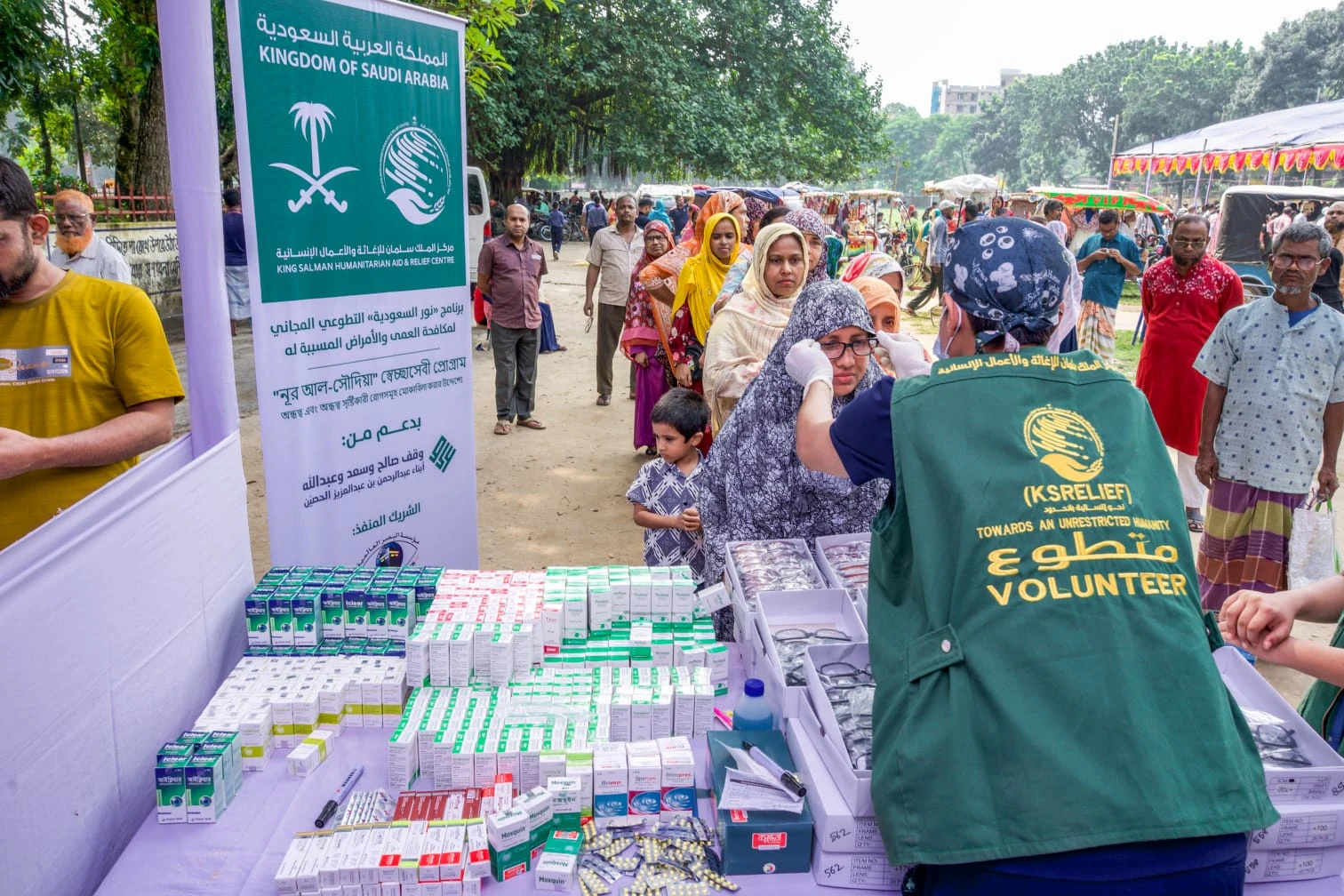
DHAKA: Volunteer Saudi doctors have over the past week provided treatment to more than 5,000 men and women needing eye surgery and specialized care in one of the poorest regions of Bangladesh.
The medical campaign was funded by the King Salman Humanitarian Aid and Relief Center and Al-Basar International Foundation — a Saudi-based nongovernmental organization providing eye healthcare and visual rehabilitation to the most vulnerable and disadvantaged communities.
The seven-day treatment program was organized last week at the Makka Eye Hospital in Rangpur, a prominent, dedicated eye care facility in northern Bangladesh managed under the supervision of Al-Basar Foundation.
“A total of 5,014 patients received free eye examinations, medical consultations, medicines, and reading glasses. In addition, 586 cataract surgeries were successfully performed,” Dr. Ahmed Taher Hamid Ali, the foundation’s country director, told Arab News on Sunday.
“Eye problems, particularly cataracts and other age-related vision problems, remain a significant concern for many people in the Rangpur region.”
The program targeted low-income households to mitigate the financial costs of ophthalmic care and allowed hundreds of cataract patients to regain sight, return to work, and manage their household responsibilities.
Three volunteer Saudi doctors from KSrelief, alongside medical professionals from the Rangpur hospital, carried out the procedures.
“Their visit reflected the importance of humanitarian cooperation and the shared commitment to providing essential eye care services to people in need,” Dr. Ali said.
“The campaign was particularly important because many people in the Rangpur Division of northern Bangladesh face financial difficulties and cannot easily afford specialized eye care services. By bringing essential eye care services directly to the community, the campaign helped people who might otherwise have gone without proper treatment.”
China Begum, a 55-year-old patient who received cataract surgery, told Arab News she was grateful for Saudi Arabia’s “generous support,” thanks to which she will soon be able to function independently and look after her family.
She was advised to undergo surgery long ago but was not able to bear the cost of the procedure and medicines.
Now, her eyesight has been restored thanks to a Saudi doctor who operated on her.
“I found the doctor very humble and cordial. He treated me like a mother,” she said.
“The whole process took around 30 minutes and it was almost painless … After the surgery, doctors provided me with medicine and glasses — all free of cost.”