- One of Philippines’ 12 halal certifying bodies saw its clients jump by 168 percent in 2024
- Predominantly Catholic Philippines has made some progress to become more Muslim-friendly
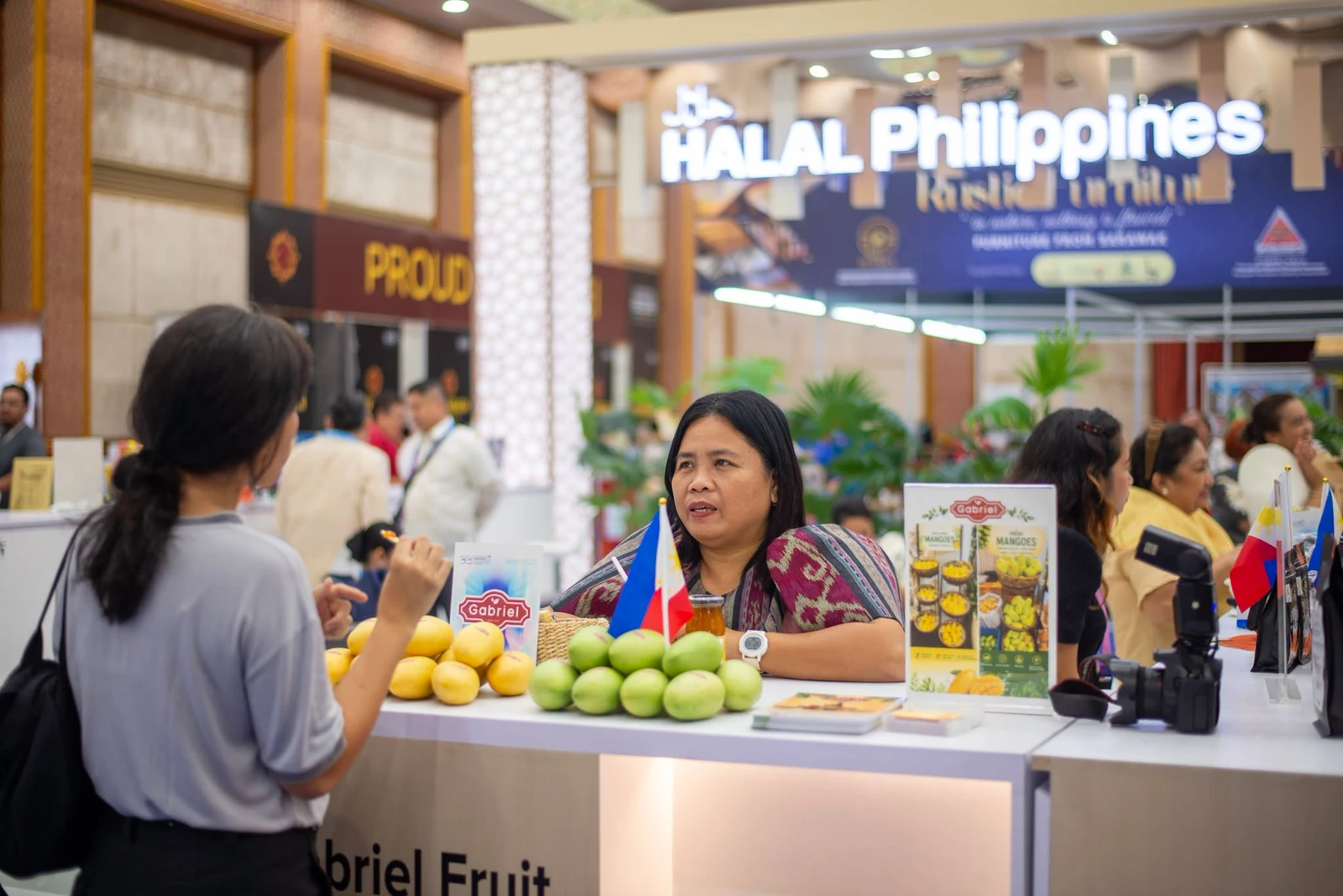
The Philippines is recording a boom in the number of halal-certified businesses as the government expands the local industry to tap into the multi-trillion-dollar global halal market.
In the predominantly Catholic Philippines, Muslims make up around 10 percent of the country’s 120 million people. While most live in the southern regions of Mindanao and the Sulu archipelago, a significant Muslim community of about 200,000 also lives in the capital region, Metro Manila.
Over the past few years, the Philippine government has launched nationwide efforts to tap into the global halal market, which is estimated to be worth more than $2.6 trillion in 2024, including campaigns to double the number of its halal-certified products and services.
“Many Filipino companies now want to enter, especially the Middle East market. Not only that, it’s also because of the push to support MSMEs, because one of the main goals of the Department of Trade and Industry is to support MSMEs to obtain halal certification,” Raymond Anido, regional sales manager at Philippine halal-certifying body Prime Certification and Inspection Asia Pacific, told Arab News.
PRIME is one of at least 12 officially recognized halal certifying bodies in the Philippines, and the only one accredited by member countries of the Gulf Cooperation Council, including Saudi Arabia, Qatar and the UAE.
Only 150 companies applied with PRIME for halal certification between 2018 and 2020, but that number has since quadrupled, most of them players in food and cosmetics.
“Based on our updated data, it’s now 600 plus (companies). When it comes to products, more than (a) thousand,” Anido said.
“Locally, halal is also becoming popular … Across Metro Manila, there are companies who are now contacting us because they want to obtain halal certification. Unlike two or three years ago, when we were the ones reaching out to the companies, they are now the ones who are inquiring about halal certification.”
Across the Philippines, promotional efforts from various government agencies, such as the Department of Trade and Industry, the National Commission on Muslim Filipinos and the Department of Tourism, appear to be bearing fruit.
“There are a lot of campaigns and people also see the market niche of halal products. And for you to be able to get to that market share, your products need to be halal-certified. So, there is a growing interest from the private sector,” said Aleem Guiapal, a halal policy expert in the Philippines and former head of DTI’s halal investment promotions and industry development.
Gains in the tourism industry have been more evident, as in 2026, the Philippines is ranked fifth among non-Organization of Islamic Cooperation Destinations by the Mastercard-CrescentRating Global Muslim Travel Index, an annual report benchmarking destinations in the Muslim travel market.
Interest in tapping into the huge Muslim market potential was also evident among clients of another Philippine halal-certifying body, the Halal International Chamber of Commerce and Industries of the Philippines.
“It is increasing continuously … our clients in halal certification. I have never seen the numbers going down, instead it’s going up continuously,” HICCIP CEO Alex Sultan told Arab News.HICCIP had an average of 18 clients per year between 2013, the year it was established, and 2021.
But in 2024, its client list jumped by 168 percent to 71 in total. In 2025, that number more than doubled to 158, encompassing the restaurant, hotel, food and beverage, as well as cosmetics industries.
“Most of our clients, we observed that they want to export their products,” Sultan said. “To export (their) product to the Middle East because the Middle East is the biggest market in halal industry.”