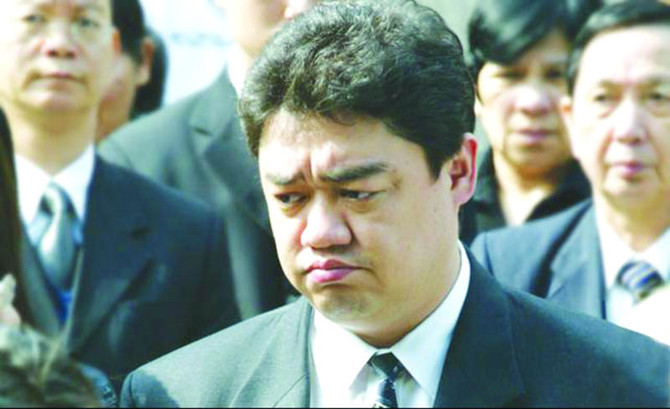
TAIPEI: A leading dissident who fled China after pro-democracy protests were crushed in 1989 said Friday he will postpone plans to stand for Taiwan’s parliament by a year.
Wuer Kaixi, who has been barred from the mainland since fleeing after the bloody Tiananmen crackdown and has been living in exile in Taiwan since 1996, had planned to run in a Feb. 7 parliamentary by-election in the hopes of dealing a “big blow” to Beijing.
But Wuer decided to withdraw from the February race in favour of the general parliamentary elections in 2016, saying he needs more time to “present my views, begin dialogues and seek support” for his campaign bid.
“I decided to run in the election as I saw Taiwan’s current most pressing challenges, one involving deepening its democracy and one involving cross-strait relations and I believe that I can contribute to Taiwan in the two issues,” he said in a statement.
“But I’ve realized that I cannot achieve such goals in just two short months and in the format of a by-election.” The by-election is to fill the seat vacated by Lin Chia-lung from the main opposition Democratic Progressive Party after he was elected mayor of central Taichung city in November’s local polls.
Wuer was number two on the Chinese government’s “most-wanted” list of protesters following the military’s crackdown on the Tiananmen pro-democracy demonstrations, which left hundreds, possibly thousands, dead.

Tiananmen dissident delays bid to run for lawmaker in Taiwan
Explosions heard in Venezuela’s capital: AFP journalist
- The explosions come as US President Donald Trump, who has deployed a navy task force to the Caribbean, raised the possibility of ground strikes against Venezuela
CARACAS: Loud explosions, accompanied by sounds resembling aircraft flyovers, were heard in Caracas around 2:00 am (0600 GMT) Saturday, an AFP journalist reported.
The explosions come as US President Donald Trump, who has deployed a navy task force to the Caribbean, raised the possibility of ground strikes against Venezuela.
Sounds of explosions were still being heard around 2:15 am, although their exact location was unclear.
Trump on Monday said the United States hit and destroyed a docking area for alleged Venezuelan drug boats.
The Republican leader would not say if it was a military or CIA operation or where the strike occurred, noting only that it was “along the shore.”
The attack would be the first known land strike on Venezuelan soil.
President Nicolas Maduro has neither confirmed nor denied Monday’s strike, but said Thursday he was open to cooperation with Washington after weeks of US military pressure.
The Trump administration has accused Maduro of heading a drug cartel and says it is cracking down on trafficking, but the leftist leader denies any involvement in the narcotics trade, saying Washington is seeking to overthrow him because Venezuela has the largest known reserves of oil on Earth.
Washington has ramped up pressure on Caracas by informally closing Venezuela’s airspace, imposing more sanctions and ordering the seizure of tankers loaded with Venezuelan oil.
For weeks Trump has threatened ground strikes on drug cartels in the region, saying they would start “soon,” with Monday being the first apparent example.
US forces have also carried out numerous strikes on boats in both the Caribbean Sea and eastern Pacific Ocean since September, targeting what Washington says are drug smugglers.
The administration has provided no evidence that the targeted boats were involved in drug trafficking, however, prompting debate about the legality of these operations.
The deadly maritime campaign has killed at least 107 people in at least 30 strikes, according to information released by the US military.