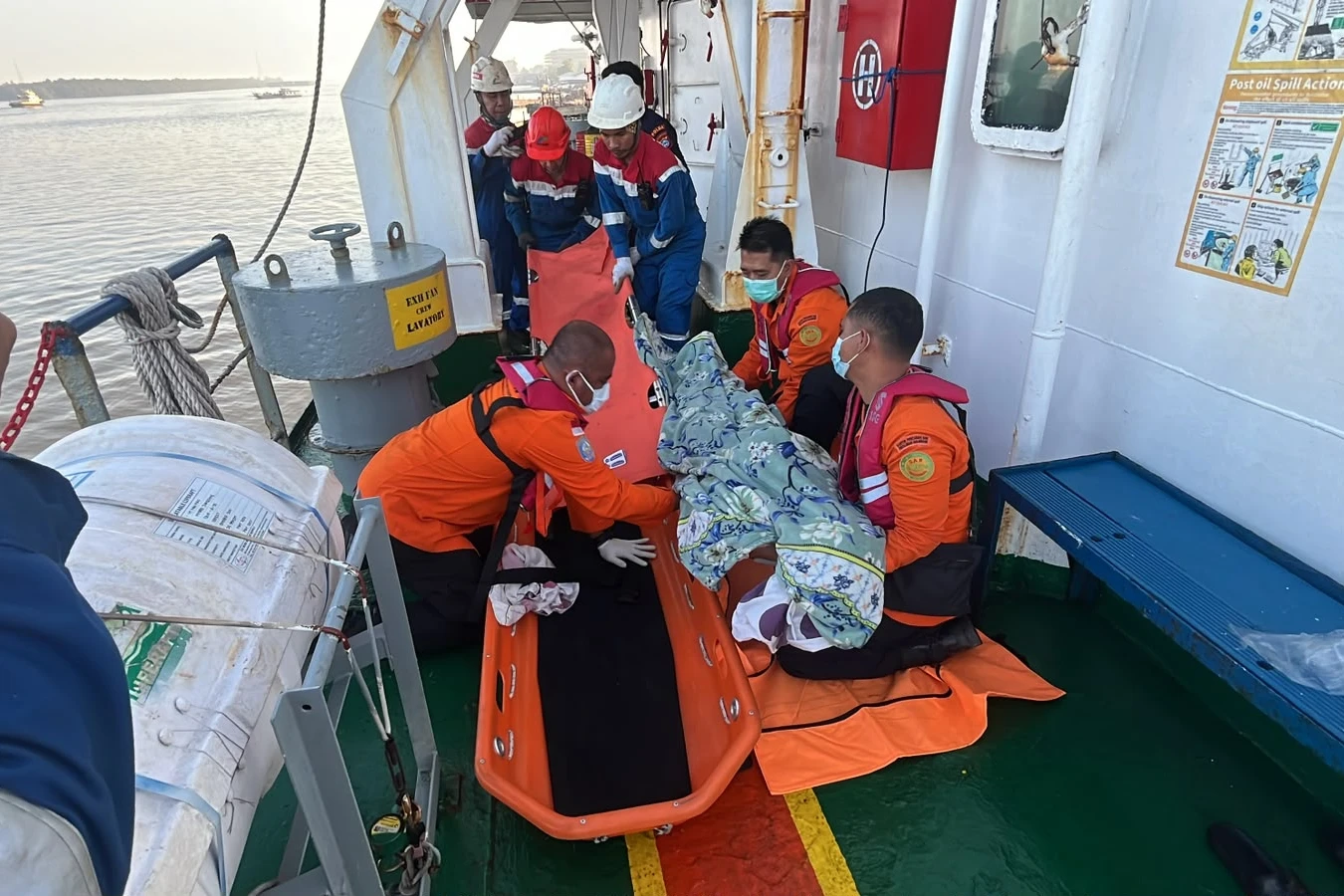
- Rescuers are faced with near-zero visibility and flooded compartments.
- The search involves 1,100 personnel, 17 ships, and 5 aircraft.
JAKARTA: Beneath the surface of the Java Sea, fast currents, water pressure and the hull design of a capsized ferry have hampered attempts to reach 126 people missing since Sunday, Indonesian officials say.
Divers entered the Virgo Transport 8 and retrieved three bodies on Friday, five days after the ship went down in bad weather. That brought the death toll to 9, while 108 people were rescued on the day of the accident.
The high-risk challenges facing the roughly 60 divers — who are among 1,100 personnel working 12-hour shifts on 17 ships and 5 aircraft — have slowed progress, adding to the anguish for distraught friends and family.
The 4,277-ton ship, which capsized some 800 km (500 miles) northeast of Indonesia’s capital, Jakarta, was making what should have been a 20-hour voyage from Surabaya in East Java province to Banjarmasin in South Kalimantan.
CURRENTS, WAVES, HIGH HULL COMPLICATE EFFORTS
Despite the time that has elapsed since the ship capsized, the mission remains a rescue operation, given the possibility that survivors may be trapped in watertight compartments.
Currents at the site were initially measured at nearly 7 knots, far above the 1.5-knot safety limit for diving, the national rescue agency said. They have since eased to between 1.8 and 2 knots, allowing navy divers to approach the ship on Thursday, before entering it on Friday.
Also complicating the effort have been waves of up to 2.5 metres (8 feet) and strong winds near the vessel.
The ship drifted about 1.8 nautical miles after the accident but finally sank to the seabed, officials said on Thursday. The Java Sea is between 40 and 50 metres (130-165 feet) deep, according to government data.
Part of the difficulty of getting into the ship has been its enclosed design, said Arianto Ardi, head of operations for the rescue agency’s Banjarmasin office.
The 119-metre (390-foot) Virgo Transport 8 is a “roll-on/roll-off” vessel built to carry vehicles as well as passengers between islands in Indonesia’s sprawling archipelago.
“Generally, ships like this have high hulls on the right and left side,” unlike passenger ships with rows of windows from the second deck up, Arianto told Reuters in a telephone interview.
The structure would have made evacuation difficult and now limits how rescuers can get inside, he said, estimating the ship likely has two or three decks, with vehicles below and passengers above.
ATTEMPT TO RIGHT SHIP AS RESCUE OPERATION CONTINUES
A potential further complication is that the company that owns the vessel, PT Virgo Karya Shipping, began trying to right the ship on Friday in a legally mandated salvage operation, while the rescue efforts continue.
Once inside the ship, divers must navigate flooded, unfamiliar compartments in near-zero visibility, said Marcellus Jayawibawa, a maritime expert with the alumni association of Indonesia’s Resilience Agency. “This could make it difficult for the diver to get out quickly in an emergency.”
A particular danger would be potential air pockets in sealed compartments, he said.
“If the cabin is watertight and contains air inside while outside there is seawater, then when the cabin door is opened, seawater will immediately try to fill the space,” with the pressure surge endangering the diver and any survivors, Marcellus said.
Even as some friends and family have begun to lose hope that anyone survived, the search by law must continue for at least a week.
“We are talking about a human life,” Marcellus said. “We must think that as low as the probability is, the possibility is they could still be there.”