- Subsidy gives owners of motorcycles, three-wheelers $0.36 per liter in relief on up to 20 liters of petrol per month
- Subsidy was announced after Middle East conflicts involving US, Iran, Saudi Arabia and Houthis drove oil prices higher
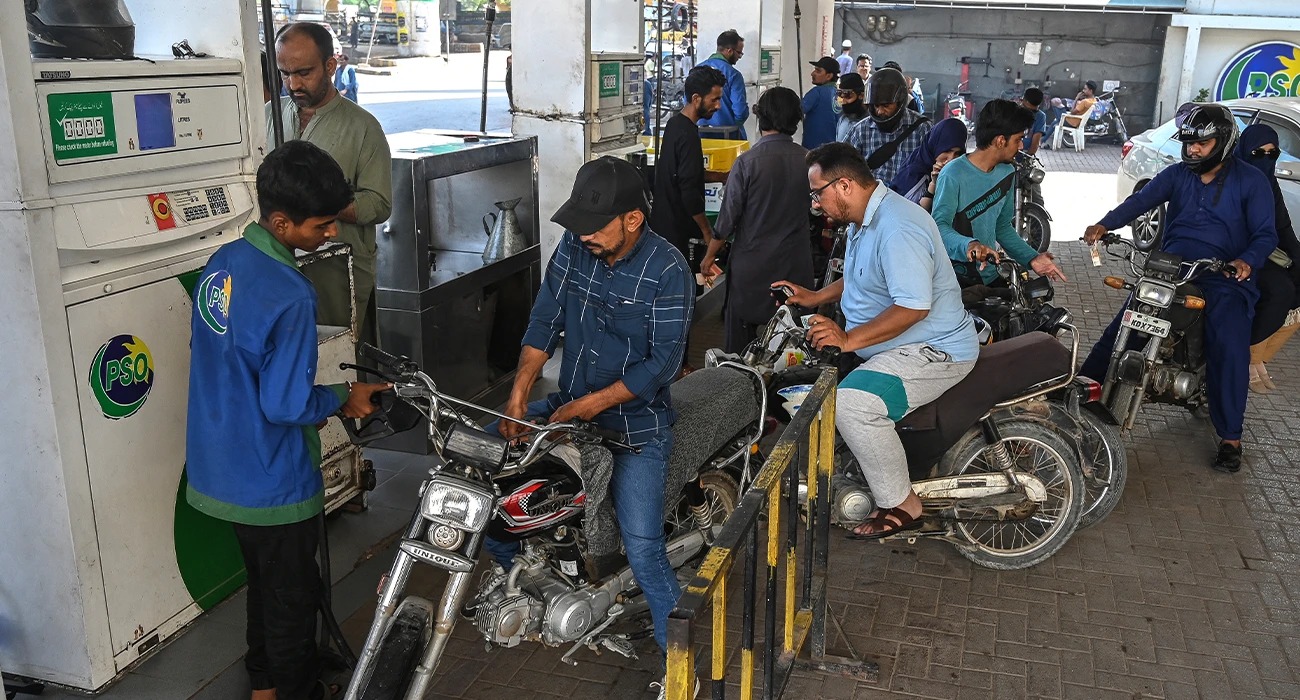
ISLAMABAD: Over 24 million people are benefiting from the Prime Minister’s Fuel Relief Scheme, a federal minister said on Friday, as Islamabad aims to cushion lower-income motorists from the constant surge in prices of petroleum products.
Pakistan’s government approved Rs75 billion ($271 million) in targeted fuel subsidies this week. The decision was taken as the conflict between the United States (US) and Iran intensified, as well as attacks on Saudi Arabia by Iran-backed Houthis disrupt global maritime trade routes. This pushed global prices of oil higher, forcing Pakistan to increase prices of petroleum products as well.
On Thursday, the government announced that the price of petrol has been slashed by Rs0.43 per liter to Rs390.79 per liter. The price of high speed diesel was increased to Rs424.92 per liter, up from Rs421.45 on Thursday.
“Minister for Parliamentary Affairs Tariq Fazal Chaudhry has said that 24 million people are benefitting from the Prime Minister’s Fuel Relief Scheme,” state broadcaster Radio Pakistan reported.
Chaudhry said the subsidy gives owners of motorcycles and three-wheelers Rs100 ($0.36) per liter in relief on up to 20 liters of petrol a month, while owners of cars with engines of up to 800cc can claim the same discount on up to 30 liters.
He said the information ministry has set up a control room to handle complaints and provide assistance to filling stations using the digital system through which the subsidy is being administered.
PAKISTAN REVIVES AUSTERITY DRIVE
The federal government announced it was reviving its austerity drive to conserve fuel supplies in light of escalating conflicts in the Middle East. The austerity measures were introduced in the months following the US-Iran war in February, but were later withdrawn after diplomatic progress eased pressure on global energy markets.
The government announced that it was reducing fuel provision by 50 percent for official vehicles for three months, exempting operational vehicles of the armed forces, civil armed forces, law enforcement agencies, essential services and the Federal Board of Revenue. It said administrative and non-operational vehicles belonging to those organizations will remain subject to the cut, while development projects are exempt.
The government also imposed a complete ban on the purchase of official vehicles and all durable goods except information technology equipment, ordering a five percent reduction in non-employee related expenditure for the entire 2026-27 fiscal year.
The notification imposed a “complete ban on foreign visits and travel for three months,” including obligatory visits, with exceptions for scholarships offered by international development partners, training and courses arranged through the Economic Affairs Division and travel under government institutional agreements.
For unavoidable foreign visits, ministers, advisers, ministers of state, special assistants to the prime minister, parliamentarians and other government functionaries will be required to travel economy class.
The government directed officials to hold meetings preferably through teleconferencing, banned official dinners except for visiting foreign delegations.
The government also said existing energy-conservation timings for businesses, first notified in June, would remain in force, requiring shops, markets, shopping malls and bazaars to close by 9 p.m., marriage halls and marquees by 10 p.m. and restaurants, cafés and food outlets by 11 p.m. Takeaway and home-delivery services are exempt.
Pharmacies, hospitals, clinics, medical laboratories, standalone bakeries and tandoors, dairy shops, fuel and CNG stations, electric vehicle charging stations, gyms, sports facilities, IT companies and call centers are also exempt from the closing restrictions.