- Veto ends mandate of expert panel overseeing sanctions restored under 2015 nuclear agreement
- Islamabad urges parties to revive Pakistan-mediated framework for ending seven-month conflict
ISLAMABAD: Pakistan has abstained from a US-backed UN Security Council resolution to extend independent monitoring of sanctions on Iran, state media reported on Friday, as vetoes by Russia and China ended the mandate of the expert panel responsible for oversight.
The resolution received 11 votes in favor, with Russia and China voting against it and Pakistan and Somalia abstaining. As permanent council members, Moscow and Beijing were able to block the measure despite its majority support.
The sanctions were restored in September 2025 after Britain, France and Germany invoked the “snapback” mechanism contained in the 2015 nuclear agreement, accusing Tehran of violating its commitments. Iran denies seeking nuclear weapons and disputes the legality of the sanctions’ restoration.
Pakistan has consistently favored a negotiated settlement that balances Iran’s rights with its international obligations, while supporting independent verification by the International Atomic Energy Agency. During last year’s debate, Islamabad backed efforts to delay the sanctions’ return and warned that confrontation would undermine prospects for a lasting settlement.
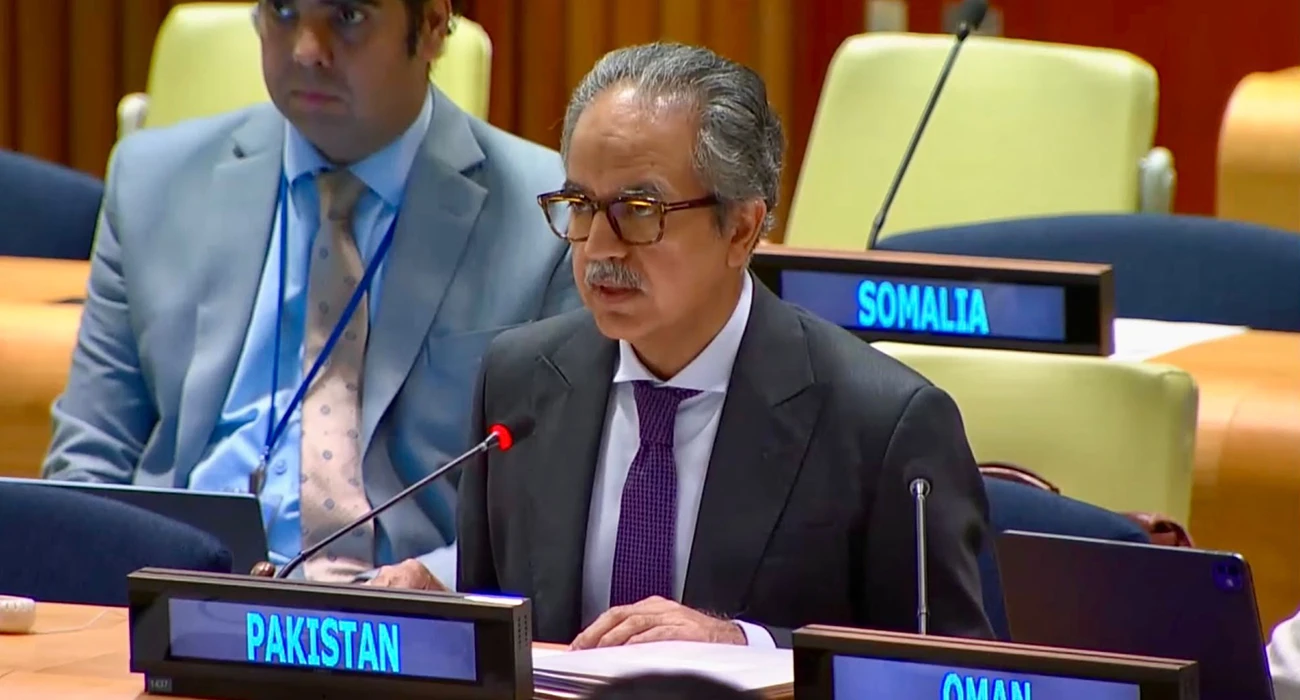
“We reiterate our position that the Iran nuclear issue should be addressed through peaceful means and in accordance with the rights, obligations and responsibilities of the parties concerned,” Pakistan’s UN Ambassador Asim Iftikhar Ahmad said while explaining the abstention.
Ahmad said Pakistan regretted that the council had taken what he described as a “non-consensual path, with far-reaching consequences,” arguing that diplomacy and dialogue remained the guiding principles for resolving outstanding questions over Iran’s nuclear activities.
He also backed the role of the IAEA, the UN nuclear watchdog responsible for verifying that nuclear material is not diverted toward weapons, saying it should perform its work independently and without political interference.
The IAEA’s monitoring role is separate from that of the Security Council’s panel of experts, which investigated sanctions violations, illicit arms transfers, financial activity and attempts to evade restrictions. The expert panel had already been unable to operate during the past year because council members could not agree on its appointments.
Washington argued that formally ending the panel’s mandate would weaken impartial monitoring and benefit countries and entities helping Tehran circumvent sanctions. Russia and China maintain that the sanctions were not lawfully restored and accuse Western powers of politicizing the council.
The vote comes little more than a week after the IAEA’s governing board reported Iran to the Security Council for failing to cooperate fully with an investigation into uranium traces found at undeclared sites. Tehran rejected the decision as politically motivated and maintains that its nuclear program is intended solely for peaceful purposes.
The dispute has acquired greater urgency during the seven-month US-Iran war, which began after American and Israeli strikes on Iran in February. Pakistan has sought to mediate between Washington and Tehran while calling for an end to hostilities.
Months of Pakistani mediation produced the Islamabad Memorandum of Understanding in June, which outlined commitments on ending the fighting and pursuing negotiations over Iran’s nuclear program, sanctions and regional security. Its implementation subsequently stalled as hostilities resumed.
“We call on all parties to implement the commitments agreed in the Islamabad Memorandum of Understanding, return to the negotiating table and allow diplomacy to deliver for the sake of regional and international peace and security,” Ahmad was quoted as saying in the state media report.
The 2015 nuclear agreement, formally known as the Joint Comprehensive Plan of Action, imposed restrictions on Iran’s nuclear activities in return for sanctions relief. It began unraveling after the United States withdrew in 2018 and restored unilateral sanctions, after which Tehran progressively reduced its compliance.