- President Trump nominated Republican Rep. Wesley Hunt as the new US ambassador to Saudi Arabia, succeeding Michael Ratney
- Hunt, a former Army officer and Texas congressman, must receive Senate approval before assuming his post in Riyadh
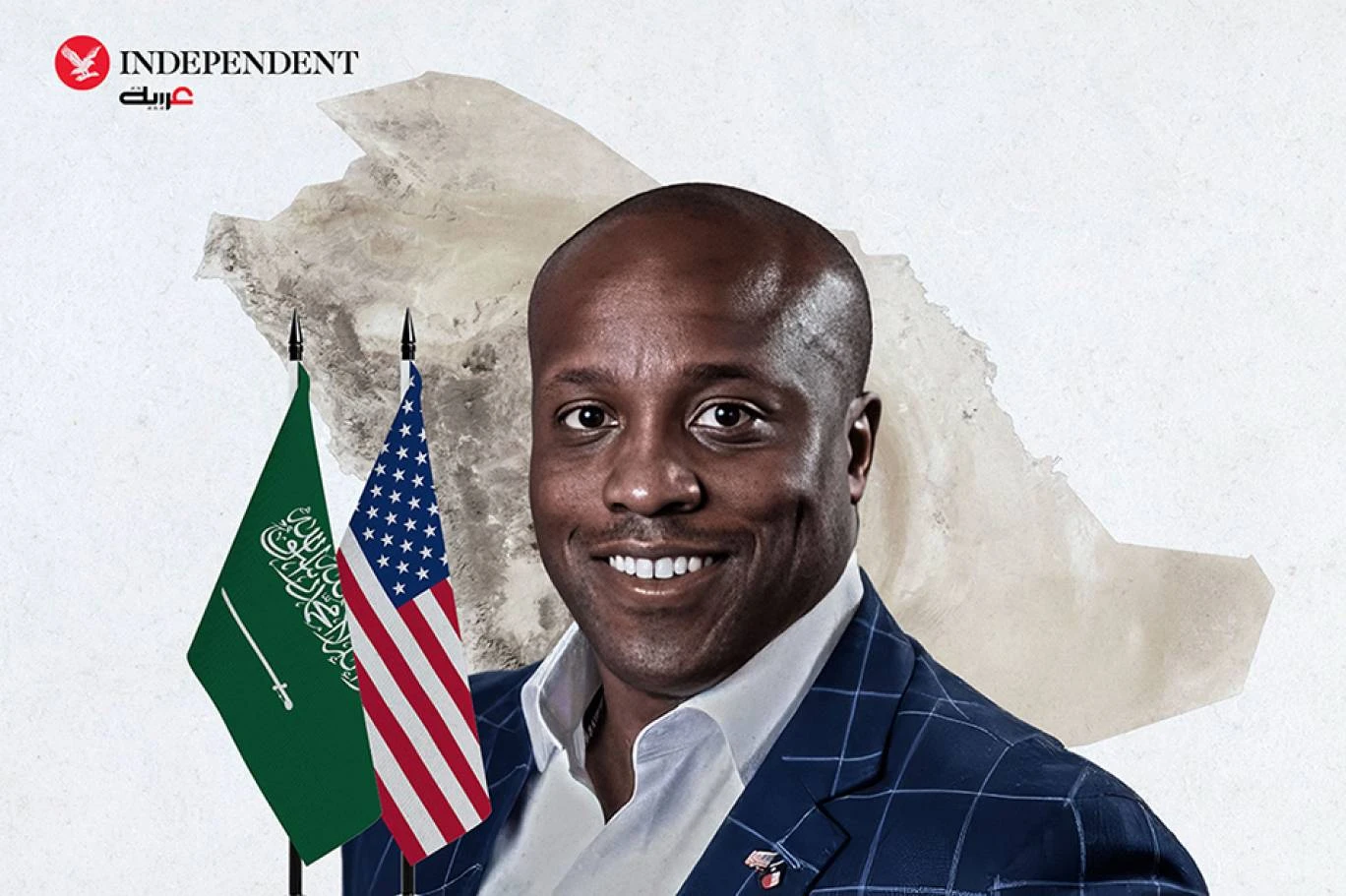
After many months of the US Embassy in Riyadh being run by a chargé d’affaires, President Donald Trump chose Republican Rep. Wesley Hunt of Texas, a former Army officer, to be his new ambassador to Saudi Arabia.
Hunt, a Republican member of the House of Representatives from the Houston area, was nominated for the post on Monday in a move that comes as US-Saudi relations are going through a particularly sensitive phase, in the wake of the war with Iran and escalating tensions in Yemen and across the region. His nomination requires Senate approval before Hunt can take up the post in Riyadh.
The ambassador of African American heritage would succeed Michael Ratney, who set an exceptional precedent among US representatives in Riyadh. Serving under President Joe Biden, during a period that witnessed some of the highest tensions in relations between the two countries in decades, Ratney managed in a short period to leave a notable impact. Even after the end of his mission, he has remained in contact with Riyadh and present in discussions about the kingdom through media and think tanks in Saudi Arabia and the US.
Peace through strength
Hunt's military background and previous service in Riyadh may also give him an opportunity to add a different dimension to the strategic relationship.
American officials with military backgrounds and experience in the region may have greater familiarity with Arab and Gulf societies than those whose professional or cultural experiences have been limited to the Western world. However, this is not always the case. Barack Obama, whose father was from Kenya, was among the US presidents whose policies toward the region disappointed many observers, contrary to expectations when he was elected.
Hunt said the nomination represented “the honor of a lifetime,” describing an experience that combines military service and diplomatic work. He referred to his service in Iraq and two years spent in Saudi Arabia as a diplomatic liaison officer, saying that the experience gave him a direct understanding of the strategic importance of the partnership between Washington and Riyadh.
In another post on X, Hunt said that, if confirmed by the Senate, his mission would focus on deepening the partnership, strengthening security and economic interests, advancing energy cooperation and confronting common adversaries. He described this as part of what he called Trump's vision of “peace through strength.”
Hunt comes from a military family and graduated from the US Military Academy at West Point in 2004. He then served eight years in the US Army as an Apache helicopter pilot and carried out 55 combat missions in Iraq, according to biographical information reported by US media.
He also served twice in Saudi Arabia as a diplomatic liaison officer with the Saudi ground forces. After leaving the military, he earned advanced degrees from Cornell University before entering the House of Representatives in 2023.
Trump's ally in difficult days
Hunt's background gives him a different profile from many political ambassadors, but it also comes with a clear political history.
He has been an ally of Trump in Congress, supported his return to the presidency and participated in his 2024 campaign. Earlier this year, he ran in the Republican primary for a Senate seat in Texas, finishing third with 13.5 percent of the vote. After losing the race, he said he did not intend to run again for the House of Representatives.
As a result, some US media outlets have treated the nomination as more than simply a diplomatic appointment. The Texas Tribune highlighted Hunt's political proximity to Trump and his defeat in the Senate race, while Jewish Insider focused on the difficulty of moving the nomination through the Senate quickly.
The Senate is facing a limited schedule ahead of the midterm elections, while a number of previous nominations are still awaiting action, leaving the timing of Hunt's arrival in Riyadh uncertain.
The timing is particularly significant because the ambassadorial post has remained vacant throughout Trump's second term until now. Ratney, a career Foreign Service officer, left his post in January 2025, and since then the chargé d'affaires has managed the US Embassy in Riyadh.
This differs from Trump's first term, when retired Gen. John Abizaid was chosen as ambassador to Saudi Arabia but did not arrive in Riyadh until 2019, more than two years after the start of Trump's first administration.
That experience showed that delays in naming a US ambassador are not unprecedented in the relationship, although the length of the current vacancy is notable given Riyadh's importance to US policy and the serious events unfolding across the region.
The debate has repeatedly been raised among those who follow relations between the two countries. US officials, however, have argued that the personal relationship between Trump and the Saudi leadership, as well as their direct communication, reduces the impact of the absence of an ambassador, regardless of how long the position remains vacant.
Hunt's nomination comes at a time when the bilateral relationship extends beyond oil and trade to issues including regional security, nuclear energy, and the US approach to Iran and Yemen.
Military ambassadors
Hunt would not be the first person with a military background to lead the US Embassy in Riyadh.
He was preceded by retired Gen. John Abizaid, former commander of US Central Command, who served as ambassador from 2019 to 2021, and Gen. James B. Smith, a retired Air Force fighter pilot who served as ambassador from 2009 to 2013.
Joseph Westphal, who served as undersecretary of the Army before becoming ambassador, held the post from 2014 to 2017.
The history of military figures serving as US representatives in Saudi Arabia dates back much further. Col. William A. Eddy, a US Marine Corps officer and Arabic-language specialist, headed the American mission in Saudi Arabia.
Eddy also served as the interpreter during the historic meeting between President Franklin D. Roosevelt and King Abdulaziz aboard the USS Quincy in 1945 and played a role in arranging the meeting.