- Hajj season presents an opportunity for progress, with every challenge serving as a catalyst for improvement, says Hisham Al-Jadhey
- Saudi Arabia is developing its service ecosystem for pilgrims under Vision 2030, balancing technological innovation with regulatory compliance
RIYADH: As Saudi Arabia continues to modernize its service ecosystem for Hajj and Umrah pilgrims, the CEO of the Saudi Food and Drug Authority has highlighted how serving pilgrims inspires innovation and improved regulatory oversight.
Hisham Al-Jadhey says serving pilgrims is a great honor for the Kingdom and a responsibility that drives continuous efforts to enhance the services, balancing innovation with stricter regulatory and compliance measures, in line with Saudi Vision 2030.
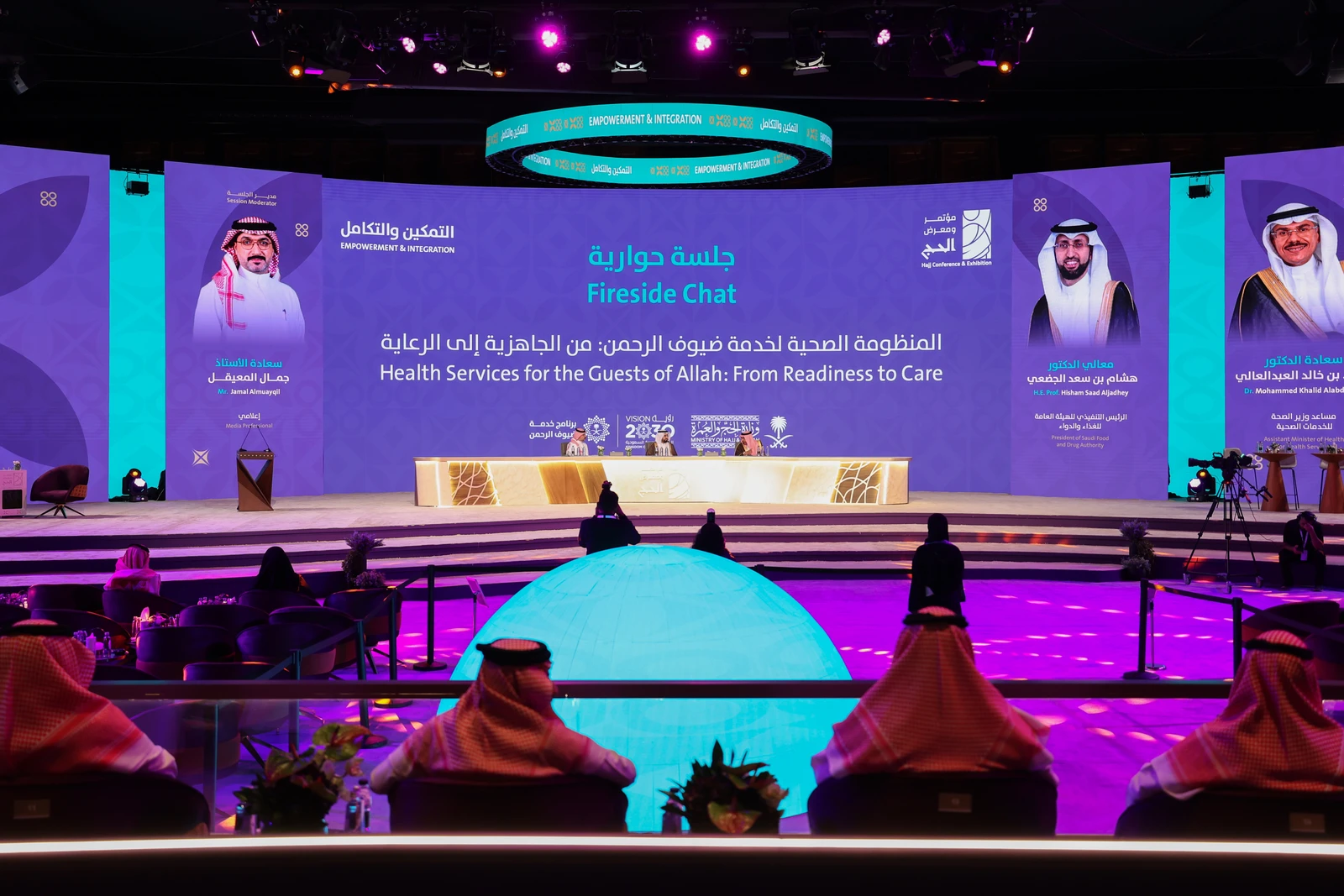
“Hajj season presents an opportunity for progress, every challenge serves as a catalyst for innovation, and every achievement lays the foundation for even greater ambitions,” he said during a panel discussion titled “Health Services for the Guests of Allah: From Readiness to Care.”
The event was part of the sixth Hajj Conference and Exhibition being held at Jeddah Superdome from Nov. 8-11 under the theme “From Makkah to the World.”
Organized by the Ministry of Hajj and Umrah in collaboration with the Pilgrim Experience Program, one of the Saudi Vision 2030 programs, the event brought together senior Saudi officials, heads of Hajj delegations and representatives of pilgrims’ affairs offices from around the world.
Representatives from more than 520 organizations across 150 countries are gathering at the sixth Hajj Conference and Exhibition, where governments, airlines, hoteliers, technology firms and service providers are negotiating the partnerships and logistics that will help shape next year’s pilgrimage season.
Al-Jadhey explained this responsibility was reflected in the authority’s early preparations for the Hajj season, which included conducting risk assessments, monitoring consignments and regulated establishments, enhancing the readiness of inspection teams, raising public awareness of preventive measures, and equipping inspectors with advanced tools powered by modern technologies and artificial intelligence.
He emphasized that the technologies, developed by the authority, represented an investment in human capabilities and the future of food and drug regulatory oversight, underscoring the importance of this responsibility.
Al-Jadhey also highlighted the authority’s use of artificial intelligence-powered solutions, including the Regulatory AI System for Incoming Drugs, a tool designed to verify controlled medicines carried by pilgrims. Supporting more than 50 languages, RASID saved inspectors more than 1,500 working hours during the previous Hajj season.
He also highlighted ProVerifier, an AI-powered verification tool that identifies products and cross-checks their information against regulatory records, reducing verification time by up to 98 percent.
He said these solutions marked a shift toward more efficient and proactive regulatory oversight by combining inspectors’ expertise with AI capabilities to enhance product safety and streamline regulatory procedures.
Al-Jadhey reaffirmed the authority’s commitment to expanding the adoption of innovative technologies and further strengthening its regulatory capabilities to meet the needs of future Hajj seasons.
The annual Hajj conference has evolved into an important platform for planning and coordination ahead of Hajj. The five previous editions witnessed more than 1,850 agreements for providing services to pilgrims, over 310 sessions and 250 workshops, and attracted more than 570,000 visitors, according to Ghassan Al-Nuwaimi, the Ministry of Hajj and Umrah’s assistant undersecretary for international relations and official spokesperson.
This year’s edition spans more than 67,000 sq. meters and brings together stakeholders involved in every stage of the pilgrim journey, from transportation and accommodation to healthcare, technology and training.