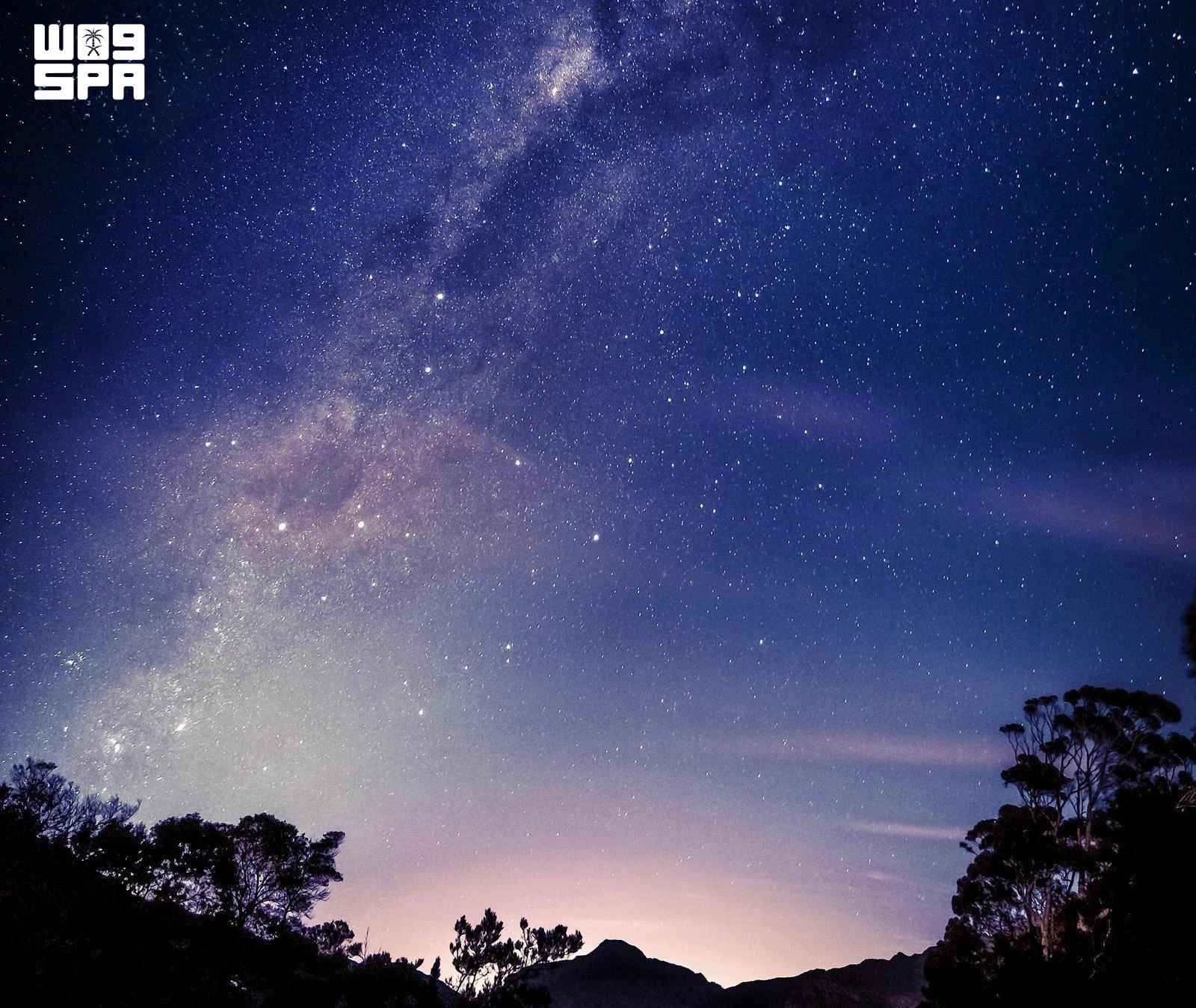
JEDDAH: The skies above the Imam Turki bin Abdullah Royal Nature Reserve feature several astronomical phenomena in September, including conjunctions involving the moon, planets and stars, lunar phases, the autumnal equinox and Neptune at opposition.
The events have already included a conjunction between Venus and Spica on Sept. 1, followed by a conjunction between the moon and Pleiades on Sept. 3. The moon reached its last-quarter phase on Sept. 4 before forming a conjunction with Mars on Sept. 7.
A conjunction between the moon and Jupiter will occur on Sept. 9, followed by the new moon on Sept. 11 and a conjunction between the moon and Venus on Sept. 14, the Saudi Press Agency reported.
The moon will form a conjunction with Antares on Sept. 17 before reaching its first-quarter phase on Sept. 18. Later in the month, the reserve’s skies will feature the autumnal equinox on Sept. 23 and Neptune at opposition on Sept. 26.
A conjunction between the moon and Saturn will coincide with the full moon on Sept. 27. The events will conclude with another conjunction between the moon and Pleiades on Sept. 30.
The reserve provides favorable conditions for astronomical observation due to its vast area and low levels of light pollution. These conditions allow celestial objects and phenomena to be viewed more clearly, supporting astrophotography and space science activities.
Alongside its natural diversity, these features strengthen the reserve’s appeal for ecotourism and astrotourism. They also raise awareness of the importance of dark skies and protecting natural environments where astronomical phenomena can be observed away from artificial light.
The Saudi Space Agency recently launched a guide to major astronomical events expected to be visible in the Kingdom from 2026 to 2030.
The guide highlights 62 events over five years, including solar and lunar eclipses, meteor showers, planetary conjunctions and oppositions, equinoxes and solstices.
It provides simplified scientific information and safe observation guidance to help the public and enthusiasts follow and understand celestial events.
Saudi reserve’s skies host celestial events