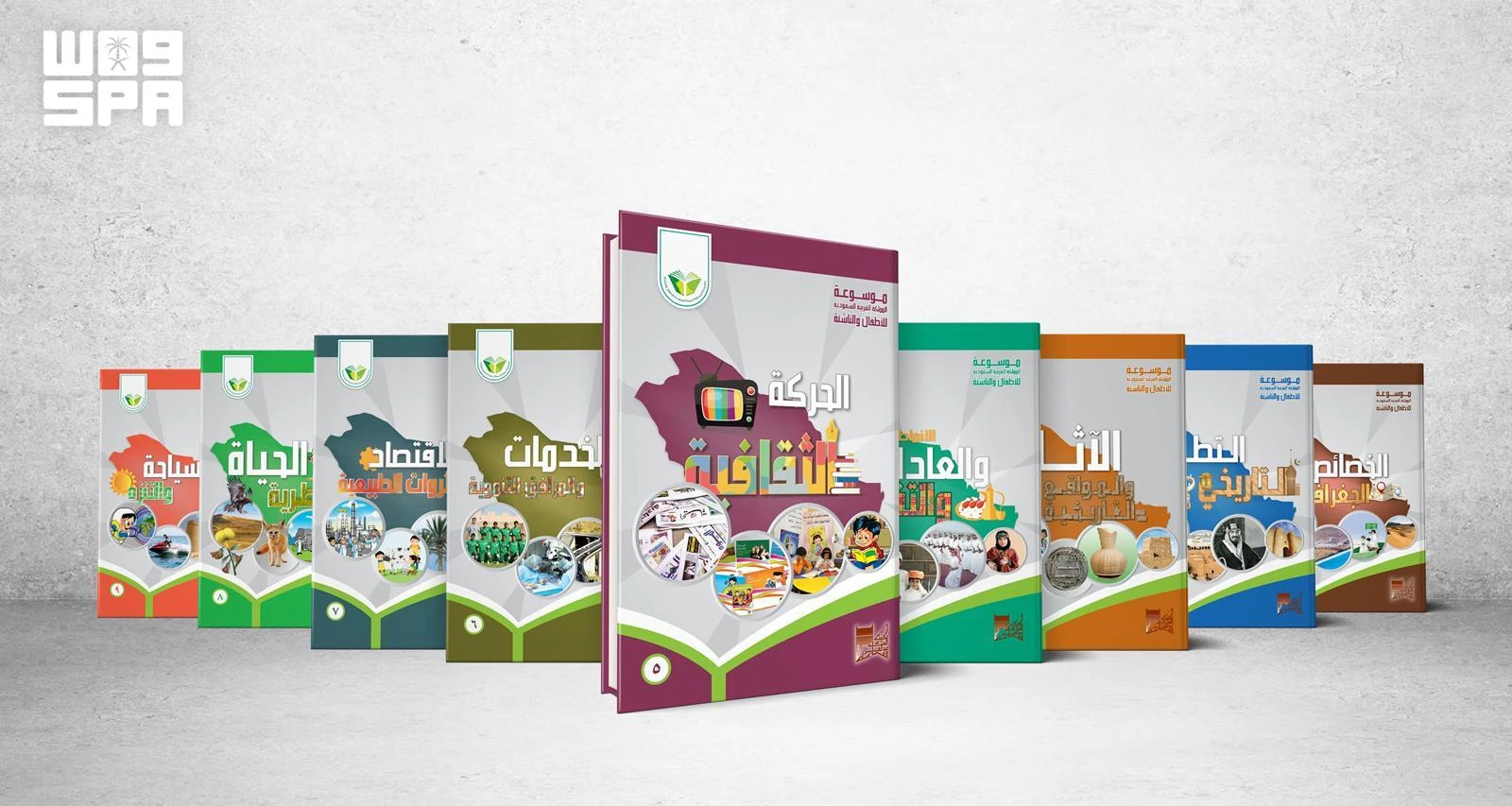
JEDDAH: A nine-volume encyclopedia published by King Abdulaziz Public Library aims to strengthen children’s national identity and introduce them to Saudi Arabia’s history, geography and cultural diversity.
The “Encyclopedia of Saudi Arabia for Children and Young People,” designed for readers aged 9–15, provides detailed, documented information about the Kingdom’s past and present. It seeks to help young readers access reliable information, respect different cultures and customs, and understand the role of religious values and humanitarian principles in their country’s heritage.
The volumes cover geographical features, historical development, antiquities and historic sites, social patterns, customs and traditions, cultural activity, development services and infrastructure, the economy and natural resources, wildlife, tourism, and recreation. A key focus is the Kingdom’s anthropological diversity, with age-appropriate content explaining how communities across its regions differ in their lifestyles, livelihoods and traditions.
The encyclopedia also explores urban life, where employment spans trade, industry and other occupations, alongside village and Bedouin communities, whose social structures support close relationships and community cohesion. It describes the rapid growth of Saudi cities and developments in social life and urban planning. It also introduces villages and smaller settlements around cities, as well as Bedouin communities that maintain traditional ways of life in the desert.
Each setting is presented through its distinctive culture, customs, traditions and daily activities.
The publication offers an illustrated account of Saudi society, architecture, history and terrain. Subjects include homes and building tools, clothing and adornments, crafts and occupations, traditional remedies, folk proverbs and their significance, traditional dances and chants, and children’s games. It also examines celebrations of social and religious occasions and earlier methods of education.
By introducing young readers to such diversity, the hope is to strengthen their sense of belonging and encourage them to contribute to national development. It also seeks to prepare them to represent the Kingdom in international, scientific and cultural forums and contribute to national prosperity and human wellbeing.
Editors and illustrators worked together to prepare and produce the encyclopedia, which contains around 1,800 photographs, 625 illustrations, 100 tables and 40 geographical maps. Some 12 illustrators specializing in children’s artwork contributed to the project, with their work selected to engage young readers. Supervisory, scientific and artistic teams oversaw the publication’s preparation, supported by review committees comprising specialists in child and adolescent psychology and education.
The publication builds on the library’s larger “Encyclopedia of Saudi Arabia,” published in 2008 in 20 volumes. That work covers the Kingdom’s 13 regions from historical, geographical, social and economic perspectives and contains more than 10,000 photographs, maps, illustrations and tables.
The children’s encyclopedia is an abridged version and forms part of King Abdulaziz Public Library’s wider efforts to support children’s cultural education.
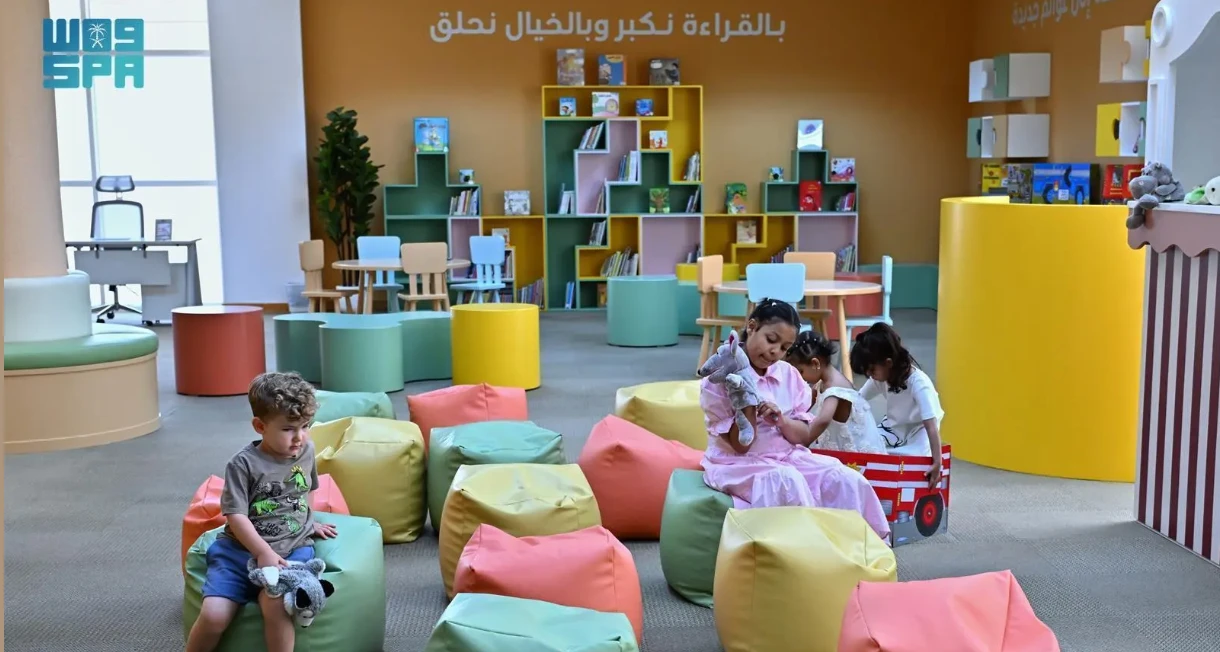
Since its establishment, the Riyadh-based library has offered stories, books, competitions, independent reading workshops, children’s cinema screenings, theatrical performances, school visits and celebrations of national occasions.
Its mobile library buses have also travelled across the Kingdom to provide cultural content for children and young people. Other initiatives include the Children’s Book Club and dedicated children’s libraries at its branches.
Established in Riyadh in 1985 and officially inaugurated in February 1988, it holds approximately 32,000 rare books, more than 123,000 rare documents and 7,620 manuscripts. It also has two overseas branches, one at Peking University in China and the other in Casablanca, Morocco.
Saudi encyclopedia introduces young readers to Kingdom’s history and culture