- Center will include biosafety level 3 laboratory for safe handling of infectious agents, and support experiments with small and medium-sized animals
JEDDAH: Saudi Arabia’s King Abdullah International Medical Research Center plans to establish a specialized laboratory animal facility in Riyadh.
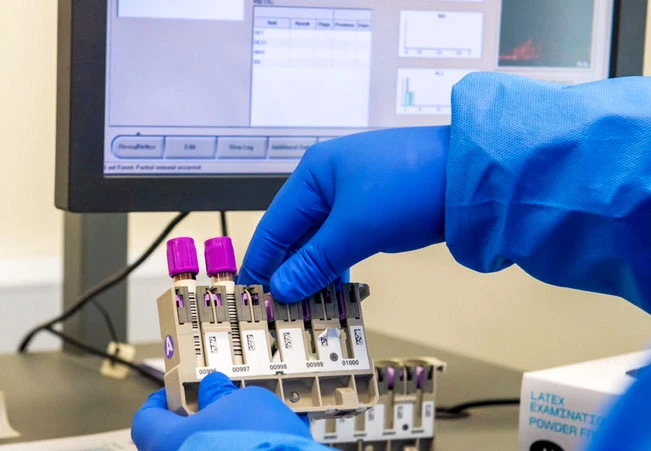
The center also plans to establish a biosafety level 3 laboratory capable of handling bacteria and viruses requiring advanced containment and safety measures, according to Al Arabiyah.
Mohammed Al-Tokhais, research director at the center’s partnerships and collaborations department, said that the center was seeking to expand its laboratory animal facility to meet advanced international standards.
The facility will support experiments involving small and medium-sized animals, while providing the infrastructure and equipment required for biotechnology research, he said.
Al-Tokhais said the biosafety level 3 laboratory would enable researchers to study certain infectious agents under tightly controlled conditions.
He added that the center’s partnerships aimed to transfer knowledge and technologies to the Kingdom, develop national expertise, and generate new research and discoveries.
Some agreements include programs to train Saudi researchers and physicians in advanced techniques not currently available in the Kingdom. After completing their training abroad, participants will be able to conduct research supporting the transfer and localization of these technologies, Al-Tokhais said.
The partnerships could also lead to patents, scientific studies, and the localization of medical technologies and treatments.
Al-Tokhais said medical research typically took several years to reach the market because of the rigorous testing and regulatory approvals required to protect human health.
The development process includes toxicity testing, animal studies and clinical trials before approval from the Saudi Food and Drug Authority.
He estimated that research outcomes generally took three to five years to reach the market, although scientists could observe preliminary results within three to six months, depending on the nature and stage of the study.
The planned facility will build on Saudi Arabia’s existing laboratory animal research infrastructure at several leading universities and medical institutions.
According to KAUST’s Core Labs website, its Animal Resources Core Laboratory supports biomedical research involving mice. The specific pathogen-free facility is accredited by AAALAC International and follows internationally recognized animal welfare standards. It also provides advanced imaging, irradiation and behavioral-assessment equipment.
King Saud University’s Experimental Surgery and Laboratory Animal Centre, established at its College of Medicine in Riyadh in 1987, supports ethically compliant research through laboratory animal units, controlled housing and specialized isolation rooms.
King Faisal Specialist Hospital and Research Centre also provides husbandry and veterinary care for research animals, including rodents and non-human primates, at its Riyadh campus and the King Fahad National Centre for Children’s Cancer.
These facilities reflect the Kingdom’s growing investment in the infrastructure and expertise needed to advance biomedical and biotechnology research.