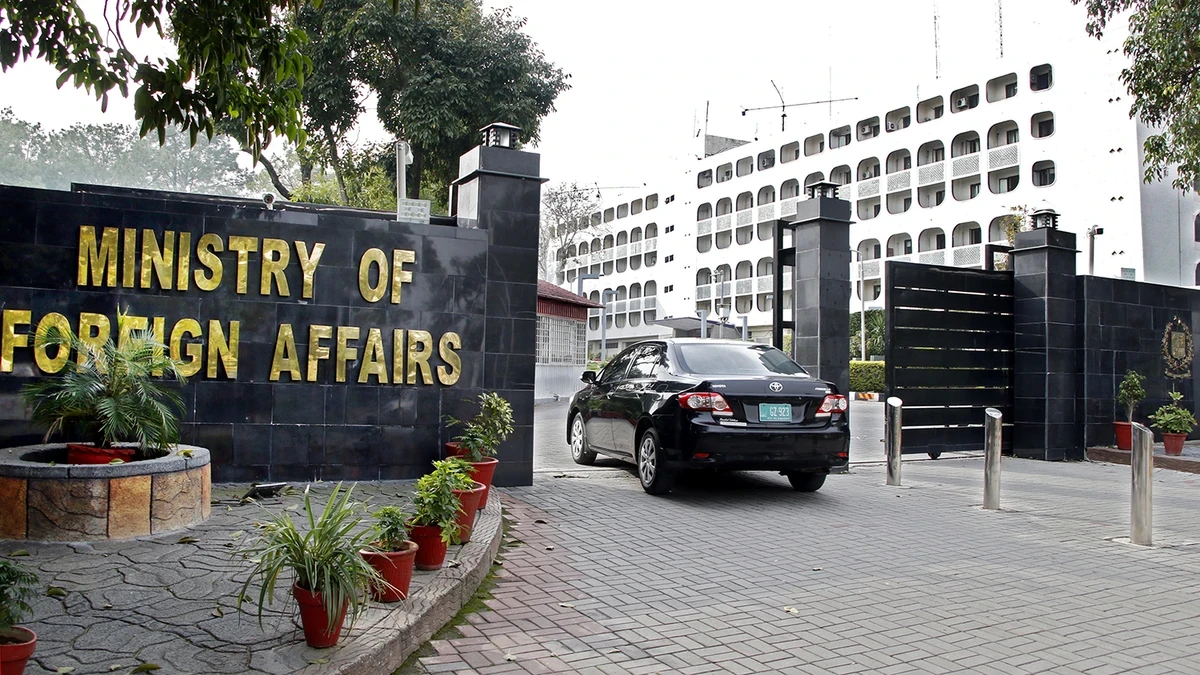
- Agency says private agents received hefty sums from applicants to expedite attestation process
- Fake stickers allegedly circulated across the country, with foreign ministry officials taking bribes
ISLAMABAD: Pakistan’s Federal Investigation Agency (FIA) has registered a case against 22 suspects, including six foreign ministry officials, for their involvement in producing, circulating and using fake apostille stickers and fraudulent documents, an FIA official said on Sunday.
The development comes as the government investigates alleged irregularities in the foreign ministry’s apostille and document-attestation system, following media reports of unofficial payments and abuse of the process that Pakistanis go through for recognition of educational, legal and other documents abroad.
It followed a report by Pakistan’s Geo News broadcaster that cited an internal inquiry into the ministry’s attestation system and reported that as much as Rs12 billion ($43 million) had been collected from citizens through unofficial channels over a year. The report said that almost 800,000 documents had been attested through the network of agents.
FIA’s anti-corruption circle raided several consultancy and courier offices in the basement of F&F Plaza in Islamabad’s Aabpara area after it received information about “preparation, circulation and use of fake apostille stickers/stamps and fraudulent slips purportedly relating to attestation/apostille services.”
“At least 22 individuals, including six foreign ministry staff members, have been booked in the case,” an FIA spokesperson confirmed to Arab News on Sunday.
Pakistan introduced the apostille system in 2024 to simplify the authentication of public documents for use abroad.
Fake apostille stickers and slips were being circulated at different locations across Pakistan, potentially causing substantial losses to the national exchequer, according to the complaint, according to a complaint lodged by the FIA.
The case was registered under sections 420, 468, 471 and 109 of the Pakistan Penal Code, relating to cheating, forgery, use of forged documents and abetment, read with Section 5(2) of the Prevention of Corruption Act, 1947.
“The agent mafia charged hefty amounts from the applicants for expediting apostille/attestation, and the MOFA (Ministry of Foreign Affairs) officials were paid their share in form of bribe to expedite the process,” read a copy of the FIA complaint available with Arab News.
The raid at F&F Plaza involved searches at several consultancy and courier offices in connection with alleged preparation, possession, circulation and use of fake apostille stickers, stamps and related fraudulent materials.
Sixteen suspects, associated with Sufi Consultants, Excellent Courier Service, Leopard Courier Services, RAAK Consultancy, Noon Consultants, GM Consultants and Fair Line Service, were identified during the operation, according to the FIA complaint.
The six foreign ministry officials named in the complaint include personnel assigned to document attestation and apostille services. One of them was an assistant director or assistant private secretary for attestation and another as the official in charge of apostille services.
Preliminary interrogation and information collected during the raid provided sufficient grounds to register the case and begin a detailed investigation, according to the FIA.
The investigation will seek to identify the source of the fake apostille stickers and slips, determine whether other foreign ministry officials or public servants were involved, and establish the financial benefits allegedly obtained by those involved.
The arrestees were produced before a local court on Saturday, which granted three-day physical remand of the accused, according to the FIA spokesperson.
Pakistan’s foreign ministry initially rejected the media report about the network, saying it had no information or record of it.
Foreign Minister Ishaq Dar subsequently ordered an inquiry on Sept. 18 and a three-member committee, headed by Petroleum Secretary Hamed Yaqoob Sheikh, was tasked with examining alleged procedural lapses, the role of courier companies and possible involvement of foreign ministry officials within two weeks.