Muhammad Ali Jinnah was born in Karachi on Dec. 25 1876.
After receiving secondary education in Karachi, he went to England for higher studies.
He joined Lincoln’s Inn to study Law.
Upon returning home, he started his career as a young Barrister in Bombay.
He soon joined politics and started political struggle for the independence of his nation.
During his political career, Jinnah advocated Hindu–Muslim unity, helping to shape the 1916 Lucknow Pact between the Indian National Congress and the All-India Muslim League.
Jinnah became a key leader in the All India Home Rule League, and proposed a fourteen-point constitutional reform plan to safeguard the political rights of Muslims.
In 1920, however, Jinnah resigned from the Congress and joined All-India Muslim League.
During early 1930s, Jinnah gave up politics and went to England.
However, upon the strong demands from the Muslim leaders, he returned to India and actively participated in politics.
By 1940, Jinnah had come to believe that Indian Muslims should have their own state. In that year, Jinnah was the president of All-India Muslim League. On March 23 1940, All-India Muslim League, led by Jinnah, passed the famous Lahore Resolution to demand a separate home land for the Muslims of India.
In a short span of just seven years, the dream of the Muslims became a reality and Pakistan came into being on Aug. 14, 1947.
Muhammad Ali Jinnah is thus regarded as the Founding Father of the Nation and is called Quai-i-Azam(great leader).
He was the first governor-general of Pakistan.
Jinnah worked to establish the newly independent country’s government and policies, and to aid the millions of Muslim migrants who had emigrated from India to Pakistan after the partition.
Jinnah died at the age of 71 on Sept. 11, 1948.
Numerous articles and books have been written on Quaid-e-Azam. He was a great leader.
Chiragh Ali Anjum has paid rich tribute to Quaid-e-Azam, in one of his articles in the following words: “Glowing tributes have been paid to the Quaid by the Muslims of the sub-continent, British rulers and moderate Hindu leaders, biographers, historians and scholars.”
The best tribute to the Quaid, in my opinion, has been paid by American scholar and historian Stanley Wolpert. He writes in his biography of the Quaid titled — Jinnah of Pakistan: “Few individuals significantly alter a course of history. Fewer still modify the map of the world. Hardly anyone can be credited with creating a nation–state. Muhammad Ali Jinnah did all three. The people of Bombay built the People’s Jinnah Memorial Hall to commemorate their historical success under the brave and brilliant leadership of Jinnah. Lord Reading, Vice Roy of the British India in 1925, who highly valued the legislative work of Jinnah, wished to recommend his name for the coveted knighthood but Jinnah regretted to receive the honor saying that he preferred to be simply Mr. Jinnah. The Muslims of Lucknow on the occasion of session of the Muslim League in October 1937 welcomed Jinnah and shouted “the Quaid-e-Azam” when they saw their leader appearing at the venue dressed in a Sherwani and a cap he borrowed from Nawab Muhammad Ismail Khan a prominent League Leader of the United Provinces. That Cap later on was to be known as Jinnah Cap. The people of Pakistan in recognition of their leader’s services to the cause of Pakistan gave him yet a unique title ‘Father of the Nation’.”


![]()
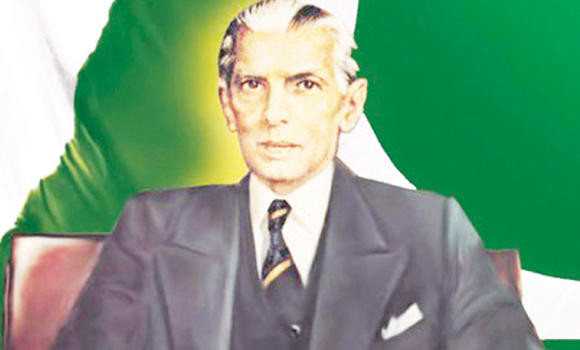
Muhammad Ali Jinnah: Father of the Nation
Muhammad Ali Jinnah: Father of the Nation
Latest updates


© 2026 SAUDI RESEARCH & PUBLISHING COMPANY, All Rights Reserved And subject to Terms of Use Agreement.