The Ministry of Health staged a drill at Jeddah Islamic Port on Thursday to identify and quarantine pilgrims suffering from infectious diseases.
The drill took place under the direct supervision of Wael Thaskandi, who is in charge of the quarantine department at the port.
The operation involved taking two 'infected' pilgrims from a passenger liner and ferrying them to the infectious department at King Fahd Hospital in Jeddah.
Adel Mohammed bin Turkistani, head of the health surveillance committee at the port, described it as a successful operation. “Everything went well except for some minute observations,” he said.
Officials from customs, immigration, command and control, and security departments took part. The "patients" were transported safely to the hospital.
Turkistani said the operation showed that the ministry was ready to tackle any emergency. He said the ministry was making every effort to serve the guests of Allah properly.
The ministry has deployed teams of officials at 14 ports of entry in the western province to check for infected pilgrims.
Health Ministry spokesman Khalid Al-Mirghalani said that the health requirements for this year focused on several diseases such as Ebola, Middle East Respiratory Syndrome Coronavirus, yellow fever, meningitis, polio and vaccination against seasonal influenza.
The ministry has announced that vaccination against meningitis is mandatory for all local and international Haj pilgrims, while flu shots are recommended. He said that vaccinations should be taken at least 10 days before pilgrims arrive in the Kingdom.
He said vaccinations against meningitis are valid for three years. Explaining the seriousness of meningitis, Al-Mirghalani said that pilgrims coming from areas where the illness is widespread, can cause an outbreak during the Haj season.
He said that congestion and overcrowding would ensure the disease spreads quicker. The vaccine is given to adults and children over two years of age and is not administered to pregnant women.
Al-Mirghalani said the ministry's national scientific committee, which acts as a command center for the pilgrimage, monitors pilgrims arriving from all countries.
He said the quarantine requirements for Haj visas have been sent to all Saudi overseas missions through the Ministry of Foreign Affairs in Riyadh.
Countries where yellow fever is endemic are Angola, Benin, Sudan, Senegal, Burkina Faso, Central African Republic, Cameroon, Burundi, Chad, Uganda, Congo, Côte d'Ivoire, Sierra Leone, Somalia, Ethiopia, Democratic Republic of the Congo, Gabon, Gambia, Ghana, Guinea, Equatorial Guinea, Guinea-Bissau, Togo, Kenya, Liberia, Sao Tomé and Principe, Mauritania, Niger, Nigeria, Rwanda, Tanzania, Mali, Ecuador, French Guiana, Guyana, Brazil, Bolivia, Suriname, Peru, Panama, Trinidad and Tobago, Venezuela, Colombia, Argentina and Paraguay.
Polio vaccinations are also compulsory for pilgrims from many African countries, and Pakistan, India, Nepal and Afghanistan. A dose of oral polio medication is compulsory for countries including Uganda, Kenya, Benin, Angola, Togo, Niger, Burkina Faso, Mali, Central African Republic, Chad, Côte d'Ivoire, Ghana, Democratic Republic of the Congo and Ethiopia.
On arrival, pilgrims from these countries would be given another oral dose of polio vaccine irrespective of their age.
Besides these vaccinations, Al-Mirghalani advised pilgrims to take precautions against influenza. The flu vaccine is not mandatory but it is desirable to take it considering the present climate and the susceptibility of pilgrims.
Al-Mirghalani advised that high-risk patients who have chronic ailments such as diabetes, hypertension and renal problems, should take the flu vaccine, which would help them perform their Haj and Umrah rituals without problems.
The official said pilgrims must pack their food in sealed containers.


![]()
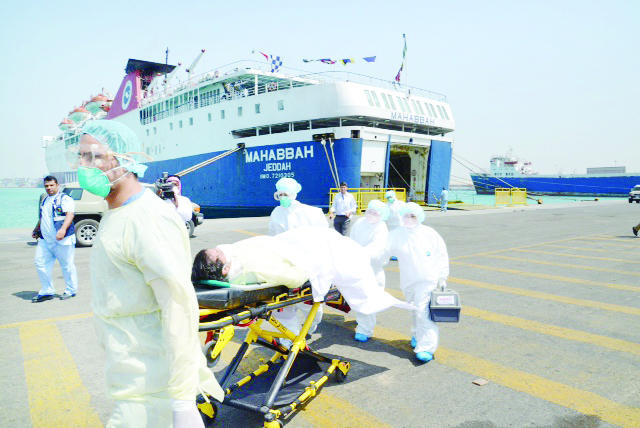
Quarantine measures for infectious diseases in place
Quarantine measures for infectious diseases in place
Latest updates


Recommended


© 2026 SAUDI RESEARCH & PUBLISHING COMPANY, All Rights Reserved And subject to Terms of Use Agreement.