- Saudi Arabia’s chairmanship of the ALECSO General Conference since May 2024 has also marked a new phase for the organization, Al-Moqbel said, with the launch of the largest package of development committees in its history
RIYADH: Amid mounting challenges and overlapping crises across the Arab world, the Arab League Educational, Cultural and Scientific Organization has emerged as a key pillar of joint Arab action.
Since its establishment on July 25, 1970, ALECSO has worked to preserve Arab identity and support comprehensive development across the region.
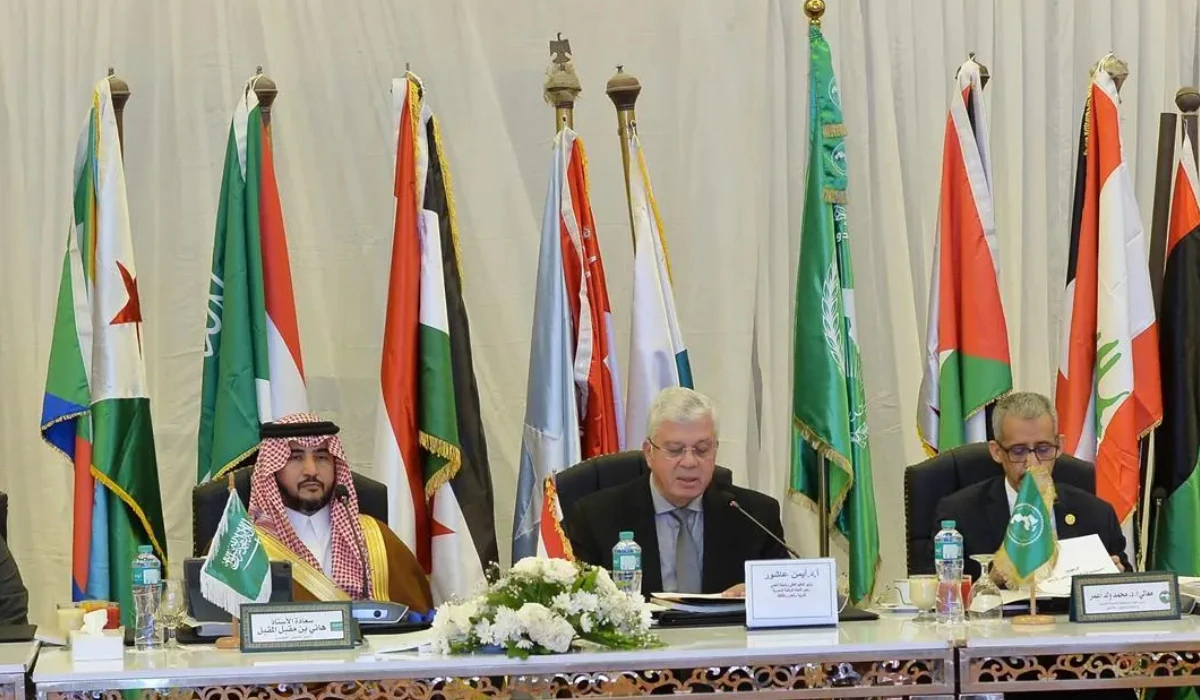
Saudi Arabia has served three consecutive terms at the helm of the council since 2021. Over those five years, ALECSO has stepped up efforts to strengthen education policies, preserve the Arab world’s cultural diversity, and advance scientific innovation, while pursuing institutional reforms and expanding international partnerships in support of its strategic objectives, according to Hani Al-Moqbel, chairman of ALECSO’s executive council.
In an exclusive interview, Al-Moqbel told Arab News that the Kingdom’s three consecutive terms reflect the confidence of Arab member states in the country. He highlighted the first term as a period that laid the foundation for the progress that followed.
“During that period, the Kingdom fostered a collaborative approach that made all member states partners in the progress achieved. This helped move the executive council toward more mature institutional practices and sustainable strategic transformation,” he said.
Saudi Arabia’s leadership of ALESCO, he added, has provided a framework for aligning priorities and strengthening the effectiveness of decision-making, while also prompting the Kingdom to reassess and reshape its contribution.
“This approach has led to the launch of 40 initiatives aimed at strengthening the presence of Saudi content across ALECSO’s work,” Al-Moqbel explained. “The executive council has also launched 29 initiatives, moving from a framework focused on approving agenda items to a more active platform for decision-making and monitoring program implementation, thereby strengthening institutional performance within the organization.”
Saudi Arabia’s chairmanship of the ALECSO General Conference since May 2024 has also marked a new phase for the organization, Al-Moqbel said, with the launch of the largest package of development committees in its history. Six specialized committees have been established to address strategic priorities.
The organization has also launched seven new projects, including development of the conference’s internal regulations, the establishment of a dedicated general conference office under the new framework, ALECSO’s first institutional performance governance framework and first governance guide, the organization’s first comprehensive training and capacity-building strategy, as well as the first unified Arab framework for selecting ALECSO experts in partnership with the national commissions.
The same period also saw a marked improvement in coordination between ALECSO and its institutional partners, both across the Arab world through the Arab League and sister specialized organizations, and internationally through UNESCO, Al-Moqbel said.
One example was the Future of Education, Culture and Science Organizations Conference in Riyadh in March 2023, jointly organized by ALECSO and the Saudi National Commission for Education, Culture and Science. The conference brought together more than 100 regional and international organizations, including UNESCO and ICESCO, with the aim of strengthening cooperation and promoting greater integration.
Yet Al-Moqbel stressed that the progress achieved so far represents “a starting point,” with several areas still requiring greater integration.
“These include harmonizing education and cultural databases and indicators across Arab organizations, rather than duplicating efforts to compile them; developing joint funding mechanisms for major digital projects that exceed the capacity of any single organization; and sharing technical expertise in emerging fields such as artificial intelligence and Arabic natural language processing,” he said. “In my view, these areas will be the real test of the seriousness of joint Arab action in the next phase.”
The organization’s approach to addressing education, cultural and scientific challenges in countries affected by conflicts, crises, disasters and emergencies has also undergone a fundamental shift, Al-Moqbel explained. Five years of institutional reforms and development efforts have transformed support for Arab countries facing such circumstances from temporary responses or ad hoc assistance driven by emerging needs into an integrated governance framework and a standing item on the agendas of the executive council and the organization’s general conference.
ALECSO now faces the task of turning these gains from transitional achievements into a permanent and sustainable framework for action.
Al-Moqbel identified four key priorities for the next phase: institutionalizing a culture of evaluation and measurement; ensuring sustainable funding to support countries affected by conflicts and crises; accelerating digital transformation across the organization’s operations; and continuing to build national capacities across member states.
“Using institutional tools to help advance the performance of Arab organizations, while establishing a model built on clear vision, sound governance and coordinated efforts, can strengthen an organization’s role as an active platform in its field,” he said.
“Effective institutional performance rests on initiative, influence and decision-making, alongside the development of institutional working mechanisms, stronger governance and a clear link between programs and their impact,” he continued. “This, in turn, can raise the organization’s institutional efficiency and strengthen its results across member states.”