- Government conditionally allows mass gatherings, precautionary measures must be observed
- Pakistan sees surge in COVID-19 cases, death toll has crossed 200
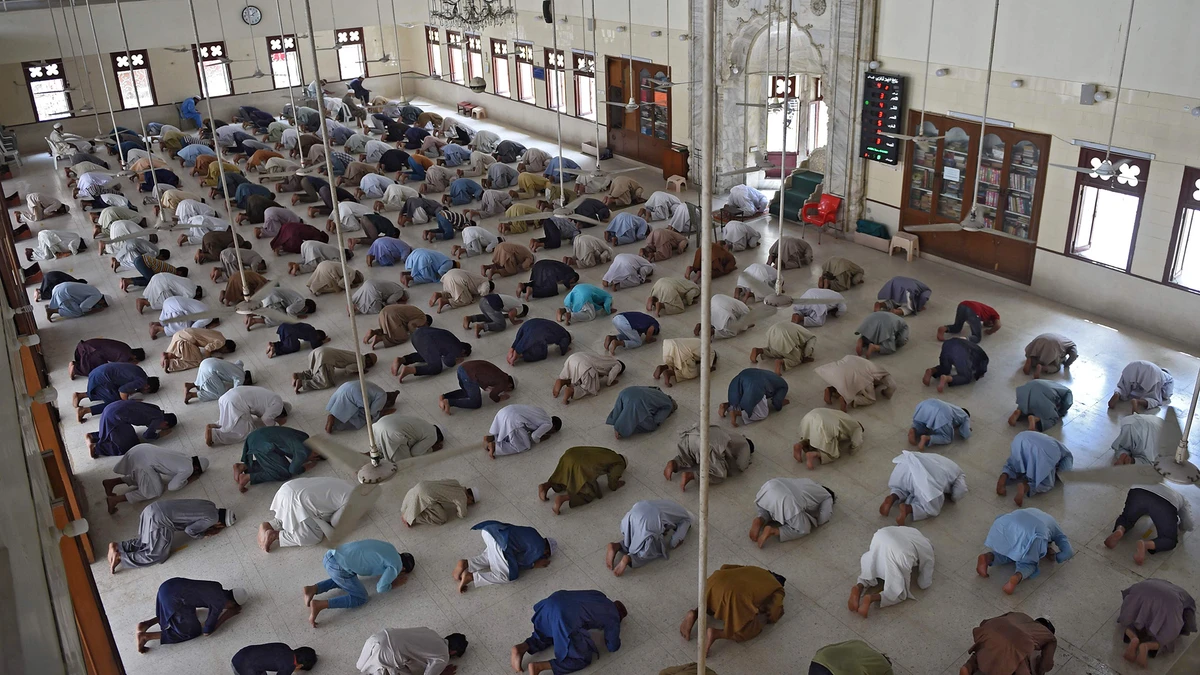
ISLAMABAD: The government’s decision to conditionally allow mass gatherings at mosques during Ramadan has triggered concerns among Pakistan’s medical fraternity, whose members warn it may jeopardize the country’s response to the coronavirus outbreak.
The fasting period, which is rooted in gathering at mosques, homes and on the streets, begins at the end of this week. It is likely to be different this year, as amid the COVID-19 pandemic countries are observing special precautionary measures that require social distancing.
In Pakistan, however, despite public health fears, attendance during Ramadan gatherings is expected to be high, especially for evening prayers, which according to medical experts may exacerbate the spread of the virus.
Dr. Qaiser Sajjad, secretary general of Pakistan Medical Association (PMA), told Arab News that the country’s medical fraternity fears the number of COVID-19 cases would rise.
“PMA is concerned about the situation and we are worried that virus cases could go up because of mass gatherings. We can only wish the people will follow precautionary measures,” he said, adding that Prime Minister Imran Khan himself warned that virus cases can go up by mid-May.
“If the two holy mosques, in Makkah and Madina, can extend the suspension of prayers during Ramadan, why not Pakistan?” he said, adding that social distancing and isolation have proven critical to slowing the spread of the disease.
After a meeting between Pakistani President Arif Alvi and religious leaders on April 18, the government decided to lift restrictions on the size of congregations during Ramadan and implement a 20-point standard operating procedure (SOP) to prevent the spread of the infection.
“To violate this SOP will be like a sin as all ulema and mashaikh (religious and spiritual leaders) have agreed on it. We must keep in mind that (when you don’t follow measures) you commit a sin as you infect another person,” Alvi said after the meeting.
In accordance with the procedures, mosques will have to remove carpets and clean the floors. People over 50 years of age and children would not be allowed to enter.
It was also agreed that gatherings would follow a recommendation by the World Health Organization (WHO) for people to keep a distance of 6-feet from each other, but its implementation may pose a major challenge.
Pakistan Ulema Council (PUC) chairman Hafiz Tahir Mehmood Ashrafi told Arab News that it would be the responsibility of the government and religious leaders to ensure that safety measures are observed.
“If clerics notice any violation of the agreed standard operating procedure, they should immediately report it to the government,” Ashrafi said, adding that PUC will support the authorities against violators.
He said that many religious leaders will offer taraweeh prayers at their homes to set an example for worshippers.
“People should also follow preventive measures against the coronavirus,” he said, warning that irresponsible conduct result in mosque lockdowns.
PM Khan on Tuesday warned that if precautions at mosques are not followed during Ramadan, the government may review its decision on allowing congregational prayers.
“I urge people to pray at home but if they want to go to mosques, they will have to follow these agreed guidelines,” the prime minister said in televised address.
Council of Islamic Ideology (CII) chairman Dr. Qibla Ayaz told Arab News the CII had started advocating worship from home already several weeks ago.
“In its recommendations issued on April 2 and April 9, CII asked people to offer prayer at their homes,” he said, adding that after President Alvi’s meeting with religious leaders, it is now the responsibility of clerics to ensure the implementation of the government’s safety guidelines.
“Of course, this will be a challenge,” he added.
One of the religious scholars who participated in the meeting with President Alvi, Maulana Hanif Jalandhari, said in a video message after the meeting that the implementation of the agreed precautions was a “national and religious responsibility.”
Religious authorities in other Muslim countries are also recommending that prayers be offered at home.
“It has been established that Prophet Muhammad performed these prayers at home, and it is known that taraweeh is Sunnah and not obligatory. If the status quo persists, making it impossible to hold Eid prayer at mosques, people will have to pray at home and no sermon will follow the Eid prayer,” the grand mufti of Saudi Arabia, Abdul Aziz bin Abdullah Al Al-Sheikh, announced on April 17.
Restrictions on mosque gatherings, especially for Friday prayers, have been imposed by provincial governments in Pakistan since the virus outbreak, allowing no more than five people to be present during congregations. But the measures have provoked a backlash in the country and police officers trying to enforce them faced mob attacks.
A sharp increase in coronavirus related deaths was been recorded in Pakistan this week. More than 200 people have succumbed to the disease, while over 10,000 infection cases have been recorded as of Wednesday.