- North Waziristan district has reported all eight polio cases this year, where only 1% vaccinators are women
- Experts urge government to allocate funds for awareness campaigns, improved hygiene of people countrywide
ISLAMABAD: Pakistan’s polio eradication campaign has hit a snag after a recent outbreak of the disease in one of the country’s northwestern tribal districts bordering Afghanistan, which health officials have blamed on vaccine refusal, falsification of records and a lack of women vaccinators in the area.
The outbreak in North Waziristan district, after the first polio case of 2022 was registered in April, is a blow to the South Asian nation’s efforts to eradicate the disease, which can cause severe paralysis in children. A total of eight polio cases have so far been reported in the district after a hiatus of nearly 15 months. The country reported its only polio case of 2021 in the month of January.
Pakistan has been struggling to abolish the crippling disease with a surveillance network of around 340,000 trained and dedicated polio workers. For the first time, health authorities succeeded in containing the virus for nearly 15 months, but the latest outbreak has dashed the hopes of its eradication anytime soon.
“Vaccine refusal, connivance of polio inoculation teams with parents to falsify record and a lack of women vaccinators in the tribal region are among major reasons behind the current outbreak,” Dr Shahzad Baig, a coordinator for the National Emergency Operations Centre for Polio Eradication, told Arab News in interview on Sunday.
He said all eight cases were detected within a radius of 15 kilometers in North Waziristan as polio inoculation teams connived with parents to use fake vaccination markings.
“We aren’t surprised as the virus was already being detected in environmental samples of southern Khyber Pakhtunkhwa province,” he said, adding the virus was detected in environmental samples at least six times in 15 months, but no new wild poliovirus case was detected in children.
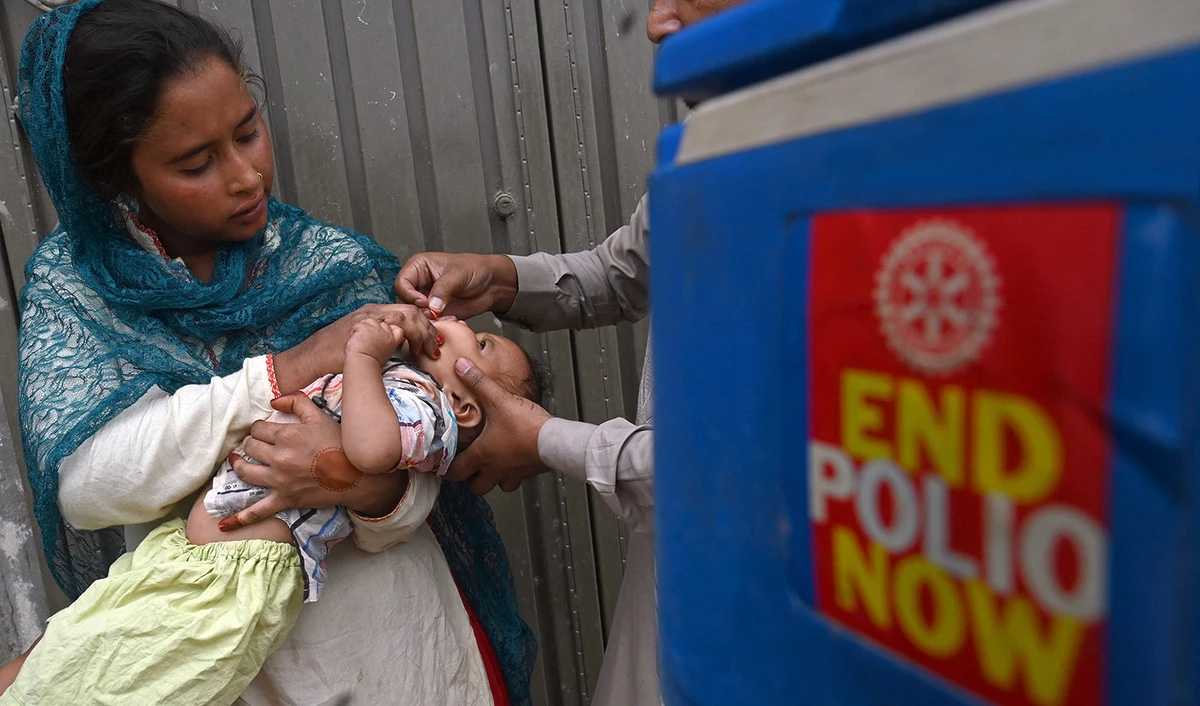
Polio vaccinators during a door-to-door campaign mark finger of a child with an indelible ink to show they have been vaccinated. A government investigation has found that parents opposed to the vaccine were using fake markers on their children’s fingers to avoid inoculation.
“Unfortunately, an uncle of one of the children, who is now paralyzed, was involved in fake marking and falsifying the official record,” Baig said. “We have terminated around two hundred vaccinators in North Waziristan for their involvement in the fraud.”
Pakistan and Afghanistan are the only two countries in the world where polio still paralyzes children, despite years of intensive eradication campaigns. Islamabad has carried out two nationwide polio vaccination campaigns in March and May. Another vaccination drive is scheduled to start on July 27, with an aim to vaccinate at least 22 million children.
The South Asian country reported 147 wild poliovirus cases in 2019, 84 in 2020, one in 2021 and eight in 2022 so far, according to the national tally. A country is declared polio-free if no new case is reported for three consecutive years in the presence of high-quality surveillance systems.
Speaking about the biggest challenge in inoculation, the polio eradication coordinator said only one percent of all polio teams would comprise women in North Waziristan, making it “extremely difficult” to access children in the conservative tribal region.
Baig said security in the region was another problem as polio vaccination teams routinely come under attack in the area, where a large segment of society believes the vaccine was not safe or part of a United States (US) scheme to spy on them and harm their fertility.
At least 50 workers, including 34 vaccinators and 16 law enforcement personnel, have so far been killed by militants during vaccination campaigns across the country, he said.
“The good news is that the virus is contained in southern Khyber Pakhtunkhwa and it is not spreading to other parts of the country,” he said. “We have devised a multipronged strategy, including the community involvement, to curb it.”
Experts have urged the government to carry out massive awareness campaigns across Pakistan, especially in the tribal regions, about benefits of the polio vaccine and dispel misconceptions about it.
“The latest polio outbreak needs to be taken seriously and the government should use every available resource to address its causes,” Dr Qaiser Sajjad, secretary-general of the Pakistan Medical Association, told Arab News.
Sajjad said the government should allocate funds to upgrade sanitation and hygiene of people across the country to curb polio and other diseases.
“The involvement of clerics, politicians and celebrities could be useful in addressing misconceptions surrounding the polio vaccine,” he added.