- Coronavirus positivity rate 21 percent in Karachi east, 16 percent in Karachi South, 10 percent in central Karachi, 11 percent in Hyderabad city
- First batch of CanSino vaccine being processed at National Institute of Health, would be available for administration end May
KARACHI: The chief minister of Sindh said on Monday half the number of COVID-19 cases in Pakistan were reported in the southern province, imposing an 8pm curfew and a ban on “unnecessary movement” in the evenings.
The coronavirus positivity ratio was 21 percent in Karachi east on Monday, 16 percent in Karachi South, 10 percent in central Karachi and 11 percent in the city of Hyderabad. Sindh has reported 309,647 infections since the pandemic began in February last year, with 4,920 deaths.
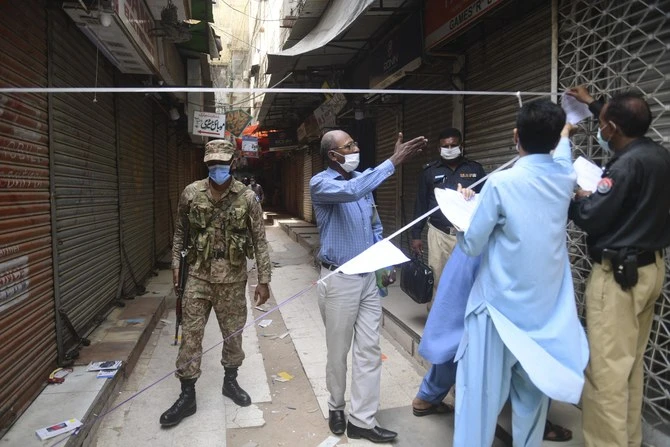
“Citizens will not be allowed to go outside the home unnecessarily after 8pm from tomorrow,” a spokesperson for the chief minister said after a meeting of the provincial task force on coronavirus. “Chief minister has directed the inspector general of police to stop people from roaming unnecessarily,” he said, adding that visits to the hospitals and other “necessary work” would be exempt from the ban.
A notification detailing decisions of the provincial task force said public transport would be allowed at 50 percent capacity and strict adherence to standard operating procedures would be ensured, including wearing masks in public.
Marriage halls, businesses centers and expo halls will remain closed whereas all contact sports, indoor gyms, sports facilities, sporting tournaments, theme and amusement parks, and arcades would also remain shut. Tourist spots, beauty salons, cinemas and theaters, shrines and all types of indoor and outdoor gatherings would be prohibited.
All educational institutions will also remain closed for another two two weeks, until further notice, the statement said.
Meanwhile, the Ministry of National Health Services said the first batch of China’s single-dose CanSino COVID-19 vaccine would be available for administration to citizens by the end of this month after quality control checks.
According to state-run Radio Pakistan, the CanSino vaccine was being processed at a National Institute of Health plant set up for this purpose last month. The report said due to an agreement on technology transfer with China, the National Institute of Health would be able to produce three million doses per month, which would significantly reduce the country’s dependence on other countries for vaccines.