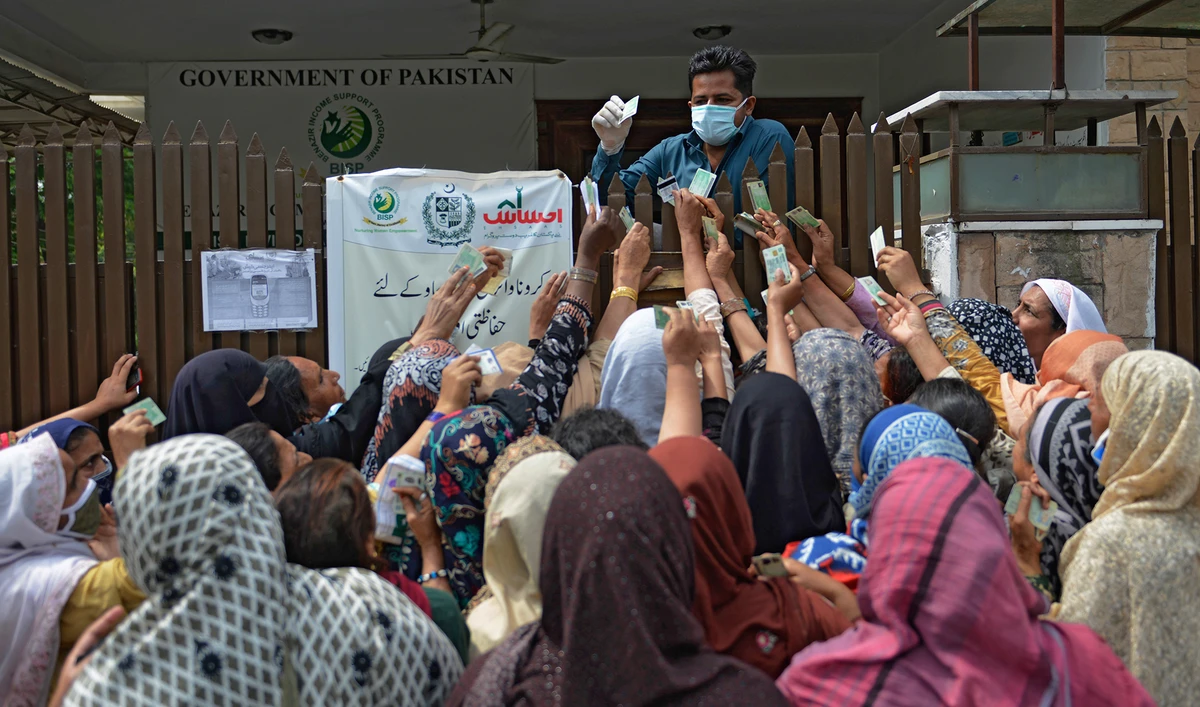
- The provincial government has earmarked $62 million for the underprivileged as no Ramadan bazaar was set up this year
- Price committees at district level are tasked to ensure sale of all essential items on the officially notified rates
ISLAMABAD: The provincial administration of Punjab plans to disburse cash handouts among 2.5 million families starting Monday to help them beat unemployment and inflation during the coronavirus lockdown, officials said Saturday.
The provincial government has earmarked $62 million [10 billion rupees] for poor families as Ramadan package to help them during the Muslim fasting month when prices of essential food items usually escalate due to the rising demand.
“We are starting this program to help families which may not be able to afford basic necessities during the holy month,” Musarrat Cheema, a Punjab government spokesperson, told Arab News on Saturday.
Under the program, each deserving family will get $25 [4,000 rupees] after a careful scrutiny of their income sources and assets. Punjab is Pakistan’s richest and most populous province with 110 million people.
The provincial government used to set up Ramadan bazaars during the holy month to provide people with subsidized essential food items including sugar, cooking oil, wheat flour, vegetables, dates and fruits. But this time the government has decided to directly disburse the amount among poor families to avoid huge crowds in the government-sanctioned subsidized markets.
“This cash handout program will help the poor meet food demand while the government is doing its best to ensure social distancing everywhere including marketplaces,” Cheema said. “No Ramadan bazaar is established anywhere in the province.”
She said the government was planning more relief packages for the poor as laborers and daily wage earners were hit hard by the lockdown which started last month to prevent the spread of the virus.
“The government is utilizing all its resources to help the people in this difficult time,” she said while urging the public to stay and pray at home to stem the spread of COVID-19.
Pakistan has reported over 12,000 coronavirus cases and 256 related deaths since February 26 when the country reported its first case. The country has witnessed a spike in the number of cases in recent days with 79 percent of them locally transmitted.
Muhammad Waheed, a laborer, said the government should have disbursed these funds before the arrival of Ramadan so that poor families could buy things for their children. “I’m unemployed for the last one month, and the government aid is yet to come,” he said.
Waheed added the prices of fruits and vegetables had almost doubled in open markets ahead of Ramadan. “This is a difficult time and we obviously look toward the government for help,” he said, urging the authorities to ensure the provision of cash handouts as early as possible.
Meanwhile, the federal government has started a $15.5 million [2.5 billion rupees] Ramadan relief package through the Utility Stores Corporation where people can buy at least 18 food and non-food items on subsidized rates.
There are over 4,000 utility stores operating across the country to provide “graded and unadulterated” essential items including cooking oil, rice, wheat flour, spices, lentils, sugar, milk and dates.
The Punjab government has also been working with the management of utility stores to ensure smooth supply and provision of all the subsidized items to the public.
“We have also constituted price committees at district level to ensure sale of all food items on the government notified rates,” Cheema said. “Heavy fines will be imposed on shopkeepers if they are found selling things on exorbitant rates.”