- A joint session of Pakistan parliament approved NAB (Second Amendment) Bill 2021 this month
- Procedurally, a bill is approved after president does not sign it within 10 days after joint session
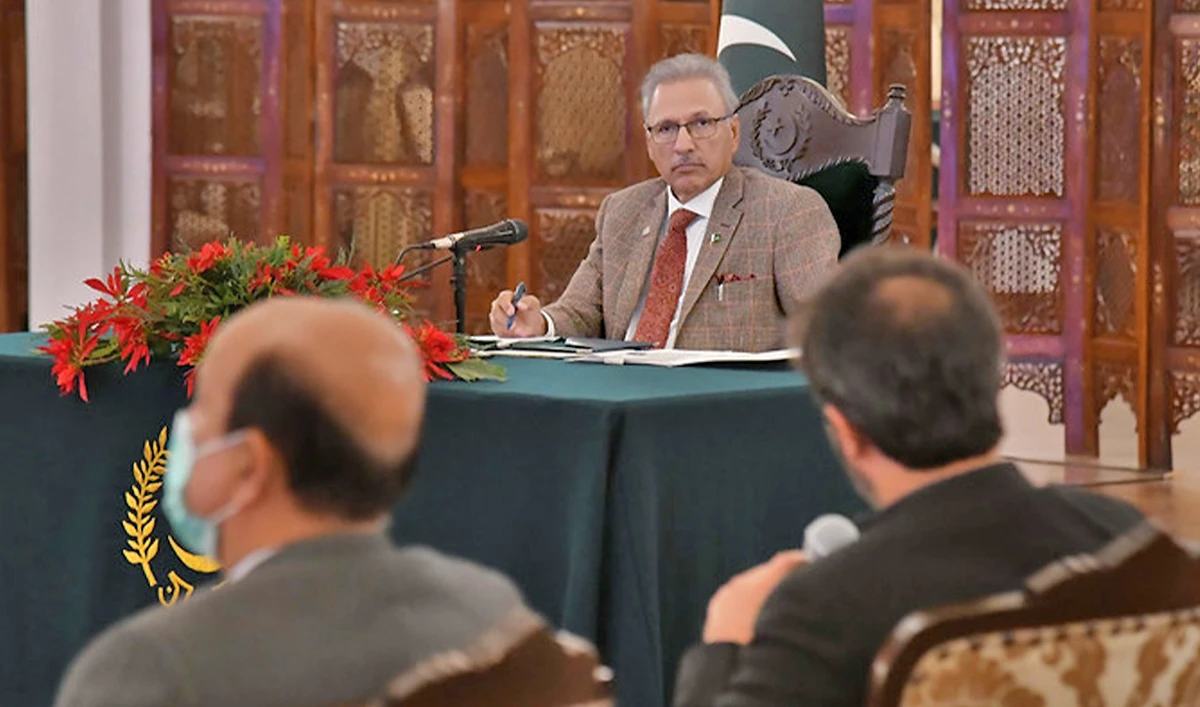
ISLAMABAD: Pakistan’s President Dr. Arif Alvi on Monday refused to sign a draft legislation seeking to amend the country’s accountability laws, saying it was “regressive” in its nature.
The NAB (Second Amendment) Bill 2021, passed by both houses of Pakistan parliament in May, states that all “pending inquiries, investigations, trials or proceedings under this ordinance, relating to persons or transactions... shall stand transferred to the authorities, departments and courts concerned under the respective laws.”
It restricts the country’s anti-corruption watchdog, the National Accountability Bureau (NAB) from acting on federal, provincial or local tax matters and removes regulatory bodies from NAB’s domain. The bill reduces the four-year term of the NAB chairman and prosecutor-general to three years, sets a three-year term for judges of accountability courts, and makes it mandatory for them to decide a case within a year.
After its passage from parliament, the legislation was sent to the president for approval, but he returned the bill on June 4. The government of Prime Minister Shehbaz Sharif then convened a joint parliamentary sitting on June 9, which cleared the legislation and it was again sent to the president.
But the president once again returned the bill on Monday, saying it was “regressive in nature” and would “promote corruption.”
“I believe the Bill as passed by the Parliament is regressive in nature, it will promote corruption by ensuring that the long arm of the law has been crippled,” the president said in a statement issued from his office.
“It is also a message to the corrupt who have amassed tremendous wealth, of which there is no doubt in the minds of the people of Pakistan, that they are not accountable and are free to continue to plunder.”
According to rules, if the president does not give his approval to a bill passed by a joint parliamentary session within 10 days, it is deemed to have been approved.
The president said the enactment of these amendments was like “demolishing the process of accountability” without an alternate system being in place, making it sterile and allowing extractive institutions and practices to prosper.
“Weak laws such as this one, create a facade of justice that blatantly hides a corrupt elite capture, and nations that accommodate such laws ensure a very damaging exploitation of the common man, perpetuating an unjust society,” he added.
Former PM Imran Khan, the chairman of the Pakistan Tehreek-e-Insaf (PTI) party which Alvi is also a member of, termed Monday a “Black Day in Pakistan’s history,” when the amended laws put an end to the process of accountability in the country.
“Our Prophet PBUH had said societies are destroyed when the poor are jailed while the rich are not held accountable,” he said on Twitter.
“Today, with this one amended NAB law we are heading toward destruction by removing white collar criminals from accountability.”