- Government extends lockdown until May 9 to curb steady increase in COVID-19 disease
- Pakistan to launch ‘track and trace system’ to identify coronavirus cases with ISI help
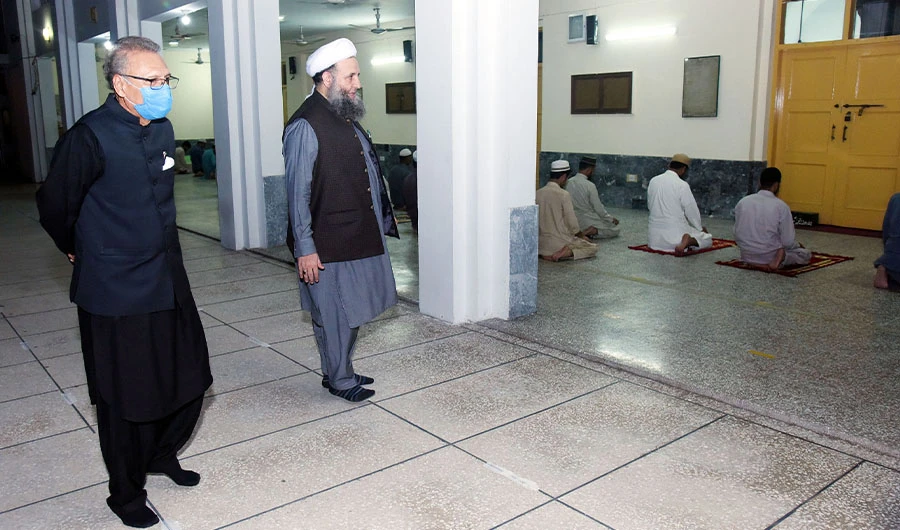
ISLAMABAD: President Arif Alvi visited different mosques in Islamabad to examine the safety measures adopted by the authorities for the protection of worshippers as people congregated across the country to welcome the Muslim fasting month of Ramadan by offering Taraweeh prayers on Friday night.
Accompanied by the country’s religious affairs minister, Pir Noor-ul-Haq Qadri, Alvi expressed his satisfaction with the arrangements made by managements of the mosques to prevent the spread of coronavirus and ensure the safety of people.
According to Radio Pakistan, he requested all citizens to “strictly follow the precautionary measures being communicated by the government.”
The people of Pakistan started fasting on Saturday since the new moon was not sighted on Thursday evening.
Many of them believe that Ramadan this year is going to be different. Although Muslims will continue to celebrate it, their daily gatherings at mosques, homes and on the streets are going to be very limited, as the fasting month will be observed under lockdowns, which governments around the world are imposing in attempts to curb the coronavirus disease (COVID-19) outbreak.
Strict controls on congregations were in place in Pakistan as well, but last week the government ceded to pressure from religious leaders and eased restrictions on mosques by conditionally allowing Taraweeh and other congregational prayers.
Worshippers will be required to stay 6 feet apart, but Pakistani doctors warn the relaxation will exacerbate the spread of the virus in the coming days.
Dr. Qaiser Sajjad, secretary-general of the Pakistan Medical Association (PMA), told Arab News: “The PMA is concerned about the situation and we are worried that virus cases could go up because of mass gatherings. If the Two Holy Mosques in Makkah and Madinah can suspend congregational prayers, why can’t we do the same in Pakistan?”
While the government appears to have second thoughts, with Religious Affairs Minister warning that if mosques do not adhere to agreed precautionary measures, the decision to allow prayers may be revoked, some provincial authorities appear to be more proactive.
On Friday, Sindh province banned communal prayers altogether, heeding the advice of doctors.
“The Sindh government has decided people should offer Taraweeh prayers at home,” Sindh chief minister Murad Ali Shah said in a video message broadcast on local television stations on Friday.
“Our hospitals are overwhelmed with patient inflows; we don’t want our health system to collapse,” he said.
The country’s National Coordination Committee also decided on Friday to extend the lockdown until May 9 to curb a steady increase in the COVID-19 disease. Other than that, it also announced to launch a “track and trace system” to identify individuals suffering from the debilitating illness with the help of its top spy agency, Inter-Services Intelligence, starting today.
Pakistan, the world’s second most populous Muslim country after Indonesia, has reported about 12,000 cases of the coronavirus and over 250 related deaths. Both the government and experts say the peak for infections is expected to hit in May.