- Calls the current Hindu nationalist government in New Delhi Nazi-inspired in a wide-ranging interview with a German publication
- Says there is more freedom of speech in Pakistan than ‘almost any Western country,’ adding that criticism based on ‘truth and facts’ is accepted
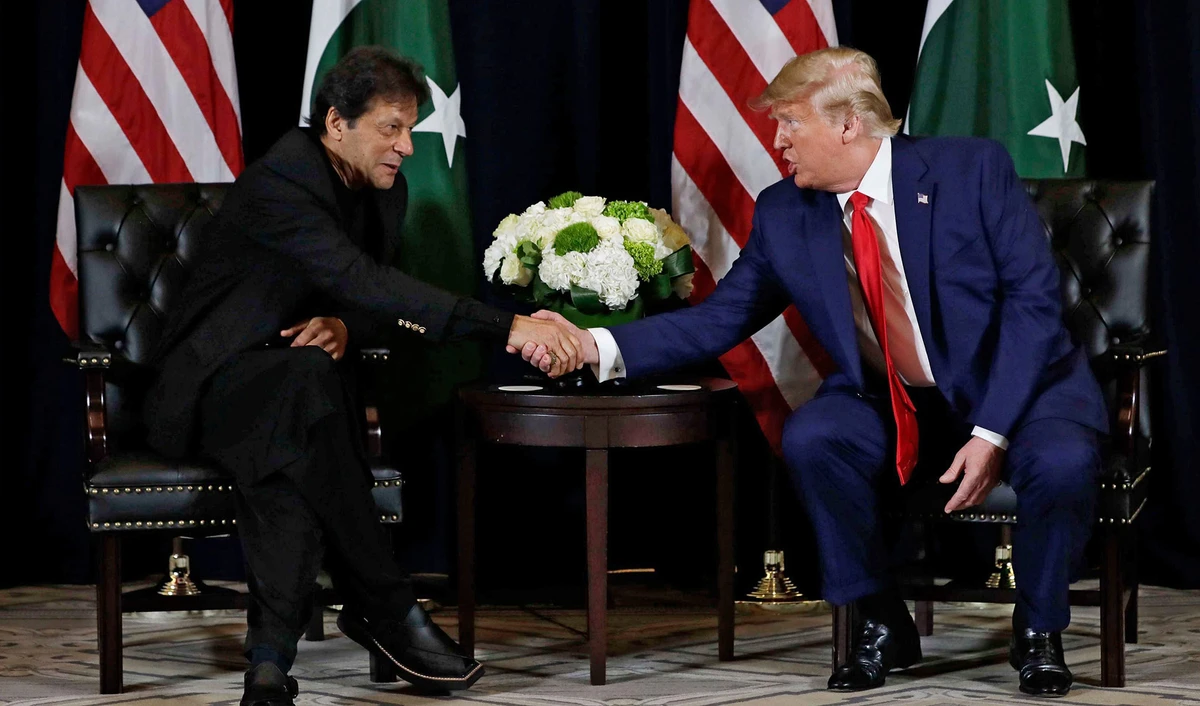
ISLAMABAD: Pakistan expected an “evenhanded treatment” from the United States with respect to India, said Prime Minister Imran Khan in a wide-ranging interview that appeared in a German publication on Friday, adding that the Kashmir dispute needed international attention since the region was a hotspot that could flare up at any time.
“The US thinks India will contain China, which is a completely flawed premise. India is a threat to its neighbors, to China, Bangladesh, Sri Lanka and to us. It has the most extremist, racist government on the subcontinent. It is a fascist state, inspired by the Nazis in the 1920s and ‘30s,” he told Der Spiegel.
Asked if he was drawing an “extreme comparison,” Khan mentioned the writings of the Rashtriya Swayamsevak Sangh (RSS), “the intellectual forerunner of Prime Minister Narendra Modi’s party.”
“They openly admired Hitler,” he continued. “The Nazis wanted to get rid of the Jews. The RSS wanted to rid India of the Muslims.”
The prime minister said he admired China’s governance model since it had helped Beijing take 700 million people out of poverty within a span of 40 years.
“This is the model I want to emulate in Pakistan,” he continued. “Despite not having electoral politics, they are good at bringing the best people to the top in their country. It’s a system based on meritocracy.”
He also noted that Beijing had put 450 ministerial level officials in jail on corruption charges.
“Countries aren’t poor because of a lack of resources,” he said. “It’s because of corruption among the leadership.”
Discussing his recent meetings with Afghan politicians, Khan said that Pakistan did not have any favorites in the war-torn country.
“Our only interest is that the future government in Kabul does not allow India to operate from there against Pakistan,” he added.
Reflecting on the changing nature of the Arab-Israeli conflict, he pointed out that every country had its own foreign policy priorities.
“As for Pakistan, the founder of the nation, Muhammed Ali Jinnah, a brilliant man, spoke in the 1940s about the Palestinian situation as a huge violation of human rights,” he said. “Pakistan still takes this view. Unless there’s a just settlement [of the Palestine issue], we cannot recognize Israel.”
Asked about his government’s decision to introduce laws prohibiting criticism of the country’s powerful military, the prime minister said there was more freedom of speech in Pakistan “than almost any Western country,” and all criticism “based on truth and facts” was accepted.
“There will be another way of dealing with the security forces – not through the media, but through the government,” he added. “I will speak to the army chief if I think there’s something wrong. There are always human rights violations in military operations and sometimes we speak about it when it happens. But this should not be done in public. When soldiers are risking their lives, you cannot demoralize them in public.”