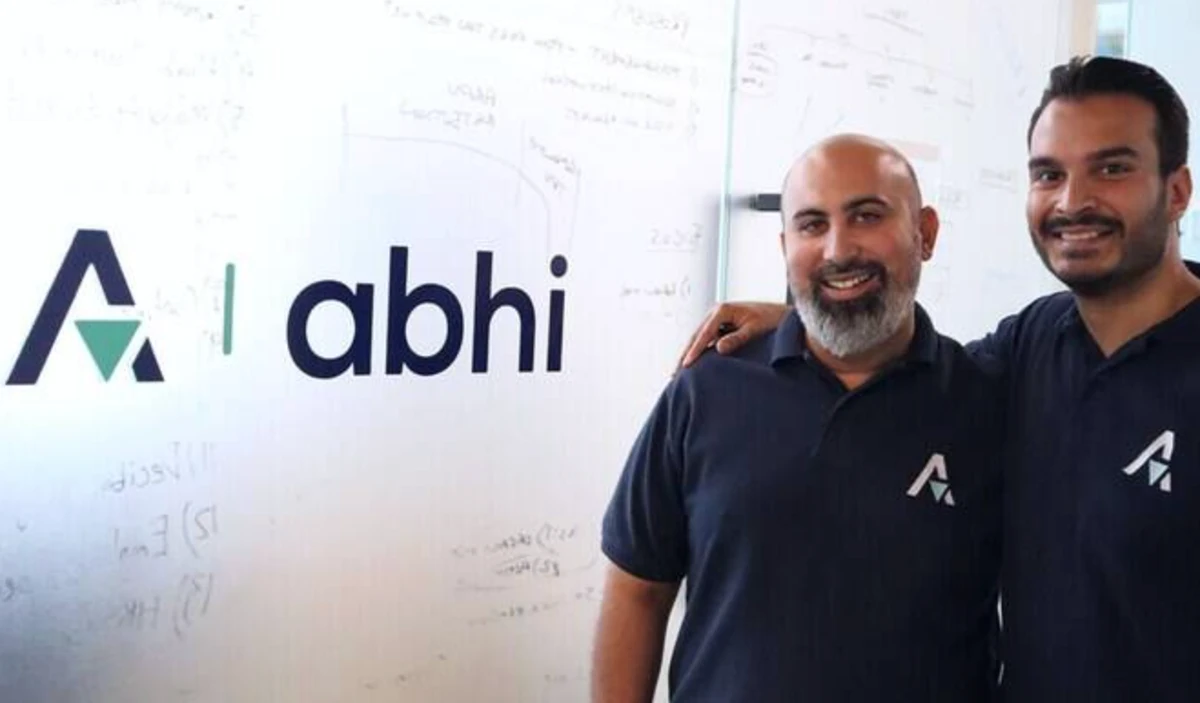
- Certification covers earned-wage product allowing workers to access salaries before payday
- Fintech entered Kingdom in 2024 through partnership providing access to $200 million for Saudi expansion
ISLAMABAD: Pakistan-founded fintech ABHI has secured Shariah certification for its flagship earned-wage access product from a Saudi-based advisory body, the company said on Tuesday, as it expands its financial services business in the Kingdom.
The approval by the Shariah Committee of Badiha Company covers ABHI’s Earned Wage Access, or EWA, service, which allows employees to access part of wages they have already earned before their regular payday rather than taking a conventional short-term loan.
The certification marks another step in ABHI’s expansion into Saudi Arabia, where it entered the market in 2024 through a partnership with Alraedah Digital Solutions. Under that agreement, Alraedah said it would enable access to $200 million over three years to develop financial products using ABHI’s technology and adapted for the Saudi market.
ABHI has since signed a series of agreements to provide earned-wage services to employees of Saudi businesses, including Qlub, QBS, Alruqee Group, Squadio, Syarah, TAM Aerospace and NOX Group, as it builds a presence in one of the Middle East’s fastest-growing financial technology markets.
“The approval reflects the alignment of Abhi’s Early Wage Access solution with Shariah principles and reinforces the company’s focus on building financial products that combine technology, accessibility, and responsible financial practices,” ABHI said in a statement.
Founded in Pakistan in 2021, ABHI initially built its business around earned-wage access, allowing salaried employees to withdraw part of their accrued earnings through employer-linked digital platforms instead of waiting for the monthly salary cycle.
It has subsequently expanded into payroll processing, payroll financing and financing for small and medium-sized enterprises, and now operates across Pakistan, Saudi Arabia, the UAE and Oman. The company says it serves more than one million users and works with over 7,000 businesses across the region.
Its expansion comes as Saudi Arabia is seeking to develop into a global fintech hub under its Vision 2030 diversification program, with the number of fintech companies rising from 82 in 2022 to 281 by August 2025, according to the Saudi Central Bank.
The Kingdom aims to have 525 fintech companies by 2030, while the sector had attracted more than SR8.9 billion ($2.37 billion) in cumulative investment by July 2025.
For ABHI, the Shariah approval potentially broadens the appeal of a product around which it has built much of its Saudi expansion. Earned-wage access differs from a conventional payday loan because employees are accessing income already accrued during the salary period rather than borrowing against future earnings.
ABHI’s Saudi website says eligible employees whose employers are registered with Alraedah can use its application to access earned salaries before payday.
The company has accelerated the rollout this year. In April, it partnered with Qlub to provide EWA to its employees, followed by agreements with QBS in May, Squadio and Syarah in June and TAM Aerospace in July.
Last week, ABHI announced a partnership with Saudi-based NOX Group to provide its employees with the same service, saying the agreement was part of its broader expansion across Gulf financial services markets.
ABHI has also expanded beyond fintech services in its home market. Together with TPL Corp, it acquired a controlling stake in FINCA Microfinance Bank Pakistan, subsequently renamed ABHI Microfinance Bank, giving the company a regulated banking platform alongside its technology business.
The fintech’s growing Saudi business reflects a wider push by Pakistani technology companies to tap Gulf markets for capital and customers, while Saudi Arabia seeks international technology partners as it diversifies its economy away from oil.