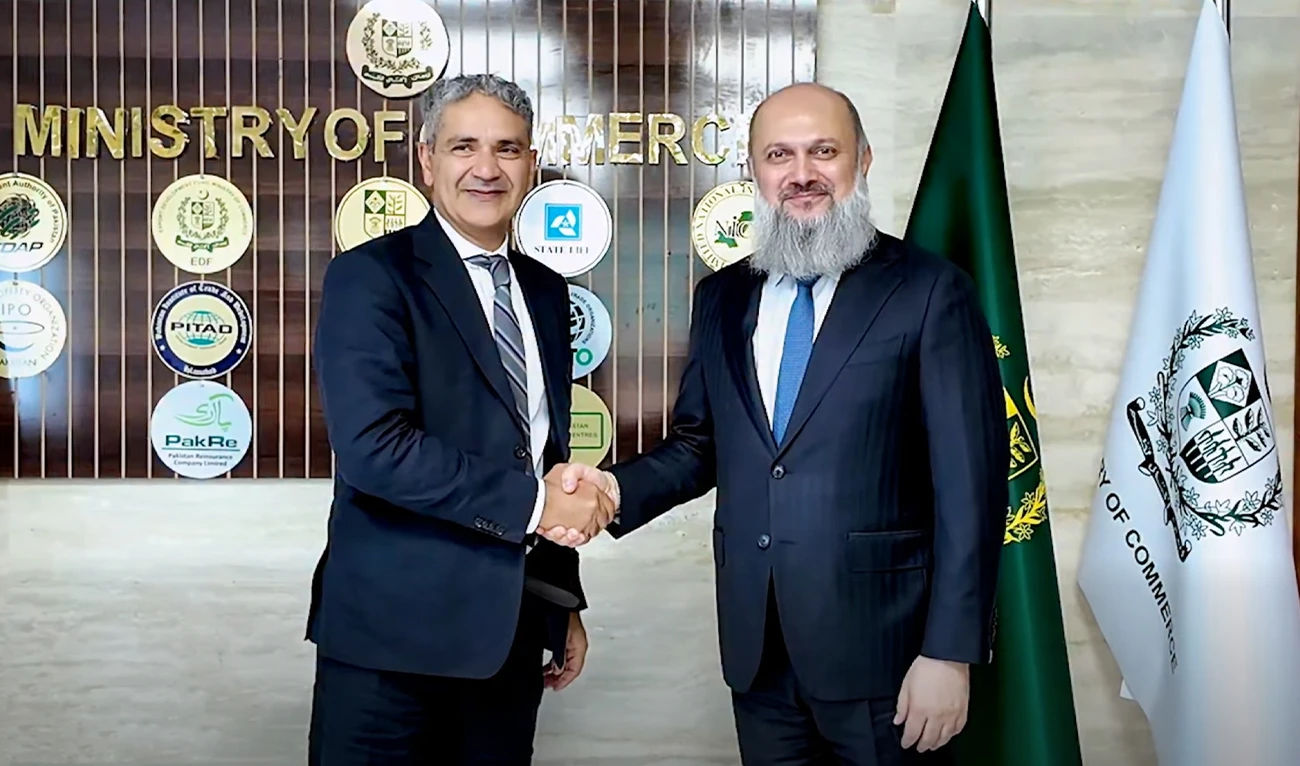
A high-level Saudi delegation led by Minister of Environment, Water and Agriculture Abdulrahman Al-Fadley visited Islamabad late last month and the two sides agreed to work toward $3 billion in Pakistani agricultural and food exports to the Kingdom within two years. It is an ambitious number. Rice and red meat, the two items that dominate the trade, were worth roughly $330 million last year: about 169,000 tons of rice valued at $163 million, and some 30,000 tons of red meat at $167 million. Closing that gap in 24 months is an uphill task. But the joint communiqué also listed processed foods, fruit concentrates and green fodder as priority items, and that wider range of products improves the odds.
The Special Investment Facilitation Council was set up in 2023 to attract investment from friendly countries, among them China, Turkiye and the GCC states, in sectors including agriculture, mining and information technology. The idea was to bring the federal government, the defense establishment and the provinces into a single coordinated arrangement to facilitate those investments. The SIFC has done well in IT. In corporate agriculture it has done less well, largely because of unresolved inter-provincial water disputes. The scope in quasi-agricultural fields, however, remains vast.
Export earnings help economic development, but only if they are put to work.
Javed Hafeez
Livestock is the most promising of them. A large tract of land in South Punjab was dedicated a couple of years ago to rearing beef animals, with breeds imported from Brazil, the United States and Australia, and trained staff using modern breeding methods have reported good yields. Balochistan is better suited still, for mutton production and for propagating improved breeds for export to the Gulf and to the Kingdom in particular. The province has close to 48 million head of livestock against a human population of about 15 million, including roughly 19 million sheep and 23 million goats, by far the largest small-ruminant herd in the country. Incentives for herd owners and animal-care training for them could raise mutton production in the province and enlarge Pakistan’s exportable surplus of red meat. Beef farms should also be encouraged in colder areas such as Chitral and Swat, where temperate summers and cold winters suit the imported breeds.
Pakistan is blessed with four seasons and a diverse topography, and produces both tropical and sub-tropical fruit. Large quantities of it, particularly in the northern areas, are wasted for want of market access and because of the difficulty of getting it out. The apples, pears, apricots and peaches grown there are of international standard. Two canning factories have now been set up near Gilgit and in Skardu to keep local fruit from perishing. They will be profitable for their owners, will generate local jobs, and will give growers an additional income. The GCC is a market for what they produce, and as canned fruit exports pick up, the number of factories will grow.
The plains of Punjab and Sindh produce large quantities of mango, citrus and banana. Mango pulp and citrus concentrate are exportable, and fetch better prices because of the value added. Canned fruit, pulp and concentrates can supplement the traditional exports of rice and red meat, which matters all the more because rice exports cannot be expanded indefinitely: it is a water-intensive crop.
Water is a sensitive inter-provincial issue in Pakistan. The National Water Policy of 2018 stresses the need for more dams, large and small. It also targets a 33 percent improvement in agricultural water use efficiency by 2030 through practices such as drip irrigation, bed planting and irrigating through small channels rather than flooding entire fields, which remains the norm. Increased export earnings from agricultural produce should be invested in agricultural research and in cheaper irrigation.
Processed foods are another area of promise: jams, jellies, pickles, sauces, spices and noodles. Given the purchasing power of Saudi consumers, the Kingdom is a substantial market. The SIFC is also facilitating green fodder production in Bhakkar, Khushab and Mianwali districts, where alfalfa has been introduced as a fast-growing crop with comparatively modest water needs. Fodder from these farms is intended for the Kingdom, which has a considerable number of animal and dairy farms.
Food security is an essential component of national security, and part of Pakistan’s own population is food insecure. Export earnings help economic development, but only if they are put to work. If even half of the additional revenue from this trade were plowed back into animal husbandry, food crops, fruit preservation and better irrigation, the target agreed in Islamabad last month would leave Pakistani agriculture considerably stronger than it found it, and the arrangement would be a genuine win for both countries.
Javed Hafeez is a former Pakistani diplomat with much experience of the Middle East. He writes weekly columns in Pakistani and Gulf newspapers and appears regularly on satellite TV channels as a defense and political analyst. X: @JavedHafiz8