- Afghanistan plunged into economic crisis when its Western-backed government collapsed as the Taliban took control in mid-August
- According to the UN World Food Program, 22.8 million Afghans are facing food insecurity
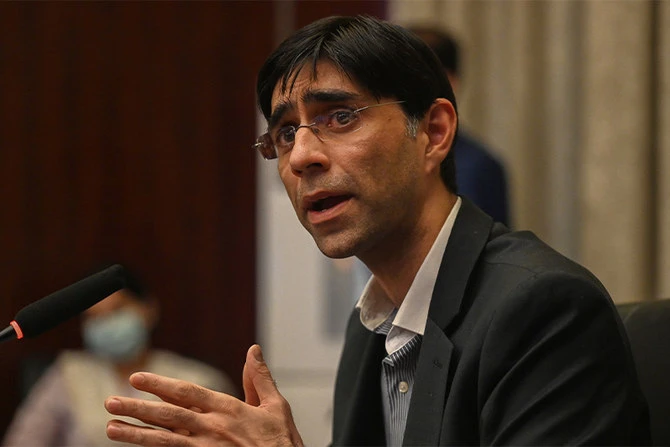
ISLAMABAD: Pakistan’s National Security Adviser Dr. Moeed Yusuf said on Tuesday humanitarian aid is exempt from sanctions, as he urged the West to release its suspended assistance to help nearly 23 million people who are at acute risk of food insecurity.
Afghanistan plunged into economic crisis when its Western-backed government collapsed and fled the country in mid-August as the Taliban took control. The takeover triggered the suspension of billions of dollars in international assistance to the war-battered country, while the US blocked Kabul’s access to nearly $10 billion in Afghan central bank assets.
As the Taliban government took office in September, the global community has been undecided on how it should reach the Afghan people without recognizing the new administration. Many figures in the Taliban cabinet, including the prime minister, the two deputy prime ministers and the foreign minister, remain on the United Nations Sanctions List.
In Afghanistan’s current economic situation and no assistance to support its aid-dependent economy, 22.8 million Afghans are facing food insecurity, according to the UN World Food Program.
In a Tuesday night interview with CNN, Yusuf said helping these people is beyond politics and the West should engage with the Taliban to solve the issue and allow banks to push money through.
“Humanitarian assistance is already exempt from any sanctions,” Yusuf said, adding that delivering aid had nothing to do with the Taliban government.
“This money is going to go to international organizations who are directly going to feed and support the average Afghan woman and man who we all professed to be wanting to protect.”
He cited Pakistan’s own decision to go beyond political divides as its cabinet on Tuesday granted permission to arch-rival India to use its land route to ship wheat aid to neighboring Afghanistan.
“The world has to focus on getting humanitarian assistance in for the sake of 35 to 40 million Afghans who are going to suffer,” Yusuf said.
In late September, the Taliban appealed to the international community to disburse aid on urgent basis as harsher winter months are fast approaching. Afghanistan’s permanent representative-designate to the UN and former Taliban spokesman, Suhail Shaheen, said they are “ready to fully cooperate” through designated organizations.
Pakistan has been calling on the international community to engage with the new Afghan government. While Islamabad has not formally recognized the Taliban as Afghanistan’s legitimate rulers it is among a handful of countries that have retained diplomatic presence in Kabul.
“Pakistan has constantly led regional diplomacy and said that we need to have a regional and international consensus on how to move forward,” Yusuf told CNN. “We want to make sure there is direct conversation.”