- The International Court of Justice will craft an advisory opinion to provide clarity on international law with regards to climate change
- But critics say the opinion, expected to take months, will lack teeth as it is non-binding upon states and has no means of enforcement
ISLAMABAD: Pakistan has urged global cooperation to mitigate the negative impacts of climate change at historic hearings at the United Nations (UN) top court in The Hague in a case concerning advisory opinion on the obligations of states, the Pakistani foreign office said on Tuesday.
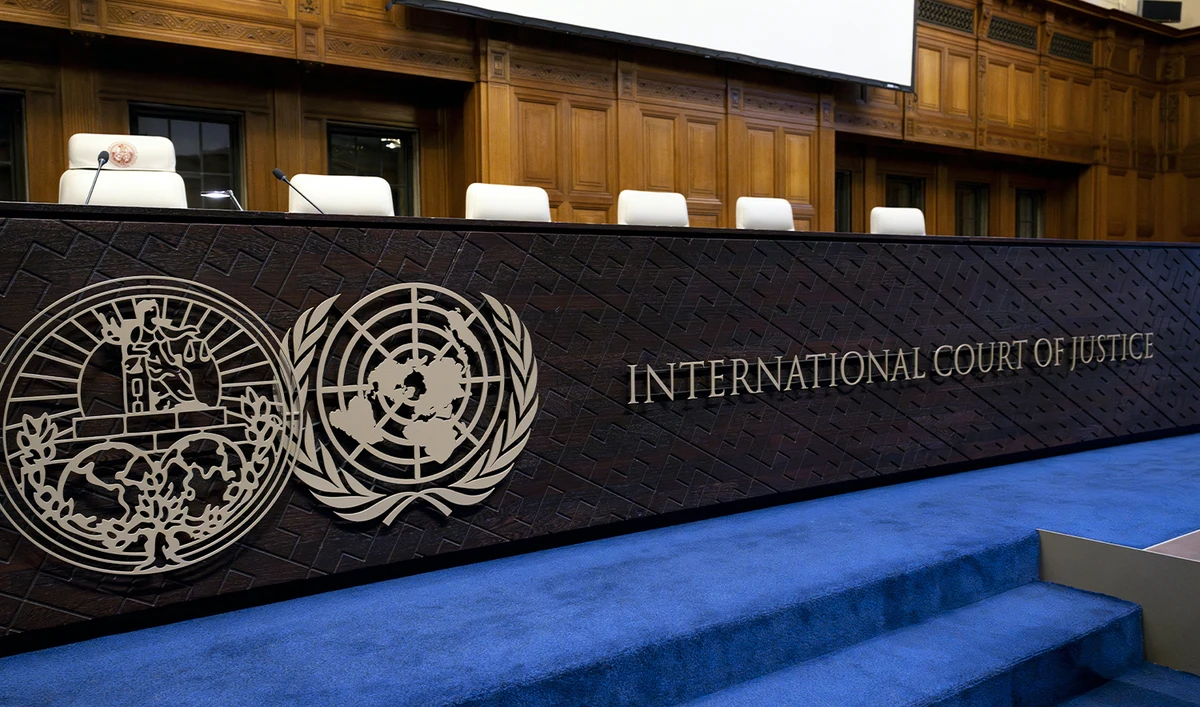
The hearings, opened this month at the International Court of Justice (ICJ), broadly concern the obligations of states with respect to climate change and their legal consequences. The advisory opinion, which will provide clarity on international law with regards to climate change, may in turn influence any multilateral processes involving climate action.
The development comes weeks after several countries, including Pakistan, took turns rejecting a new but vague draft text which attempted to form the spine of any deal reached at the UN climate talks, or COP29, on money for developing countries to transition to clean energy after the draft failed to detail how much wealthy nations would pay to poor countries.
Pakistan, one of more than 100 countries and organizations at the UN top court, was represented by Attorney-General Mansoor Usman Awan, who highlighted the South Asian country’s vulnerability to climate change at the hearings initiated as a follow-up to a resolution passed by the UN General Assembly in March 2023.
“It [Pakistan’s presentation] underscored the need for international cooperation to mitigate the negative impacts of climate change, based on the established principles of Equity and Common But Differentiated Responsibilities and Respective Capabilities,” the Pakistani foreign office said in a statement.
“Pakistan’s participation in these proceedings demonstrates its strong commitment to continue working with the international community to address the challenge of climate change.”
Pakistan is ranked as the 5th most vulnerable country to climate change, according to the Global Climate Risk Index. In 2022, devastating floods affected over 33 million people and caused economic losses exceeding $30 billion, highlighting the country’s high susceptibility to extreme weather events.
Due to rising temperatures, extreme climatic phenomena, including droughts, cyclones and heatwaves, have been occurring more frequently and with greater intensity across the South Asian country, which is one of the most severely threatened nations especially in the context of its dependency on climate-sensitive sectors such as agriculture, water, natural resources and the environment, and socio-economic issues such as poverty
Critics say the advisory opinion, which is expected to take months to finalize, will lack teeth as it is non-binding upon states and there is no means of enforcement, while others hope the ICJ will lay down a legal precedent that will influence domestic climate legislation and litigation.
Negotiators at last month’s UN climate talks in Baku tried to close the gap between the $1.3 trillion the developing world says is needed in climate finance, but poor nations blasted both rich nations and the host Azerbaijan presidency for a “completely unbalanced” deal.
“We would like to correct the balance. It is completely tilted,” Pakistan delegate Romina Khurshid Alam said.