- The Competition Commission of Pakistan’s system uses AI, advanced data analysis to detect cartels in public procurement
- The system will help screen large procurement volumes and corporate data, identify high-risk tenders and generate leads
ISLAMABAD: Pakistan plans to deploy artificial intelligence (AI) as part of efforts to curb bid rigging, authorities said on Monday, as Islamabad aims to strengthen competition, improve transparency and ensure fairer procurement processes.
Bid rigging occurs when companies collude to manipulate the outcome of competitive bidding processes, often by agreeing on prices or deciding in advance which bidder will win. Such practices undermine fair competition, inflate procurement costs and limit opportunities for businesses.
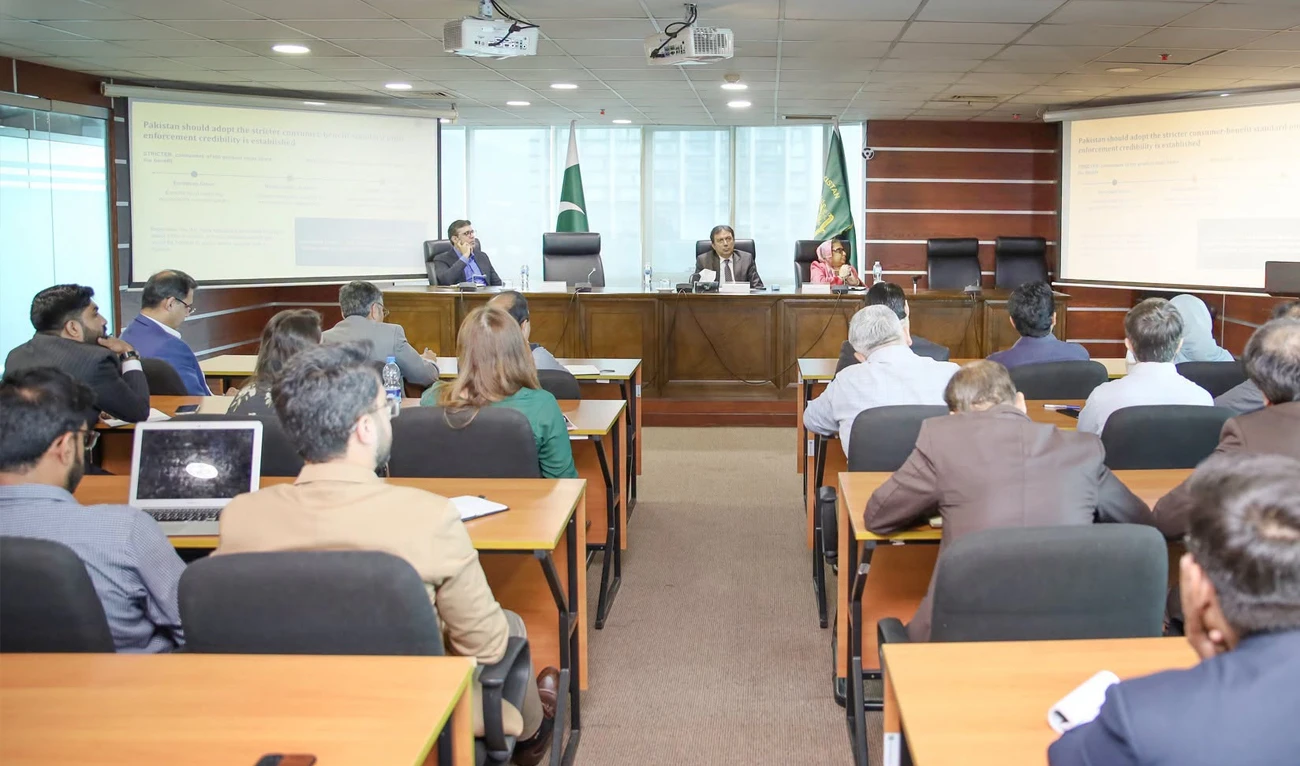
The Competition Commission of Pakistan’s (CCP) has said that its Bid-Rigging Detection System (BRDS), which uses AI and advanced data analysis to detect cartels in public procurement, recently featured in the ‘Computational Antitrust Worldwide: Fifth Cross-Agency Report’ by Stanford Computational Antitrust project.
The initiative assumes particular significance as Pakistan is estimated to spend around 15–20 percent of its Gross Domestic Product, approximately $60 billion annually, on public procurement of goods, works and services, it says.
“Our objective in developing the Bid-Rigging Detection System (BRDS) is to promote competition, transparency and value for public money by enabling CCP to proactively identify suspicious bidding patterns in public procurement,” CCP Chairman Farid Ahmad Tarar told Arab News on Monday.
“The system is at the pre-deployment phase, wherein its initial design and testing stage have been completed. Currently, work on its live integration with the federal and provincial procurement authorities, SECP’s corporate registry and other relevant institutions is under process.”
The Fifth Cross-Agency Report brought together first-hand accounts from 30 competition authorities and examined what computational tools enabled them to achieve that would otherwise have been “difficult — or impossible — through conventional enforcement methods.” The report explained how BRDS is designed to transform detection of collusive tendering in Pakistan from a largely complaint-driven and manual process to proactive, systematic and data-led market surveillance.
Historically, the scale and fragmentation of procurement data, coupled with the absence of automated links to corporate ownership records, made it difficult to identify sophisticated patterns such as bid rotation, cover bidding and related-party participation across multiple tenders, according to CCP.
BRDS has reached an advanced stage of development and pre-deployment preparation, whereas understandings have been reached with Public Procurement Regulatory Authority, provincial procurement authorities and SECP for the implementation of the system.
“The system will help screen large volumes of procurement and corporate data, identify high-risk tenders and generate investigative leads; however, every alert will be independently verified and assessed through due process under the Competition Act, 2010,” Tarar said.
“Ultimately, BRDS will strengthen deterrence against collusive bidding, protect honest businesses and help safeguard the national exchequer.”
CCP said its contribution also set out practical lessons for competition authorities in developing economies, emphasizing investment in machine-readable data, inter-agency cooperation, controlled testing and legal defensibility.
The publication of the Fifth Cross-Agency Report places Pakistan’s experience before the international regulatory and academic community and enables other competition authorities to study and build upon CCP’s emerging computational-enforcement model.
“BRDS is expected to strengthen CCP’s enforcement against cartelization by enabling proactive screening of procurement data, earlier identification of high-risk bidding patterns and evidence-based prioritization of investigations,” the commission said.
“This will support fair competition in public procurement and help secure better value for public money.”