- KSE-100 loses 2,541 points after Oman postpones Gulf-Iran talks on strategic waterway
- Trading value falls to Rs24.6 billion ($88.6 million) as investors turn risk-averse
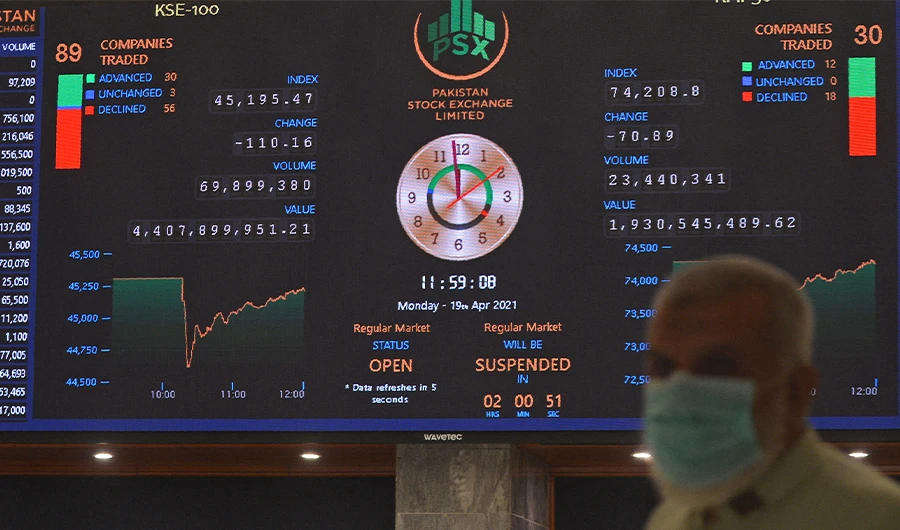
ISLAMABAD: Pakistan’s benchmark stock index fell 1.5 percent on Monday as the postponement of Gulf-Iran talks over the Strait of Hormuz and surging global oil prices renewed concerns over the country’s energy costs and external finances, a top brokerage house said.
The KSE-100 index lost 2,541 points to close at 167,970, after falling as much as 3,070 points during intraday trading amid broad-based selling.
The decline came after Oman postponed a meeting scheduled for Monday between Iran and Gulf states to discuss possible arrangements concerning the Strait of Hormuz, a critical global energy route whose disruption has roiled oil and gas markets during months of Middle East conflict. Oman did not announce a new date for the talks.
“The local bourse was battered by aggressive selling today as investor confidence took a sharp hit following Oman’s announcement of the postponement of a scheduled meeting between Iran and Gulf countries concerning the Strait of Hormuz,” Topline said in a daily stock market report.
“The delay in diplomatic talks renewed concerns over regional stability and the possibility of prolonged disruption along the Strait of Hormuz.”
International oil prices also jumped more than 3 percent on Monday, with Brent crude rising above $108 a barrel as markets reacted to renewed attacks on Saudi energy infrastructure and shipping as well as the postponement of the Hormuz talks.
“International oil prices surged following the delay news, raising concerns over global energy supplies, Pakistan’s import bill, inflation, and external account. The development further weighed on investor sentiment,” Topline added.
Pakistan is heavily reliant on imported energy, making increases in international oil and gas prices a particular concern for its balance of payments and domestic inflation. Petroleum crude and petroleum products were among the country’s largest imports in the last month of the previous fiscal year, according to official data.
The Strait of Hormuz, which connects the Gulf with the Arabian Sea, carried around 20 percent of global petroleum liquids consumption and more than 20 percent of worldwide liquefied natural gas trade before the current conflict severely disrupted flows through the waterway.
Monday’s losses were broad-based, with United Bank Limited, Fauji Fertilizer Company, Lucky Cement, Oil and Gas Development Company and MCB Bank collectively shaving around 930 points off the benchmark index, Topline said.
Market participation also weakened from the previous session. Around 570 million shares changed hands, with traded value at Rs24.6 billion ($88.6 million), compared with 683 million shares and Rs33.6 billion ($121 million) on Friday.
Cnergyico PK Limited was the most actively traded stock by volume, with around 97 million shares changing hands.
The decline reversed Friday’s recovery, when the KSE-100 had gained 0.98 percent to close at 170,512 after reports of the planned Gulf-Iran meeting helped ease oil prices and improve investor sentiment.