- Brazil, India, Germany and Japan have been pushing to expand current five UNSC permanent members to 11
- The group of four, or G4, want to become permanent members and have proposed two members from Africa
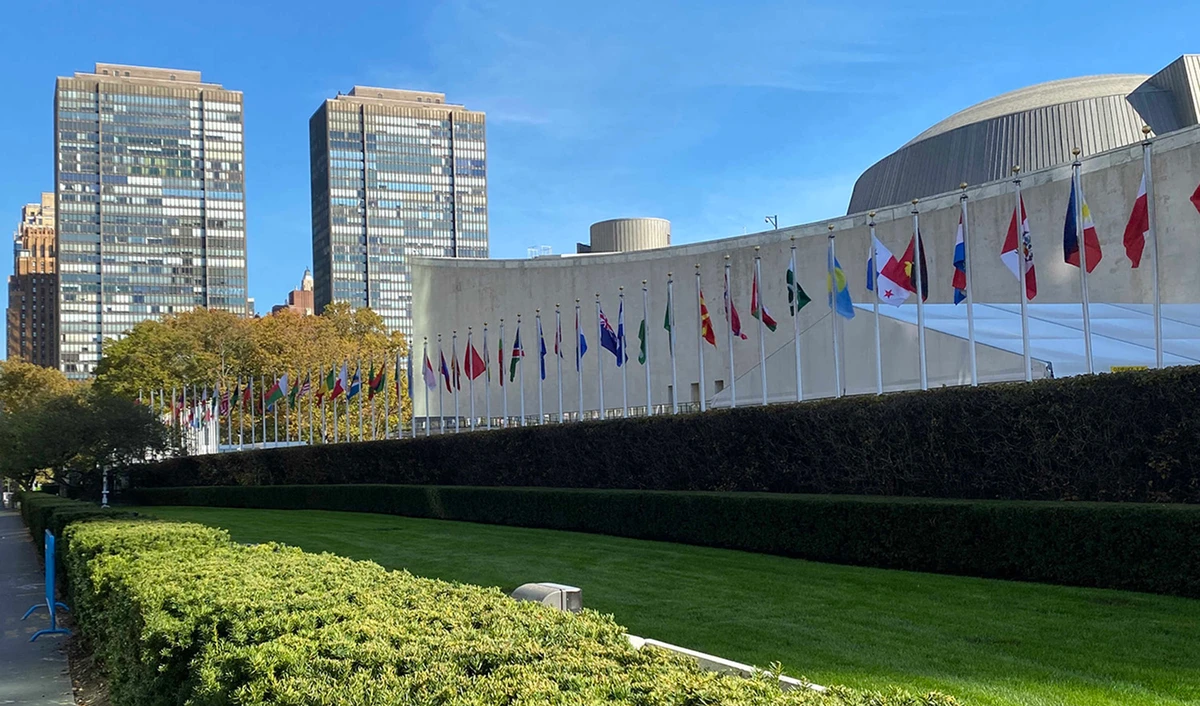
ISLAMABAD: Pakistan’s foreign office spokesperson on Thursday welcomed an oral draft resolution passed by the United Nations General Assembly (UNGA) to continue with the Intergovernmental Negotiations (IGN) process for Security Council reforms and called the rejection of the Indian demand for text-based negotiations a "major diplomatic achievement" as it thwarts plans by India, Brazil, Germany and Japan to expand permanent membership of the UN Security Council.
The UN General Assembly this week decided to roll over the intergovernmental negotiations on Security Council reforms to the next General Assembly session, seen as success for countries like Pakistan who are part of the Uniting for Consensus (UfC), which is against expansion in UNSC permanent seats.
The informal plenary of the 77th session of the UN General Assembly will take place in September this year.
The IGN is a process initiated in 2009 to reform the United Nations Security Council (UNSC), including its size. The 193 member states of the UNGA have remained largely divided on the reforms, especially on the issue of permanent membership which has been aggressively pushed by the group of four (G4), which includes India, Japan, Brazil, and Germany.
The Uniting for Consensus group has firmly opposed additional permanent members and instead suggested a new non-permanent category of members with a longer re-electable term.
The UNSC is currently composed of 15 members including the United States, China, Russia, France, and United Kingdom, which are permanent members ,and 10 non-permanent members elected for two years.
“In the session held in the UNGA on July 12, our stance is accepted as member states agreed that this process of IGN will continue and through it, all its members will work for a negotiated outcome for the Security Council reforms,” foreign office spokesperson, Asim Iftikhar Ahmed, told Arab News.
India through the G4 has been pushing to start text-based negotiations instead of oral negotiations for the expansion of the Security Council, Ahmed said, adding that through text-based negotiations, New Delhi wanted to lock in proposals and discussions.
“No one agreed on it and this was a major diplomatic achievement for us.”
Pakistan’s stance was very clear: any proposal for a change in UNSC should have the support of a maximum member states and could not be done on the wishes of a few countries, Ahmed added.
“Our group UfC has been consistently pursuing this position by working closely with the Arab Group, Organization of Islamic Cooperation, and African Group. They all agreed upon the continuity of the existing process for the such Security Council reforms which are in the interest of the large majority and not only for a couple of states,” the spokesperson said.
Pakistan has shown flexibility as UfC agreed on the expansion of UNSC by electing non-permanent members for a longer term, the spokesperson said.
For any UNSC reform, a two thirds majority means 129 members, including all P-5 veto powers, should agree and ratify a proposal, he said, adding that no group had such a majority right now and only negotiations in IGN could reduce differences.
“Text-based negotiations cannot be started until there is agreement on the principles as to whether permanent membership and veto power should be increased or not,” he said.