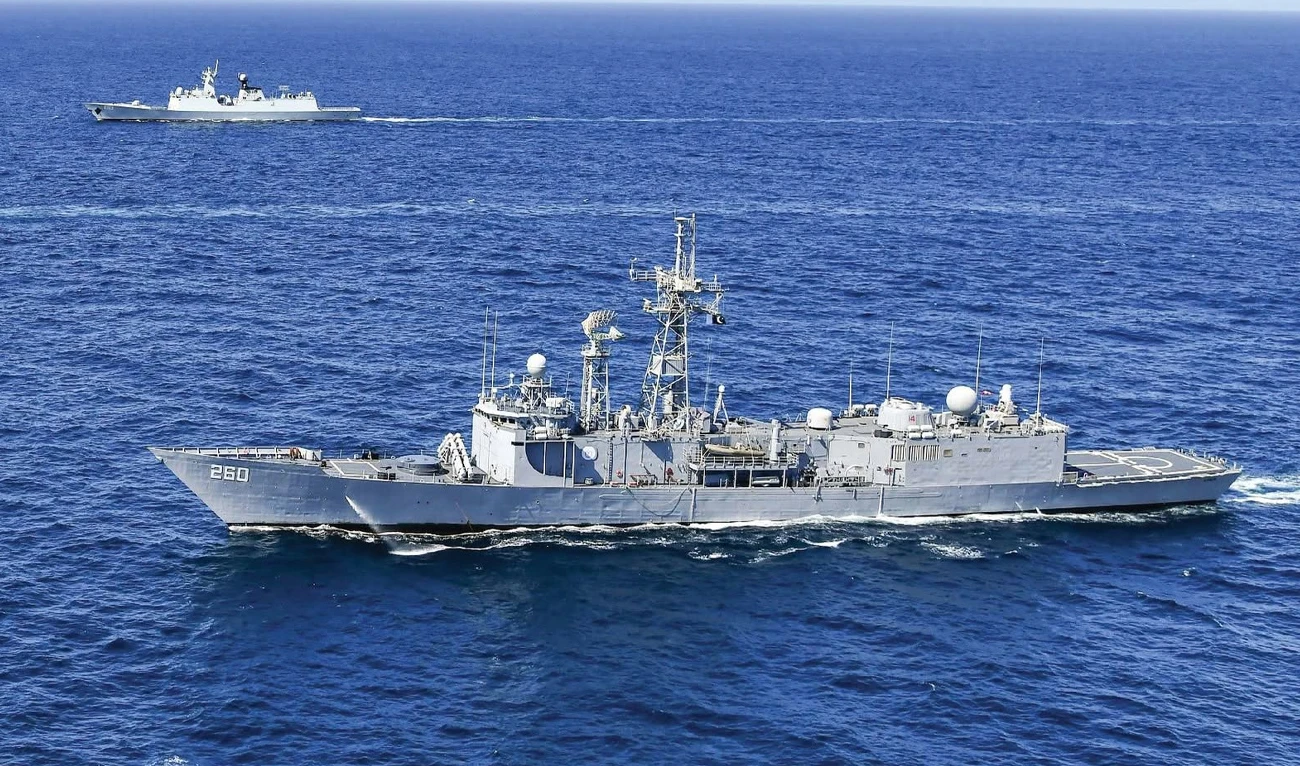
- Navy launched Operation Muhafiz-ul-Bahr in March to protect merchant shipping, critical trade routes
- Pakistan has since joined Saudi-led coalition formed to secure Red Sea, Bab Al-Mandab shipping
ISLAMABAD: Pakistan said on Tuesday its navy was protecting the country’s energy lifelines amid continuing conflict in the Middle East, six months after launching an operation to escort merchant vessels along critical maritime trade routes.
Operation Muhafiz-ul-Bahr was launched on March 9 after the war involving the United States, Israel and Iran severely disrupted shipping around the Strait of Hormuz, through which much of Pakistan’s imported energy passes. With around 90 percent of the country’s trade conducted by sea, Islamabad has been particularly exposed to disruptions on maritime routes linking it with Gulf suppliers.
The Navy initially deployed warships to escort Pakistani merchant vessels on routes between Karachi and the Gulf and Red Sea, while monitoring commercial traffic in coordination with the state-owned Pakistan National Shipping Corporation (PNSC). Pakistani officials said at the time the escorts did not extend into the Strait of Hormuz itself.
The maritime challenge has since widened beyond Hormuz, with attacks threatening commercial shipping in the Red Sea and Bab Al-Mandab. Pakistan has joined a Saudi-led multinational maritime coalition announced in July to protect shipping and energy routes in those waters, and last month said it was ready to help operationalize the initiative after three Pakistani sailors were killed in an attack on a commercial vessel in the Red Sea.
“Amid ongoing conflict in the Middle East, Pakistan Navy has demonstrated its resolve and commitment to preserve national security through Operation MUHAFIZ-UL-BAHR,” President Asif Ali Zardari said in a message marking Pakistan Navy Day on Sept. 8.
“Pakistan Navy made swift and significant contributions in preserving the country’s energy security and economic lifelines by ensuring continuity of our vital sea-borne energy supplies.”
Prime Minister Shehbaz Sharif, in a separate Navy Day message, said the force had ensured the “uninterrupted movement of Pakistani flagged merchant vessels, especially PoL carriers” during heightened tensions and disruptions around Hormuz, referring to petroleum, oil and lubricants.
When Muhafiz-ul-Bahr was launched, the Navy said two merchant vessels were already under escort as it sought to counter what it described as “multidimensional threats” to national shipping and maritime trade.
Days later, two PNSC vessels carrying between 100 million and 120 million liters of oil arrived in Karachi after being escorted by the Navy from Fujairah in the United Arab Emirates, according to PNSC officials.
Independent maritime reporting subsequently identified Pakistani warships escorting nationally owned tankers in the Gulf of Oman. USNI News reported in March that PNS Shah Jahan, one of Pakistan’s Chinese-built Type 054A/P frigates, was among the naval assets deployed under the operation as Pakistan and India mobilized warships to protect nationally owned tankers amid drastically reduced traffic around Hormuz.
The crisis also forced Pakistan to pursue alternative energy routes. The government said in March it had sought crude oil supplies through Saudi Arabia’s Red Sea port of Yanbu as disruption around Hormuz threatened the majority of Pakistan’s energy supplies.
Maritime security concerns have since increasingly extended to the other side of the Arabian Peninsula.
Saudi Arabia announced a multinational maritime security coalition in July aimed at protecting commercial shipping and energy routes in the Red Sea, Bab Al-Mandab and Gulf of Aden, where attacks by Yemen’s Houthi movement have threatened vessels.
Pakistan was among the countries that endorsed the initiative, though the Foreign Office said in early August that Islamabad was still examining its operational arrangements and was not aware of plans for Pakistani forces to escort Saudi vessels.
Pakistan took a firmer position after three of its nationals were killed in an attack on a commercial vessel in the Red Sea on Aug. 11.
“We support freedom of navigation and maritime security in international waterways under international law,” the Foreign Office said the following day.
“Pakistan is a signatory to this coalition and abide by its communiqué. We are ready and willing to assist Saudi Arabia and other coalition partners in the operationalization of this communiqué to preserve the safety and security of the global supply chain, as well as maritime traffic.”
The spokesperson said Pakistan would implement its commitments to the coalition “with full earnest,” though Islamabad has not publicly announced any deployment of naval vessels under the initiative.
Pakistan’s Navy also continues to issue navigational warnings covering a wide maritime area stretching from the Strait of Hormuz and Sea of Oman to the Gulf of Aden and Red Sea. Warnings published in late August included a security incident involving an oil tanker in the Sea of Oman and Strait of Hormuz and piracy in the Gulf of Aden.