- The return to a cease-fire was settled by the two armies’ director-generals of military operations, a joint statement said
- Pakistani national security adviser says cease-fire came through ‘direct channel,’ not result of back channel talks with Indian national security chief
ISLAMABAD: Pakistani national security adviser Moeed W. Yusuf said on Thursday an agreement between the militaries of Pakistan and India to stop firing along their disputed border in Kashmir was not the result of back channel diplomacy between him and Ajit Kumar Doval, the national security adviser to the prime minister of India.
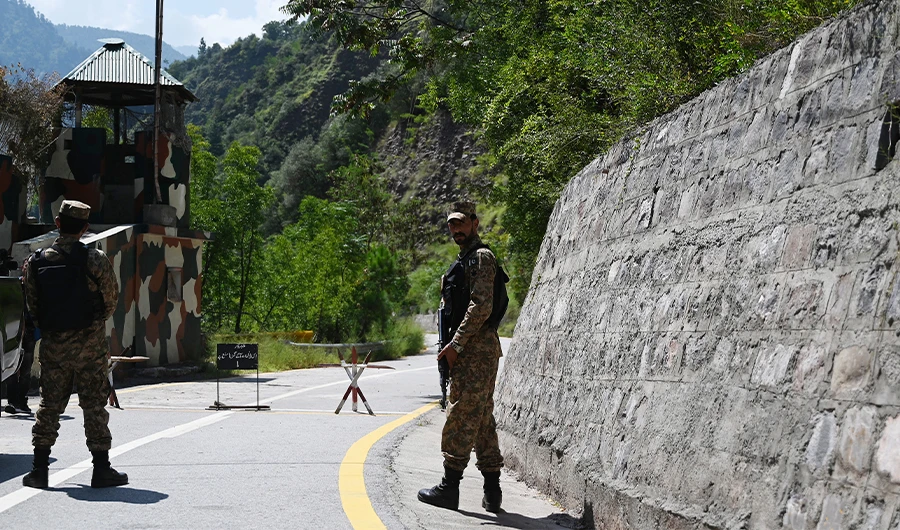
The nuclear-armed neighbors signed a cease-fire agreement along the Line of Control (LoC) — the de facto border in the Kashmir region — in 2003, but the truce has been fraying in recent years. In recent months, cross border firing has become frequent, often killing or maiming people living in the area.
The military operational heads of the two countries spoke over the telephone on Thursday and agreed to discuss each other’s concerns that could disturb peace and lead to violence in the Himalayan region, a joint statement said.
“In the interest of achieving mutually beneficial and sustainable peace along the borders, the two DGsMO [director-generals of military operations] agreed to address each other’s core issues and concerns which have propensity to disturb peace and lead to violence,” the statement said.
“I have seen claims by Indian media that attribute today’s cease-fire announcement between Pakistani and Indian DGMOs to back-channel diplomacy between me and the Indian NSA [national security adviser]. This is baseless. No such talks have taken place between me and Mr. Doval,” Yusuf said in a Twitter thread.
“The welcome development on the LoC is a result of discussions through the established channel of DGMOs. Obviously these are by their very nature not in the public eye and done privately and professionally through the direct channel,” Yusuf added.
“Pakistan has continued to call for the 2003 cease-fire agreement to be honored and I am glad we have reached the understanding. It must be followed in letter and spirit,” the Pakistani official said. “Doing so will save innocent lives so no one should question the intent. Nor should wrong inferences be drawn. There is nothing more than meets the eye here.”
Kashmir has long been a flashpoint between the neighbors, but tension was renewed after New Delhi withdrew the autonomy of the Himalayan region in August 2019 and split it into federally administered territories. Both countries claim the region in full, but rule it in part.