- Pakistani medical regulator this month issued directive requiring Afghan medical and dental students to return home
- Pakistan has deported thousands of Afghans since 2023 when it launched a drive to expel undocumented citizens
ISLAMABAD: Afghan students possessing valid visas and who are enrolled in degree programs in Pakistan will be allowed to continue their studies in the country, foreign office spokesperson Sajjad Haider Khan clarified on Thursday, reiterating that Islamabad has not imposed a “blanket ban” on Afghan students studying in the country.
The clarification comes in response to the Pakistan Medical & Dental Council’s (PM&DC) letter on Sept. 1, in which it said Afghan nationals already enrolled in medical or dental programs in Pakistan are required to return to Afghanistan. It warned Pakistani institutes that no new admission, placement, transfer, migration or “other facilitation” of Afghan nationals would be permitted.
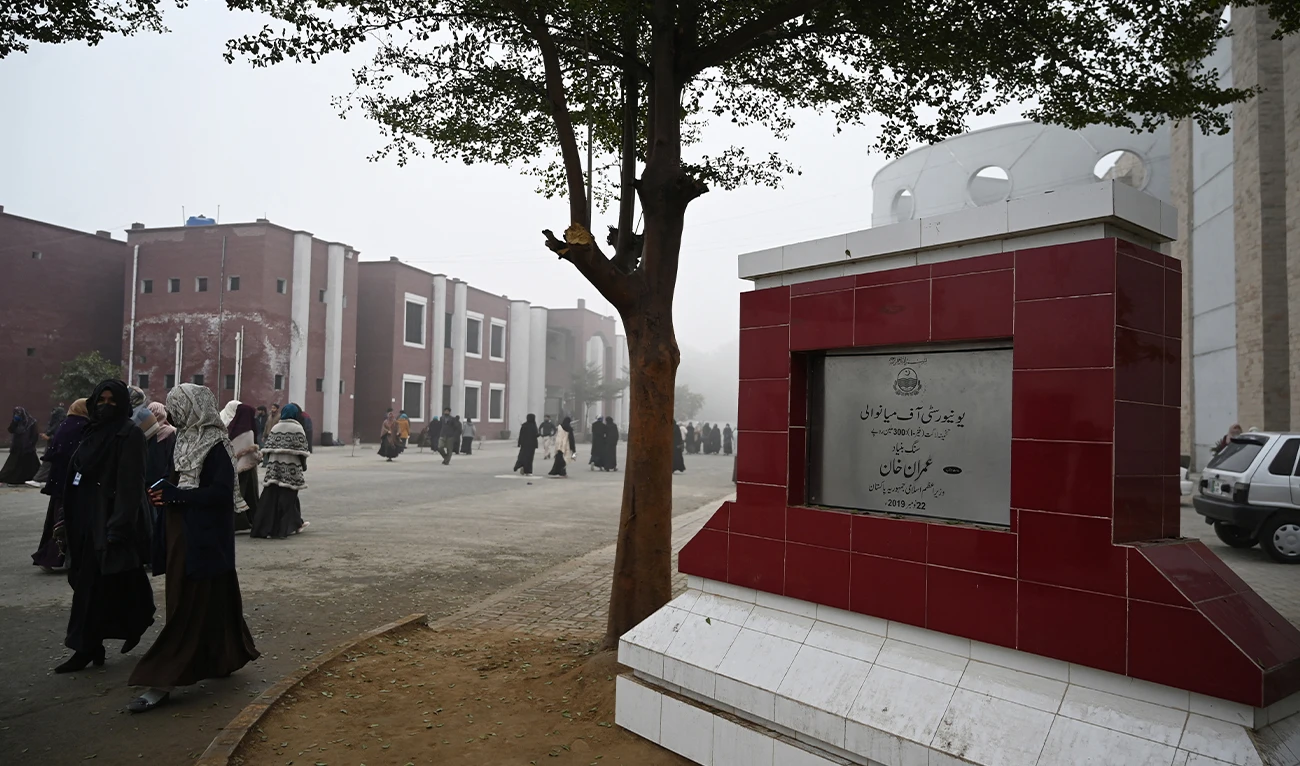
Medical institutions in Punjab began implementing the directives this week. Over 40 Afghan students at two leading medical universities in Punjab’s capital Lahore, including 26 women, were ordered to complete departure formalities within 24 hours this week, as per university directives seen by Arab News. This prompted appeals from Afghan students, who urged Islamabad to allow them to continue their studies in Pakistan.
“Those who are holding valid visas and registered in valid degree programs, they will continue and they will complete their education in Pakistan,” Khan told reporters during a weekly press briefing in Islamabad.
He said this was a requirement followed worldwide by students who wished to study in another country, adding that Islamabad has not imposed a “blanket ban” on Afghan students. He told media representatives to seek further clarity about the PM&DC letter from the regulator itself.
“You should ask them to clarify if all these students are validly registered and hold valid visas, who have been asked to go back or are there some deficiencies,” the spokesperson added.
The PM&DC order comes against the backdrop of Pakistan’s widening campaign to repatriate Afghan nationals and an unprecedented deterioration in relations with Afghanistan’s Taliban government over a surge in militancy in Pakistan’s western regions bordering Afghanistan.
A UN refugee agency’s data showed this week that more than 300,000 Afghans returned from Pakistan in the first seven months of 2026. Pakistan kicked off the deportation drive in November 2023 in response to surging militant attacks in the country. Islamabad blamed Afghan nationals for being involved in militant attacks and suicide blasts, without offering evidence.
Separately, Pakistan’s Ministry of Kashmir Affairs, Gilgit-Baltistan And States and Frontier Regions (SAFRON) urged the Punjab government on Wednesday to seek the interior ministry’s approval to allow Afghan medical and dental students in Punjab to continue their studies.
A copy of the letter seen by Arab News, addressed to the Punjab Home Department, noted that Afghan medical and dental students in Pakistan possess valid visas and are studying on Higher Education Commission (HEC) and other scholarship programs.
“In view of above, it is solicited to kindly approach the Ministry of Interior, Islamabad to allow the medical and dental students to continue their professional studies in various colleges/universities in Punjab on humanitarian ground, and the medical students may also be granted visa extension to complete their professional degree,” the letter said.
Pakistan has hosted millions of Afghans since the Soviet invasion of Afghanistan in 1979, through subsequent decades of war and the Taliban’s return to power in Kabul in 2021.
However, Pakistan’s deportation of Afghan nationals has strained ties between the two nations. Rising militant attacks targeting Pakistani law enforcers and civilians since 2021 have also damaged relations between Islamabad and Kabul.