- Government says omicron variant-driven fifth wave is spreading at ‘great pace’
- Health chief says next few weeks will tell how serious the new wave could be
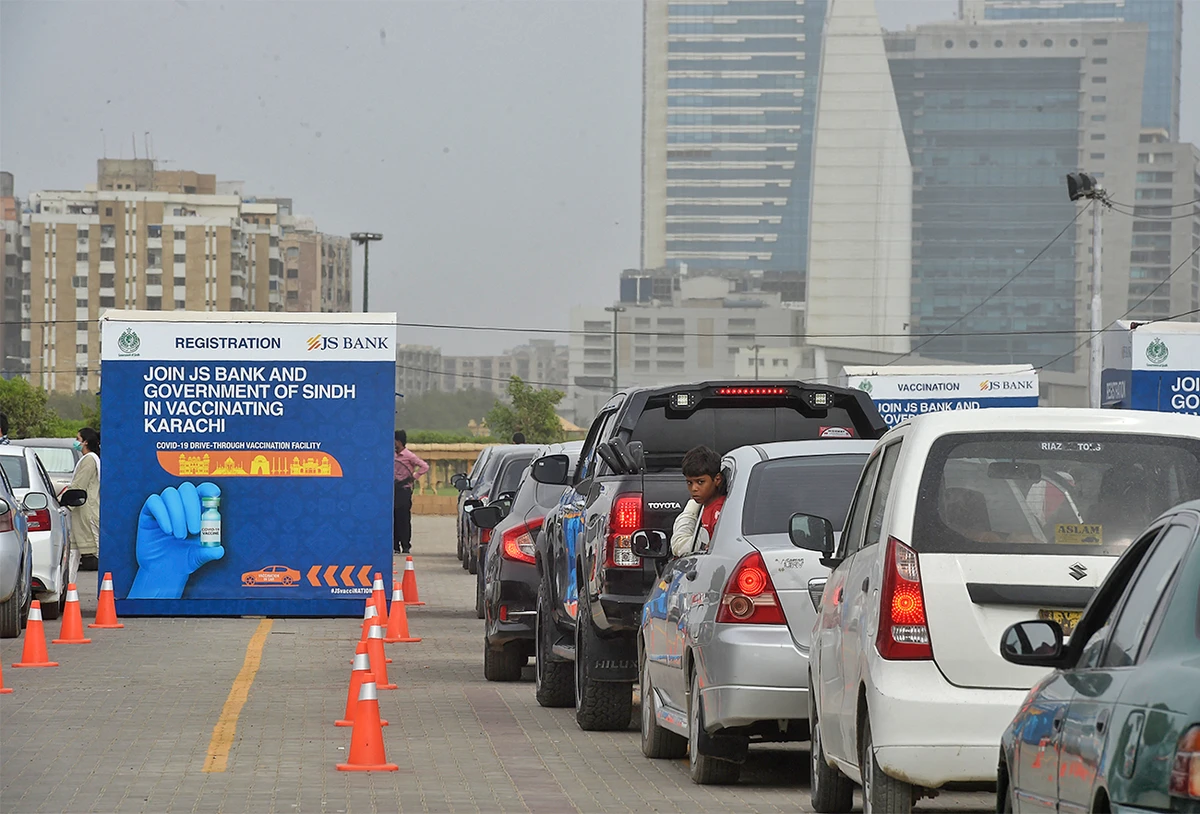
ISLAMABAD: Pakistan plans to launch a “massive” countrywide COVID-19 vaccination drive in March to stem the spread of new variants as the country’s southern Sindh province detected the omicron strain in nearly 50 percent virus cases, officials said on Monday.
Pakistan reported 708 new coronavirus cases in the last 24 hours, according to official figures. This is the first time daily infections have crossed the 700 mark since October 30, 2021.
The National Command and Operation Center, which oversees the country’s pandemic response, said earlier today that an omicron-driven fifth wave of the virus was spreading at a “great pace.”
“We are now seeing a local transmission of the omicron virus in Pakistan and vaccination of maximum people, including children above 12 is the only solution to curb its surge,” Dr. Mumtaz Ali Khan, a focal person at the National Institute of Health in Islamabad, told Arab News.
“We are planning a massive countrywide vaccination campaign in March to boost immunity of our people against new variants, including the omicron strain,” he said, adding the vaccination target has yet to be finalized.
In Sindh, results of 351 COVID-19 tests conducted under a government initiative to determine the prevalence of the omicron variant showed that 175 samples, nearly 50 percent, were infected with the strain, the Dawn newspaper reported, citing a statement issued from the Sindh chief minister’s office.
“Among the cases found infected with omicron, few had a travel history, predominantly from the United Kingdom, US, Dubai, Germany, Saudi Arabia, Nairobi and Angola,” the report read.
Karachi Administrator Murtaza Wahab said the coronavirus positivity rate in the southern Pakistani port city had crossed 6 percent and a majority of the cases were of the omicron variant, SAMAA TV reported.
Pakistan has fully vaccinated 70.5 million people so far and administered at least a single dose to over 156 million individuals.
“This vaccination rate is proving quite effective against the omicron variant as the number of infections is soaring, but patient hospitalization and death rate is still low,” Khan said.
He said a majority of omicron cases were reported in Karachi, followed by Lahore and Islamabad. “Good news is that almost all patients with omicron infection have mild symptoms, especially the vaccinated people.”
Pakistani Planning Minister Asad Umar, who heads the NCOC, on Sunday said there was “clear evidence” of the beginning of a new wave of coronavirus in the country, with genome sequencing showing rising cases of the omicron variant.
A year ago, the newly available vaccine offered hope that the COVID-19 pandemic might be under control by the start of 2022. Instead, the sudden arrival of omicron has brought a surge in coronavirus cases across the globe.
Worldwide infections hit a record high over the last week or so, with an average of just over a million cases detected a day between December 24 and 30, up some 100,000 on the previous peak posted on Wednesday, according to Reuters data. Deaths, however, have not risen in kind, bringing hope the new variant is less lethal.
Dr. Faisal Sultan, an adviser to Pakistani Prime Minister Imran Khan on public health, said only next few weeks would tell them how serious the new COVID-19 wave could be.
“Specific measures are being enhanced like contact tracing [to curb infections surge],” he told Arab News.
The vaccination drive would continue along with public awareness and education, besides ensuring better enforcement of existing rules, Dr. Sultan added.
The Pakistan Medical Association last week warned that a fifth wave of the coronavirus could hit the country by the end of January as new cases of the fast-spreading omicron variant were reported in different cities across the nation.
The strain was first detected in southern Africa and Hong Kong in November, with the first known case in Pakistan identified last month in a woman who had no travel history outside the country.