- Planning ministry says authorities ordered to investigate unjustified price increases
- September consumer inflation stands at 10.3 percent, wholesale prices rise 13.3 percent year-on-year
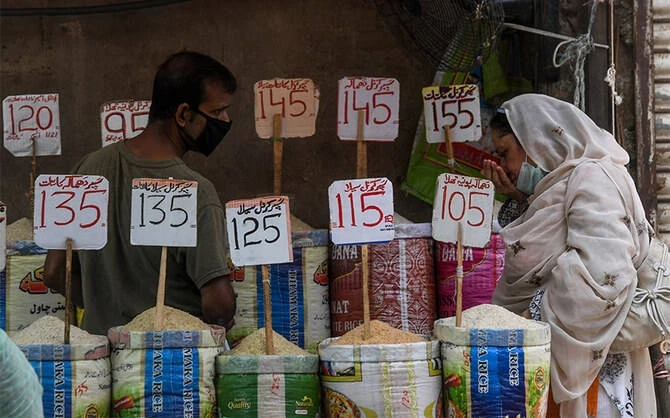
ISLAMABAD: Pakistan has ordered closer scrutiny of food prices and transport fares to prevent unjustified increases as fuel costs driven up by the US-Iran war squeeze consumers, the planning ministry said on Thursday.
The conflict has increased energy costs for import-dependent Pakistan, raising transportation and distribution expenses and adding to pressure on household budgets. Authorities are seeking to determine whether businesses are passing on price increases beyond those justified by higher costs.
Annual consumer inflation eased to 10.3 percent in September from 11.1 percent in August, while wholesale inflation stood at 13.3 percent year-on-year. Weekly inflation, measured by the Sensitive Price Indicator, reached 11.53 percent year-on-year in the week ending Oct. 1, with fuel, electricity and several essential food items recording sharp increases.
“The Minister directed provincial governments to closely monitor wholesale and retail prices and take enforcement action where unjustified gaps existed, particularly in major markets including Lahore and Karachi,” the planning ministry said in a meeting after Planning Minister Ahsan Iqbal chaired a meeting of the National Price Monitoring Committee, expressing concern over rising prices of essential commodities, particularly wheat flour.
“He also called for close monitoring of supply chains and distribution costs to prevent disproportionate pass-through of fuel price increases to essential food prices,” the statement added.
Iqbal also directed authorities to compare current transport fares with those charged after the previous fuel price increase to determine whether operators had imposed disproportionate hikes.
The minister ordered provincial and district administrations to strengthen monitoring of market supplies, arrivals, hoarding, profiteering and unjustified price increases, particularly for wheat flour, onions and other essential food items.
According to the ministry, major annual price increases were recorded in onions, liquefied petroleum gas (LPG), electricity, diesel, petrol and wheat flour. Chicken, garlic, gram pulse and LPG registered notable weekly increases.
Iqbal directed the Ministry of National Food Security and Research to investigate why domestic prices of diammonium phosphate (DAP) fertilizer remained high despite declining international prices, saying the benefit of lower global prices should be reflected in Pakistan’s domestic market.
He also ordered the submission of an inspection and quality assessment report on ghee, edible oil and milk products within one week. The minister said any third-party validation proposed by the industry should be financed by the industry rather than the government.
The Oil and Gas Regulatory Authority was directed to take measures to narrow the gap between officially notified and prevailing market prices of LPG cylinders.
Iqbal said price monitoring should focus not only on inflation statistics but also on identifying the causes of price increases, addressing market distortions and ensuring timely enforcement to protect consumers.