- Two government-backed candidates defied numbers and trounced the opposition nominees for the top Senate slots on Friday
- Legal experts say the Supreme Court can review the Senate election procedure and judge if was followed by voters
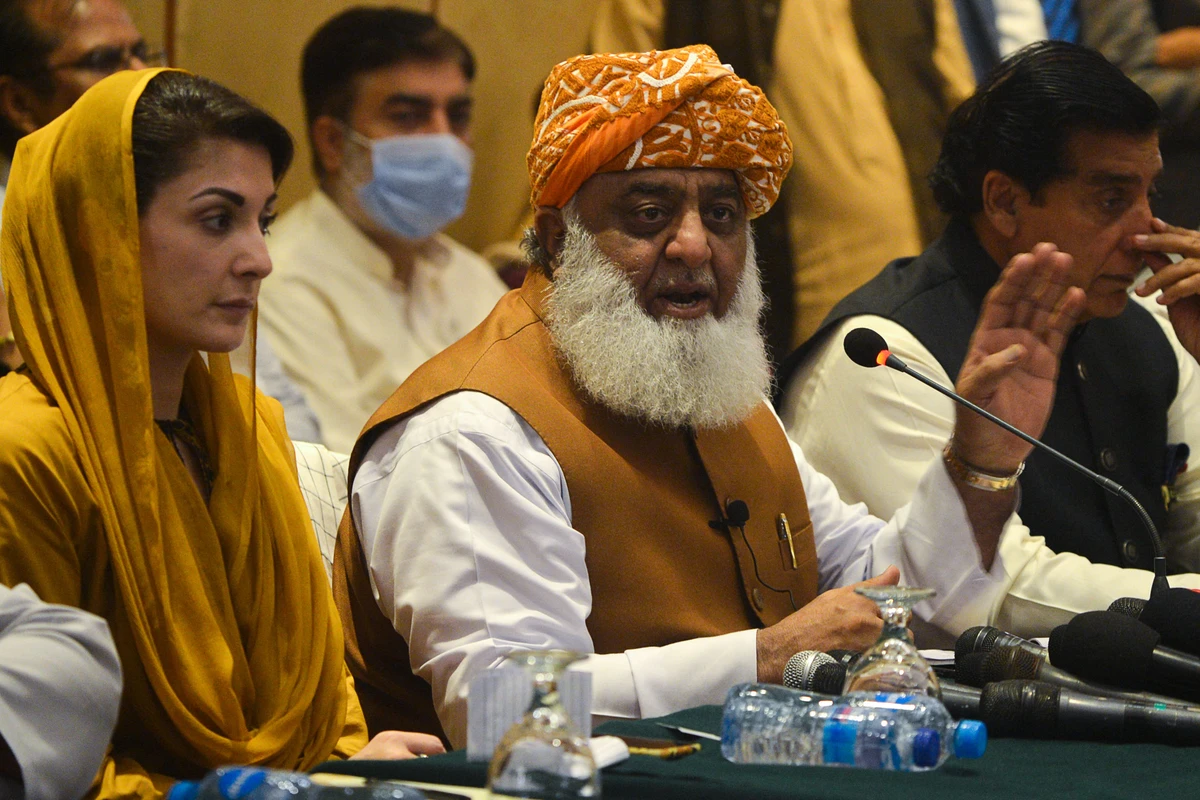
ISLAMABAD: The opposition Pakistan Democratic Movement (PDM) alliance has decided to convene a special meeting on Monday to discuss its legal and political options after two government-backed candidates clinched the top Senate slots in an electoral contest marred by allegations of irregularities.
The PDM is also expected to finalize its strategy for the anti-government "long march" that is scheduled to take place on March 26.
Prime Minister Imran Khan's government on Friday succeeded in trouncing the joint opposition's candidates in crucial Senate elections despite its weak numerical strength in the 100-member upper house of parliament. The 11-party opposition alliance accused the government of "rigging" the elections and decided to challenge it in a court of law.
"We will look at our political and legal options in the Monday meeting," Aslam Ghauri, a spokesperson for the Jamiat-e-Ulama-e-Islam party, told Arab News on Saturday. "However, one thing is sure that the Senate elections were rigged in favor of the government."
The ruling Pakistan Tehreek-e-Insaf (PTI) party's chosen candidate for Senate chairman Muhammad Sadiq Sanjrani won the election by bagging 48 votes while his opponent Yousuf Raza Gilani could only secure 42 votes. The presiding officer who conducted the election announced that seven of Gilani's votes were rejected for not being stamped correctly.
"It's a joke that ballot papers were not properly stamped," Ghauri said. "We believe that our votes were valid, but the presiding officer intentionally rejected them to help the government candidate win the election."
In the contest for the Senate deputy chairman, the government-supported candidate Mirza Mohammad Afridi received 54 votes while the opposition nominee Abdul Ghafoor Haideri only got 44 votes. "We will try to find out our seven members who defected to vote for the government candidate," Ghauri said.
Last week's Senate election had already been tainted by accusations of corrupt practices and a controversy over the method of voting.
The upper house of parliament gives equal representation to all the federating units in order to promote national cohesion and harmony by counterbalancing the numerical disparity among provinces in the National Assembly.
Each Senator is elected for a term of six years while election is held after every three years with the retirement of half the members.
Legal experts said the opposition alliance could seek remedy from the Supreme Court through a petition since it had a "strong case" with reference to the rejection of votes that were declared invalid due to incorrect placement of stamp on ballot papers.
"Past precedents are available that the Supreme Court has taken up such cases and it may adjudicate this issue as well," advocate Sharafat Ali told Arab News. "The court will be reviewing the election procedure to see whether it was followed by voters or not."