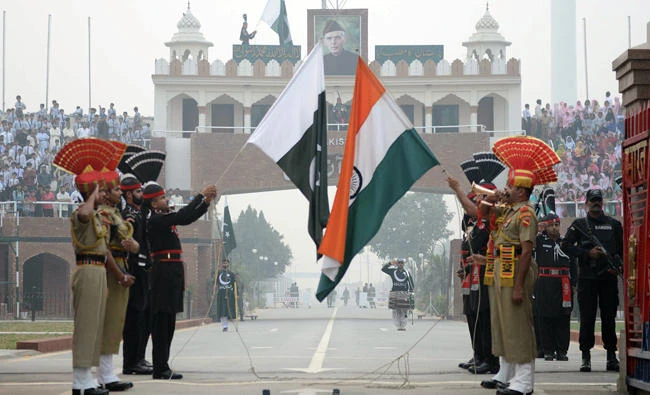
- The RUSI commentary says that these initiatives from Pakistani military come against a background of exchanges of fire along Line of Control in Kashmir.
- General Bajwa has been struggling to lower the tension between the nuclearized belligerent neighbors.
ISLAMABAD: UK-based think-tank Royal United Services Institute (RUSI) has said in a report that Pakistan’s military chief General Qamar Bajwa realizes that the way to peace and prosperity in Pakistan is through military cooperation with India but New Delhi is not reciprocating the approaches.
“There is some rapprochement, but it is stuttering and there’s a long way to go yet,” the RUSI commentary said.
The RUSI’s expert on South Asia and the Middle East, Kamal Alam, has written the report published this week.
In the report the author referred to the development, on March 23, 2018, when on Pakistan Day military parade in Islamabad Army Chief General Qamar Javed Bajwa invited Sanjay Vishwasrao, the Indian military attaché, and his team.
“In a sign that ties between the two foes are warming up, Javed followed this two weeks later by saying that the Pakistan military wanted peace and dialogue with India,” RUSI report said.
The report added that “these initiatives come against a background of almost weekly exchanges of fire along the Line of Control in Kashmir. However, they mark a change in attitudes that started when Bajwa became COAS in November 2016.”
“General Bajwa has been struggling to lower the tension between the nuclearized belligerent neighbors. He realizes only dialogue can save both Indians and Pakistanis from devastating inadvertent or accidental war,” Zaffar Nawaz Jaspal, Islamabad-based analyst and professor at Quaid-i-Azam University, told Arab News.
“However, due to their internal dynamics neither the Indian political ruling elite nor the military junta is ready for a serious dialogue,” Jaspal added.
“Since right-wing Hindu nationalists have taken power in New Delhi there has been a hostile environment in the region. Political and diplomatic relations are at their lowest level. Gen. Bajwa reached out to India but the Indian political elite is bent of isolating Pakistan,” analyst Qammar Cheema told Arab News.
The two countries will also take part in joint military drills in Russia in September this year, with Chinese participation under Shanghai Cooperation Organization (SCO).
“The SCO has an agreement on conducting joint anti-terrorist military exercises among the member states to which both Pakistan and India acceded at the time of joining the organization in June 2017,” Pakistan’s Foreign Ministry spokesman Dr. Mohammad Faisal said on Thursday, March 3, during a weekly news briefing.
“The exercise (Peace Mission 2018) is being hosted by Russia under this agreement. We are prepared to share our experiences with other SCO member states and work together against this common enemy. We hope that SCO will provide an opportunity for both countries to interact for peace and security in the region,” Dr. Faisal added.
Gen. Bajwa himself, speaking at RUSI last year, announced that the Pakistan army is now no longer insecure and feels confident of its future, and that he welcomed Indian participation in Pakistan’s flagship infrastructure project, the China Pakistan Economic Corridor (CPEC).
“Despite continued tensions and fire-fights in Kashmir at their fiercest for a decade, Pakistan’s generals want to talk and feel the ball is in India’s court,” the RUSI report read.
“The views expressed in this commentary are the author’s, and do not necessarily reflect those of RUSI or any other institution,” an article on the RUSI website said.
Late last month Pakistan and India revived non-governmental negotiations commonly known as Track II dialogue, to discuss the issues of bilateral concerns.
“They (Track II dialogues) do take place from time to time. Usually, former ambassadors, retired government officials, journalists and the people from academia of both countries take part. They do not have any link with the formal dialogue,” Pakistan’s Foreign Ministry spokesman said.
“There is some rapprochement, but it is stuttering and there’s a long way to go yet,” the RUSI commentary said.
The RUSI’s expert on South Asia and the Middle East, Kamal Alam, has written the report published this week.
In the report the author referred to the development, on March 23, 2018, when on Pakistan Day military parade in Islamabad Army Chief General Qamar Javed Bajwa invited Sanjay Vishwasrao, the Indian military attaché, and his team.
“In a sign that ties between the two foes are warming up, Javed followed this two weeks later by saying that the Pakistan military wanted peace and dialogue with India,” RUSI report said.
The report added that “these initiatives come against a background of almost weekly exchanges of fire along the Line of Control in Kashmir. However, they mark a change in attitudes that started when Bajwa became COAS in November 2016.”
“General Bajwa has been struggling to lower the tension between the nuclearized belligerent neighbors. He realizes only dialogue can save both Indians and Pakistanis from devastating inadvertent or accidental war,” Zaffar Nawaz Jaspal, Islamabad-based analyst and professor at Quaid-i-Azam University, told Arab News.
“However, due to their internal dynamics neither the Indian political ruling elite nor the military junta is ready for a serious dialogue,” Jaspal added.
“Since right-wing Hindu nationalists have taken power in New Delhi there has been a hostile environment in the region. Political and diplomatic relations are at their lowest level. Gen. Bajwa reached out to India but the Indian political elite is bent of isolating Pakistan,” analyst Qammar Cheema told Arab News.
The two countries will also take part in joint military drills in Russia in September this year, with Chinese participation under Shanghai Cooperation Organization (SCO).
“The SCO has an agreement on conducting joint anti-terrorist military exercises among the member states to which both Pakistan and India acceded at the time of joining the organization in June 2017,” Pakistan’s Foreign Ministry spokesman Dr. Mohammad Faisal said on Thursday, March 3, during a weekly news briefing.
“The exercise (Peace Mission 2018) is being hosted by Russia under this agreement. We are prepared to share our experiences with other SCO member states and work together against this common enemy. We hope that SCO will provide an opportunity for both countries to interact for peace and security in the region,” Dr. Faisal added.
Gen. Bajwa himself, speaking at RUSI last year, announced that the Pakistan army is now no longer insecure and feels confident of its future, and that he welcomed Indian participation in Pakistan’s flagship infrastructure project, the China Pakistan Economic Corridor (CPEC).
“Despite continued tensions and fire-fights in Kashmir at their fiercest for a decade, Pakistan’s generals want to talk and feel the ball is in India’s court,” the RUSI report read.
“The views expressed in this commentary are the author’s, and do not necessarily reflect those of RUSI or any other institution,” an article on the RUSI website said.
Late last month Pakistan and India revived non-governmental negotiations commonly known as Track II dialogue, to discuss the issues of bilateral concerns.
“They (Track II dialogues) do take place from time to time. Usually, former ambassadors, retired government officials, journalists and the people from academia of both countries take part. They do not have any link with the formal dialogue,” Pakistan’s Foreign Ministry spokesman said.