- 80 percent disease spread and increased positivity ratio in 11 major cities across Pakistan, NCOC says
- People visiting a public place without a facemask can be arrested after authorities in Islamabad impose Section 144 for two months
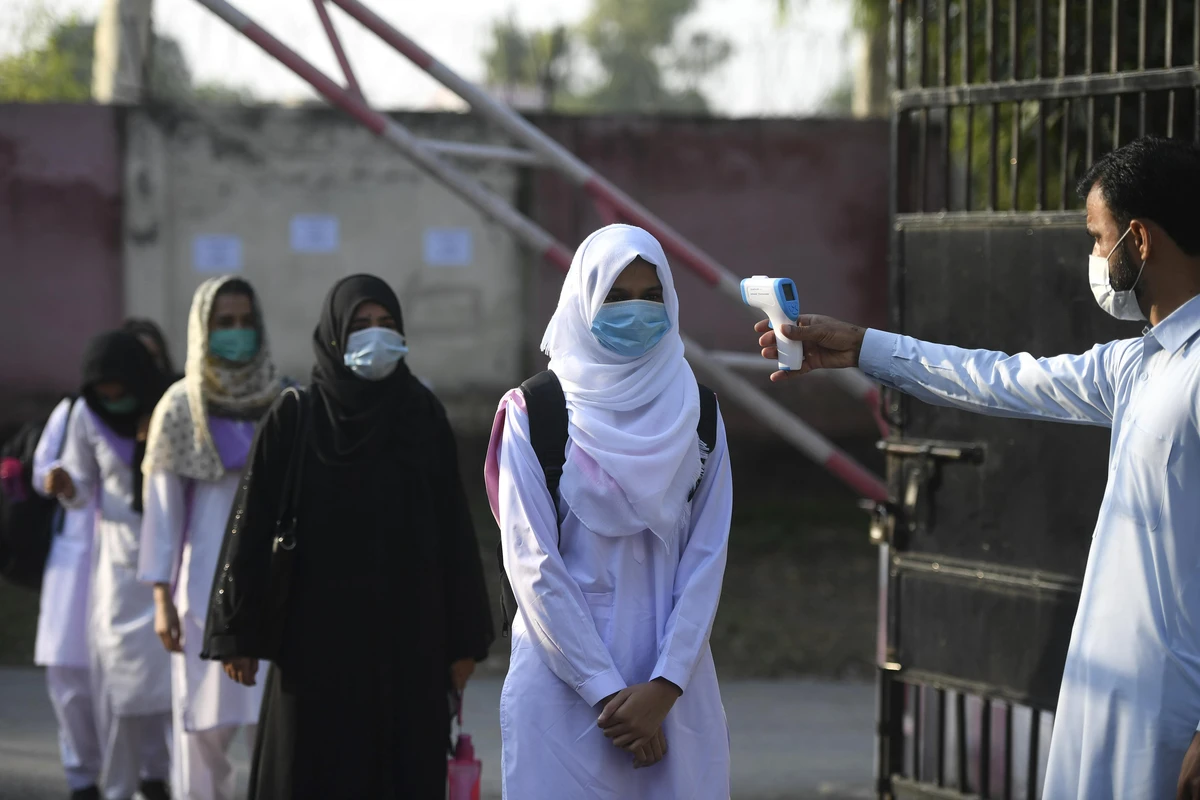
ISLAMABAD: Pakistan’s National Command and Operation Center (NCOC), which leads coronavirus mitigation efforts across the country, announced on Wednesday that wearing masks in public places would now be mandatory.
The NCOC’s decision comes a day after Special Assistant to the Prime Minister on Health, Dr. Faisal Sultan, formally announced a second wave of the coronavirus in Pakistan, warning that imposing restrictions once again had become “inevitable.”
According to a government portal, 330,200 people have tested positive for coronavirus in Pakistan so far, and there have been 6,759 deaths.
“Wearing of face mask is mandatory while moving out of homes in closed places with large crowds and public areas,” the NCOC said in a statement. “Wearing of face mask is must in all offices both govt and private sector.”
NCOC also directed provincial government to ensure that masks were worn “particularly [in] bazaars, shopping malls, public transport and restaurants.”
“80 percent disease spread and increase positivity ratio in 11 major cities across Pakistan,” the NCOC statement said.
Local media reported that 4,374 lockdowns had been imposed in 11 cities, including Quetta, Lahore, Rawalpindi, Multan, Peshawar, Islamabad, Hyderabad, Mirpur, Karachi, Gilgit and Muzaffarabad.
Islamabad’s Deputy Commissioner Muhammad Hamza Shafqaat also issued a notification in his capacity as district magistrate on Wednesday, imposing Section 144 in the federal capital for two months and announcing that anyone visiting a public place without a facemask could be arrested by the police.
In August, the government announced that virtually all sectors in Pakistan shut down to prevent the spread of the coronavirus would be reopened that month, other than schools and marriage halls, which opened in September. Since then, there has been a slow uptick in infection numbers.
“A few weeks ago we were getting 400 to 500 cases per day, but now it has increased to 700 to 750 cases,” Sultan, the de facto health minister, said at a press briefing on Tuesday. “The mortality rate has also increased. Another ratio which is considered is percentage positivity [number of positive cases in samples of 100] which remained less than two percent, but now it has reached close to three percent.”
Lamenting that people were not following coronavirus standard operating procedures (SOPs), Sultan said it had now become “necessary to strictly implement” restrictions.
“We will start it from local level,” he said. “In districts where the disease is more rampant we will start from there. Focus will be on those areas which have been badly hit by the virus. We are deliberating on the restrictions but district administrations have been advised to impose fines on buses, wedding halls, restaurants and other crowded areas.”
He said the National Command and Operation Center (NCOC), which leads coronavirus mitigation efforts, would deliberate setting shorter work timings for businesses to curb the spread of the coronavirus.
“A mechanism is being devised to get complaints from the masses,” the health chief. “People will be requested to register complaints regarding violation of SOPs. On Wednesday (today), we will discuss it with the provinces to finalize the proposals.”