- Inquiry report says electrical cable linked to air conditioner was most probable source of Aug. 26 nursery blaze
- Probe assigns principal institutional responsibility to hospital, senior management over known safety risks
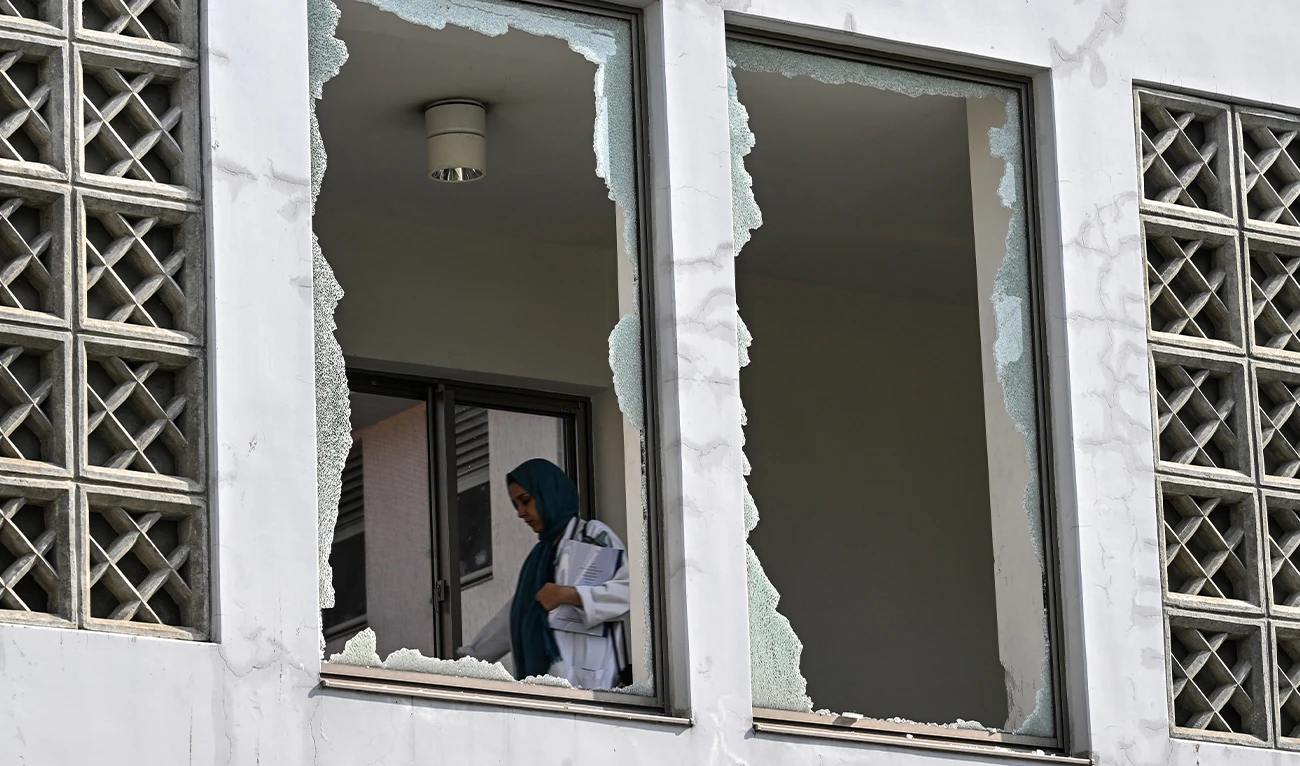
ISLAMABAD: A Pakistani government inquiry released on Tuesday has found that a major Islamabad public hospital failed to act on known fire-safety risks before a nursery blaze killed 14 newborns last month, assigning principal institutional responsibility to the hospital and senior management.
The Aug. 26 fire broke out at the Mother and Child Health nursery of the Pakistan Institute of Medical Sciences, or PIMS, where 15 medically dependent newborns were being treated in a unit designed for 10. Fourteen died and one survived.
The inquiry identified the electrical supply cable of an air-conditioning unit as the most probable point of ignition, saying localized electrical heating likely damaged its insulation and ignited nearby combustible material. It found no evidence of arson, multiple ignition points, a pre-fire oxygen leak or an incubator or warmer causing the blaze.
But the committee said PIMS had been warned repeatedly about wider fire-safety deficiencies, including after a July 6 fire at its nursing hostel exposed problems with smoke detection, alarms, electrical inspections, evacuation, firefighting equipment and emergency planning. Those warnings were not turned into a comprehensive, time-bound and independently verified corrective program before the nursery blaze, it said.
“The Committee concludes that systemic and institutional failure is established, but individual responsibility varies according to the strength of the evidence,” the report said.
“PIMS and its senior management bear the principal institutional responsibility for failing to convert known fire safety risks, prior warnings and assigned duties into an effective and verified safety system.”
The full inquiry report, released on Tuesday on the orders of Prime Minister Shehbaz Sharif, said the hospital’s fire-safety vulnerabilities had been documented long before the August tragedy.
It cited previous correspondence from Islamabad’s Capital Development Authority, recommendations by the Federal Ombudsman in 2015 and PIMS’s own acknowledgement in 2025 that its fire-safety infrastructure was aging.
The committee said maintenance records showed the nursery’s air-conditioning units had been serviced but there was no systematic, periodic and traceable electrical-safety regime covering cables, terminations, insulation, earthing, circuit breakers and thermal hotspots.
“The electrical failure most probably explains how the fire began; the institutional system explains why it became a catastrophe,” the report said.
The inquiry found the consequences of the fire were compounded by overcrowding and inadequate emergency preparation in a unit caring for patients incapable of evacuating themselves.
Fifteen newborns were being treated in the 10-bed nursery, several dependent on oxygen or respiratory support, while only two doctors and two nurses were immediately available. The committee described this as a “serious operational mismatch” and said safe evacuation resources were limited.
It found no adequately rehearsed nursery-specific system for evacuating newborns and no demonstrated functional automatic smoke detection or fire alarm system in the affected area. It also found no sprinkler protection.
The report said combustible materials and the oxygen-supported clinical environment intensified the fire once it had started but found no evidence that an oxygen leak caused the blaze.
CCTV footage showed the fire visibly underway at around 6:38 a.m. and dense smoke obscuring the camera within roughly a minute. Confirmed notification to the Capital Emergency Services was recorded at around 6:54 a.m., while dispatch occurred at 6:55 a.m. and responders arrived at around 7:01 a.m.
The committee said the principal concern was the interval between detection of the fire and confirmed external notification, rather than the response of emergency services after they had been alerted.
PIMS could not demonstrate that it had a tested incident command system capable of immediately triggering alarms, external notification, evacuation, access management and a coordinated emergency response when a fire was detected, the report said.
The inquiry rejected allegations that doctors, nurses and security personnel had simply abandoned the newborns, saying CCTV and other evidence showed frontline workers responding within moments.
Staff Nurse Razia Noreen rescued the sole surviving newborn and attempted to re-enter the nursery, while other nursing and security staff also took part in rescue efforts, the committee found. It said personnel whose rescue actions were established by evidence should not be blamed merely because of the outcome.
The report also questioned why the old Mother and Child Health building remained in use while a newer facility funded by the Japan International Cooperation Agency was gradually becoming operational, saying the continued use of the older nursery was not supported by a sufficiently documented risk assessment or transition plan.
The committee said it had not established criminal guilt against any named individual at this stage but identified several areas requiring further investigation.
These included possible culpable negligence in the electrical installation or maintenance associated with the air-conditioning unit, possible obstruction of a mandatory emergency exit, failure to act despite prior warnings and any culpable delay in seeking external emergency assistance.
It said individual responsibility should be established through further administrative, disciplinary or criminal proceedings based on each person’s actual duties, knowledge of the risks, authority to act and role in any failure.
The committee recommended an immediate hospital-wide fire, life-safety and electrical audit, functional automatic smoke detection and alarm systems, appropriate fire-suppression systems, safer emergency exits, preventive electrical inspections and dedicated neonatal evacuation procedures and drills.
It also called for stronger hospital management and regulatory oversight, saying safety measures should not be considered implemented merely because they had been approved or were described as under way, but only once risks had actually been addressed and the corrective work independently verified.
“The enduring lesson is that patient safety cannot depend on individual courage once a fire has started,” the committee said.
“It must be secured beforehand through preventive engineering, effective fire and life safety systems, adequate staffing and evacuation capacity, professional hospital governance, prompt incident command, independent regulation and a compliance regime in which risks remain open until corrective measures are physically implemented and verified.”