- Muhammad Aurangzeb will engage with financial institutions, policymakers, development partners and rating agencies
- The visit comes as Pakistan moves to transition from macroeconomic stabilization toward investment, export-led growth
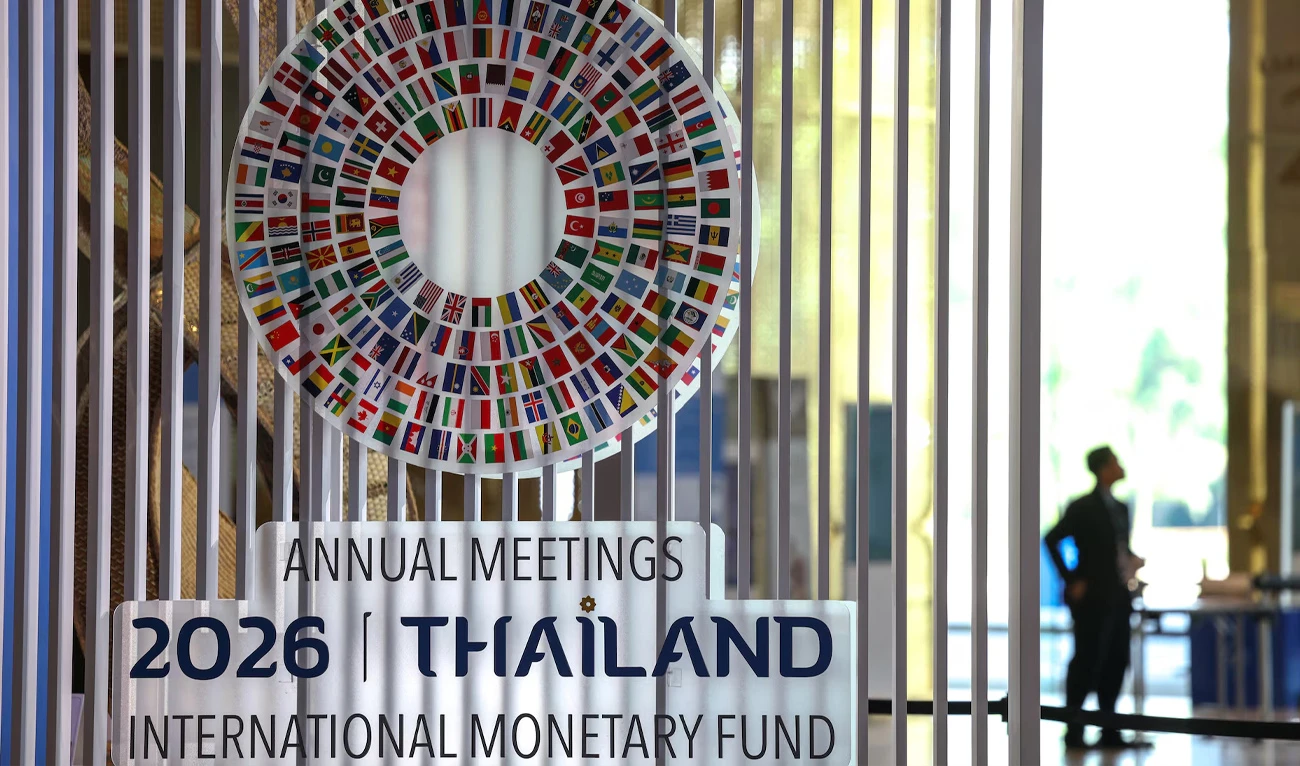
ISLAMABAD: Finance Minister Muhammad Aurangzeb has left for Bangkok, Thailand to lead Pakistan’s delegation to the World Bank–International Monetary Fund (IMF) annual meetings scheduled to be held from Oct. 12 till Oct. 18, the Pakistani finance ministry said late Saturday.
The visit comes as Pakistan continues its transition from macroeconomic stabilization toward sustainable, investment and export-led growth, while advancing structural reforms and strengthening engagement with international capital markets and development partners.
Pakistan secured a $7 billion Extended Fund Facility in Sept. 2024, followed by a $1.4 billion, 28-month Resilience and Sustainability Facility in May last year. The IMF said on Wednesday it had reached an agreement with Pakistan that could unlock about $1.2 billion financing under both facilities.
Aurangzeb will represent Pakistan at key IMF and World Bank events and engage with international financial institutions, finance ministers and policymakers, development partners, global investors, banks, credit rating agencies, think tanks and international media during the visit.
“The Finance Minister will hold a series of high-level engagements with the leadership of the IMF and World Bank Group, including the International Finance Corporation (IFC) and Multilateral Investment Guarantee Agency (MIGA), focusing on Pakistan’s macroeconomic outlook, reform progress, private sector development and future cooperation,” the Pakistani finance ministry said.
“He will also attend the IMF Managing Director’s meeting with Finance Ministers, Central Bank Governors and Heads of Regional Financial Institutions of the Middle East, North Africa, Afghanistan and Pakistan (MENAP) region.”
During the visit, the finance minister will engage with the leadership of major multilateral and development finance institutions, including the Asian Infrastructure Investment Bank (AIIB), OPEC Fund for International Development, Saudi Fund for Development (SFD), International Islamic Trade Finance Corporation (ITFC), Japan International Cooperation Agency (JICA), ECO Trade and Development Bank, United Nations Economic and Social Commission for Asia and the Pacific (ESCAP), and International Organization for Migration (IOM).
On the bilateral front, he will hold high-level meetings with counterparts from Saudi Arabia, China, Türkiye, Iran, the United Kingdom and host country Thailand, aimed at strengthening economic, investment, trade and development cooperation. He will also engage with the US Department of the Treasury to further strengthen bilateral economic cooperation and discuss Pakistan’s reform and investment agenda.
A major focus of the visit will be engagement with international investors and capital markets, according to the Pakistani ministry.
The finance minister will meet and participate in investment seminars, sovereign investor forums and roundtable discussions with leading international financial institutions, including JP Morgan, Citi, Deutsche Bank, Standard Chartered Bank, MUFG, Mashreq Bank, Dubai Islamic Bank, Abu Dhabi Commercial Bank, Ajman Bank, Barclays, Bank of America, Jefferies International, Alvarez & Marsal and MSCI.
“Across these engagements, the Finance Minister will highlight Pakistan’s progress in restoring macroeconomic stability, strengthening fiscal and external buffers, advancing structural reforms and returning to international capital markets, while setting out the Government’s priorities for investment, exports, private sector-led growth, job creation and greater financial inclusion,” Aurangzeb’s ministry said.
“The visit underscores Pakistan’s proactive engagement with the international economic and financial community and the Government’s commitment to converting restored macroeconomic stability into investment, productivity, exports, jobs and sustainable and inclusive economic growth.”