- Agreement sets framework for five refineries to modernize facilities, produce cleaner Euro-V fuels
- Pakistan’s aging refineries process about 350,000 barrels per day as country seeks to cut fuel imports
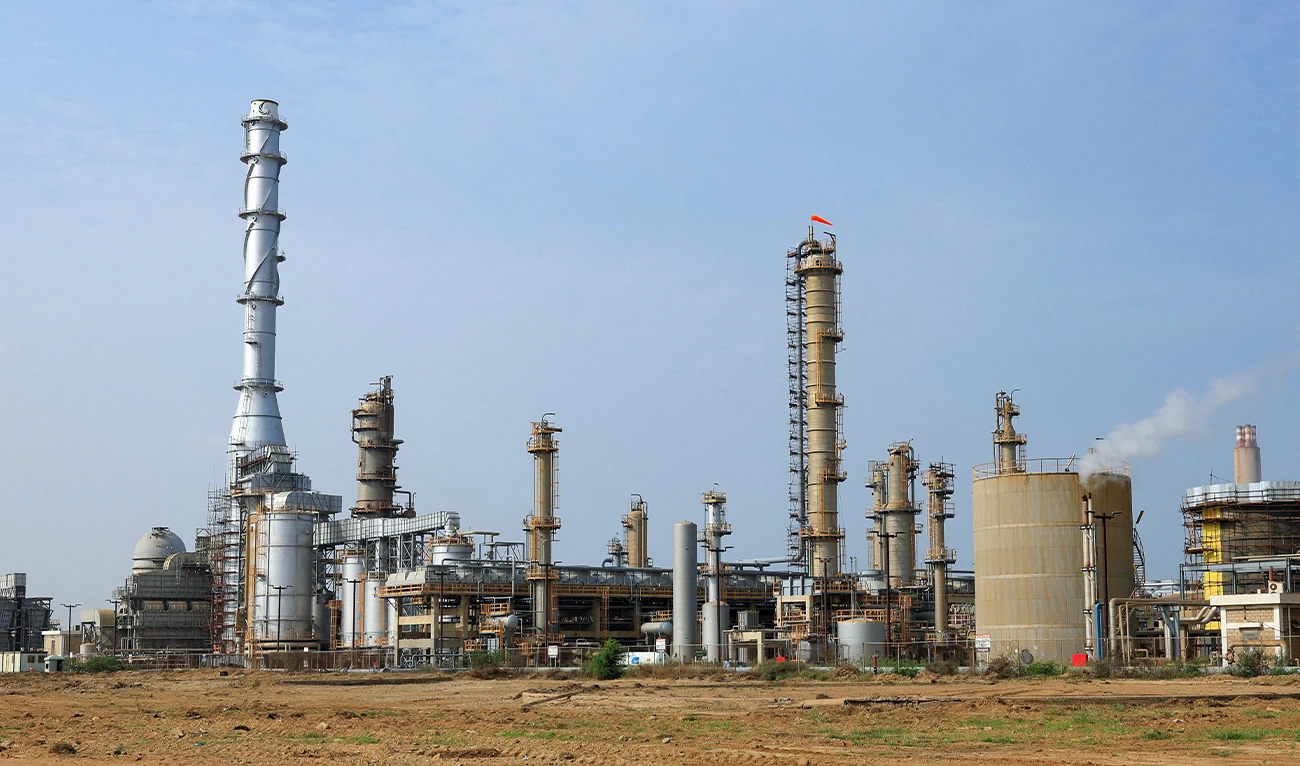
KARACHI: Pakistan has finalized a key agreement needed to unlock about $6 billion in planned upgrades at its five existing oil refineries and referred it to the government’s top economic decision-making body for approval, according to an official document seen by Arab News on Thursday.
The agreement would provide the contractual framework for implementing Pakistan’s amended Brownfield Refining Policy, which offers incentives to existing refineries to modernize aging facilities, produce cleaner Euro-V fuels and reduce output of lower-value furnace oil.
The Petroleum Division has sent the draft to the Economic Coordination Committee (ECC), a cabinet body that takes key government decisions on economic and financial matters.
“The minister for energy (petroleum division) has authorized the submission of the summary to the ECC,” the document said.
The move is a critical step toward allowing Pakistan’s five existing refineries — Pak-Arab Refinery Ltd., Attock Refinery Ltd., National Refinery Ltd., Cnergyico Pakistan Ltd. and Pakistan Refinery Ltd. — to sign individual upgrade agreements and proceed with investments estimated by the government at around $6 billion.
The Brownfield Refining Policy was originally introduced in 2023 and amended in August 2026 after the Cabinet Committee on Energy approved changes in July that were subsequently ratified by the federal cabinet, according to the document.
The amendments were designed to make long-delayed refinery upgrades commercially viable by offering incentives tied to modernization projects.
“The upgrade agreement provides a uniform contractual framework for implementation of refinery upgradation projects under the amended Policy,” the document said.
“It sets out the respective rights and obligations of the parties and provides the mechanism for implementation and monitoring of upgrade projects, administration of Refinery Upgradation Accounts, verification of project milestones and disbursement of incentives in accordance with the policy,” it added.
The agreement was finalized after consultations between the government and refinery operators and was sent to the law and finance divisions for review on Sept. 1.
“Law division has conveyed that the agreement is in order and aligned with the refining policy,” the document said.
The government has designated Inter State Gas Systems (ISGS) as the entity responsible for implementing the policy, executing upgrade agreements, monitoring projects and administering refinery-upgradation accounts and incentive payments.
It remains unclear when the ECC will take up the agreement.
Finance adviser Khurram Schehzad said he did not know when the committee would next meet or whether the refinery proposal would be on its agenda.
An industry stakeholder involved in the process also said refiners had not yet been given a firm signing date, though the agreement could be finalized by the “end of this month.”
Pakistan has been trying for years to modernize its aging refining infrastructure. The five refineries have a combined crude processing capacity of about 350,000 barrels per stream day but require substantial investment to produce higher-quality fuels and reduce reliance on furnace oil.
Refiners have said investments of this scale are likely to require foreign financing, with Saudi Arabia, Azerbaijan and Türkiye among potential sources.
Pakistan spent about $16 billion on fuel imports last year, according to official data, highlighting the government’s push to expand domestic refining capacity and reduce its dependence on imported petroleum products.