- PM Khan says government will introduce ordinances to discourage wheat and dollars smuggling, hoarding of food items
- Six airports of the country will remain open for 35,000 Pakistanis stranded abroad
ISLAMABAD: Prime Minister Imran Khan on Tuesday extended nationwide restrictions on public gatherings, including resumption of activities at education institutes, for another two weeks to contain the spread of coronavirus.
“We reached this decision with the consent of all provincial chief secretaries and chief ministers,” the prime minister said while sharing the decisions taken at the National Coordination Committee (NCC) meeting earlier in the day.
The NCC is an apex decision making body on the coronavirus pandemic, with representation from civil and military leadership.
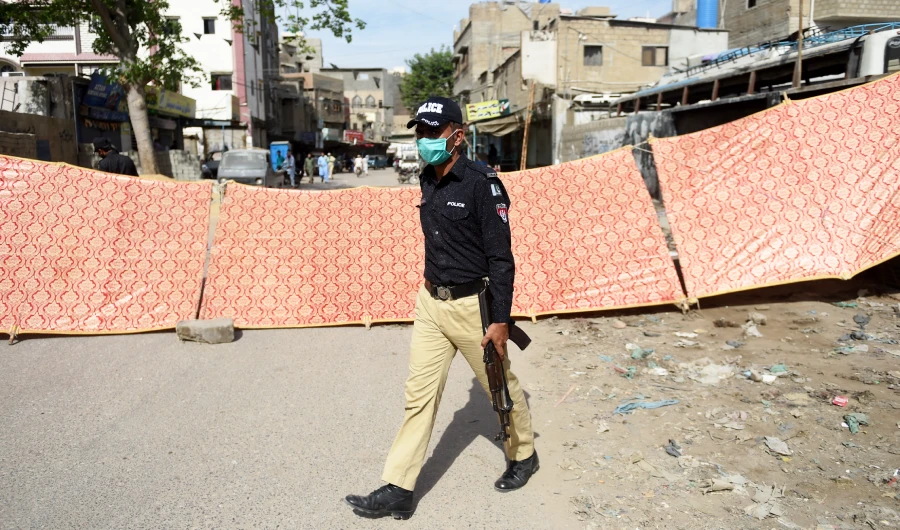
Pakistan first closed all education institutes and suspended public gatherings on March 13, about two weeks after the first coronavirus case was reported in the country. Since then, the government has taken numerous measures, including tracing and testing suspected cases, establishment of large quarantine centers and partial lockdown of cities across the country.
The prime minister lauded the public support for the lockdown and maintaining social distancing that had helped contain the spread of COVID-19. “I am glad to share that the coronavirus spread is only 30 percent of what the government had projected,” he said.
However, he cautioned the public to stay vigilant since there could be a surge of the infectious disease.
Khan continued that Pakistan was facing two major threats amid the coronavirus pandemic, including wheat and dollar smuggling and hoarding of essential food items. “We are introducing ordinances to save the nation from hoarders and smugglers,” he said. “Strict punishments will be given to those trying to create artificial inflation during Ramadan.”
Discussing the Muslim fasting month that will begin toward the end of April, the prime minister said he would consult clerics from all schools of thought and guide the public on how to perform religious rituals and prevent the spread of virus.
“We need to develop a national response to it,” he said. “We can meet the challenge by exercising wisdom and caution.”
Talking about the impact of lockdown on daily wage earners, he said that they were going through a difficult period and the government was extending them financial assistance through its flagship Ehsaas program.
However, he maintained it was not easy for the government to reach all the needy people since about 75 percent of laborers were not registered with the state.
“The program has successfully helped out many families so far,” he said, “but we may not be able to reach the country’s entire population.”
Pakistan has reported 5,837 cases to date with 96 deaths, according to Ministry of National Health Services.
Dr. Zafar Mirza, who advises the prime minister on public health, said that experts had projected 18,000 cases by April 14.
“However, there is no room for complacency,” he warned. “It will be premature to infer any results from these numbers.”
Speaking on the occasion, Dr. Moeed Yusuf, who is special assistant to the PM on national security, said that six airports of the country will remain open to bring back around 35,000 Pakistanis stranded abroad.
“We will be bringing back up to 7,000 Pakistanis per week,” he said, adding that the government was prioritizing the repatriation of laborers in the Gulf states who had lost their jobs, prisoners released by some countries and Umrah pilgrims from Saudi Arabia.
Pakistan will also be repatriating its 6,000 nationals from Afghanistan within the next few days, he added.
“We have arranged proper testing and quarantine facilities for all those who will be brought back from other countries,” Yusuf added.