- The country imported 36 LNG cargoes last winter, of which 35 came from Qatar, according to official figures
- Islamabad may have to pay up to $90 million for a spot cargo compared with $30 million under normal arrangements
ISLAMABAD: Pakistan is bracing for a potential winter gas crunch after QatarEnergy extended its force majeure on liquefied natural gas (LNG) supplies until December 29, officials said on Saturday, raising concerns about fuel availability during peak winter months ahead.
QatarEnergy halted production and declared force majeure in March, following attacks on its facilities during the United States-Iran conflict in the Middle East. Pakistan is particularly exposed to disruptions in Qatari supplies because of its heavy reliance on the Gulf producer.
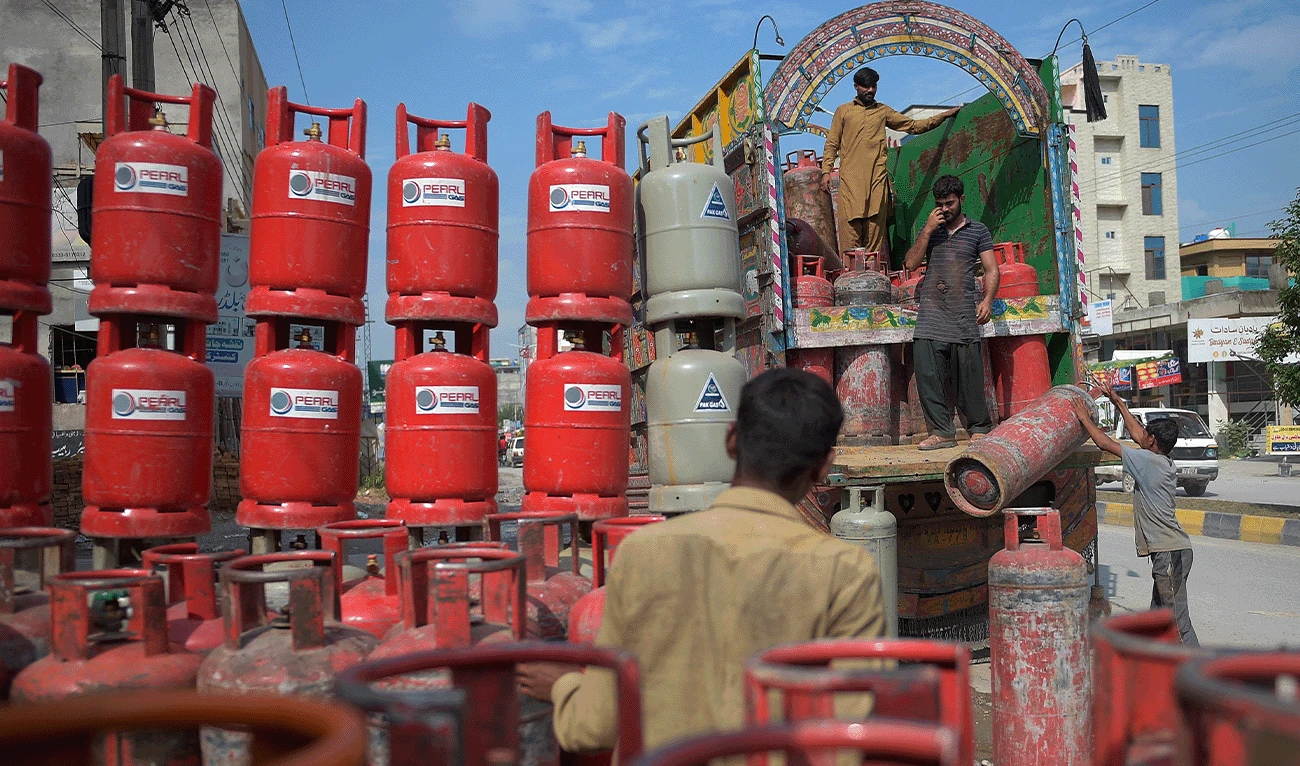
The extension could reduce LNG availability in the months of December and January, when household gas consumption typically rises, forcing the government to potentially restrict supplies to power plants, industries, fertilizer manufacturers, cement factories and compressed natural gas (CNG) stations.
However, government officials and industry representatives said the South Asian country can manage the situation by prioritizing household consumption, arranging additional LNG cargoes from the spot market and relying on alternative fuels for power generation.
“There could be complaints during peak winter, but gas will be available during cooking hours. It may not be available for space heating and water heating though,” a senior official of the Pakistan’s Petroleum Ministry told Arab News on Saturday, requesting anonymity.
According to Pakistan’s latest Economic Survey, imported LNG accounted for approximately one-fifth of the country’s total gas consumption between July 2025 and March 2026.
Pakistan imported 36 LNG cargoes last winter, of which 35 came from Qatar, according to official data. The country received six cargoes in November 2025, 10 in December, 12 in January 2026 and eight in February.
Asked whether the situation could worsen during the winter months, the official said the government could purchase additional LNG cargoes from the international spot market if necessary.
He, however, acknowledged that spot market purchases would be significantly more expensive than Pakistan’s supplies from Qatar under a long-term contract.
“A cargo which normally costs around $30 million can cost around $80 to $90 million from the spot market,” he said, adding that the government would have to decide whether to absorb the additional cost.
The additional cost would not be fully passed on to domestic consumers, with industrial, commercial and CNG sectors likely to bear a larger share of the financial burden, according to the official.
About fertilizer production, he said seven of Pakistan’s 10 fertilizer plants operated on dedicated gas networks, while two others had been informed that their supplies would depend on LNG availability. He ruled out the prospect of a fertilizer shortage, saying manufacturers maintained additional inventories of around 300,000 tons.
The official said though the power sector had requested LNG supplies for winter, power plants could switch to alternative fuels, including furnace oil, if imported gas was unavailable.
“There could be some form of load-shedding, but we hope [electricity] demand will decrease during winter and there will not be any load-shedding,” he said.
“The top priority is the domestic consumer, then the power and fertilizer sectors, followed by cement and CNG.”
Asif Inam, chairman of the Sui Southern Gas Company (SSGC) board of directors, also expressed confidence that Pakistan would be able to manage the situation despite supply constraints.
“If they do not run power plants on LNG, the country can manage under these tough circumstances,” Inam told Arab News, adding that domestic consumers would continue receiving gas for eight to nine hours daily.
He said the connection of a new gas field in southern Pakistan, which has a production capacity of 100 million cubic feet per day (MMCFD), would reduce the country’s dependence on imported LNG.
“So our need for LNG is reduced to just one cargo this year,” he said.
Qatar has supplied Pakistan with as many cargoes as possible since the US-Iran conflict began in Feb., helping Pakistan largely meet its requirements, according to Inam.
“We only need a very nominal cargo in January,” he said.