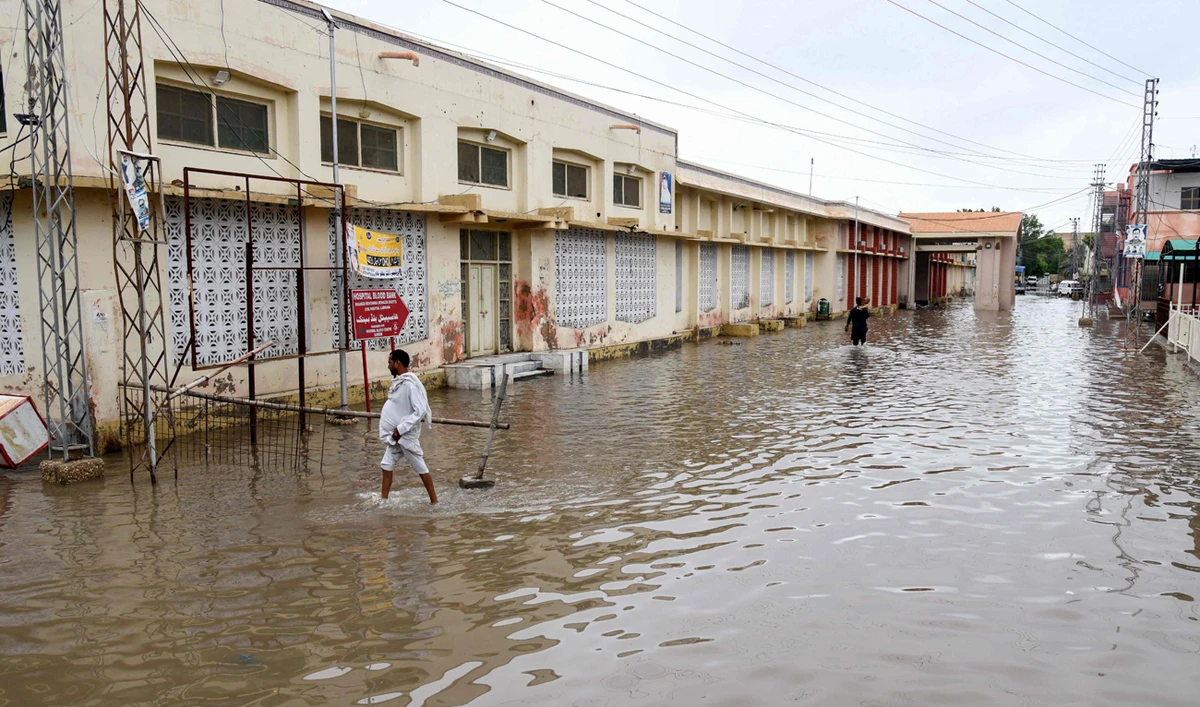
- Pakistan’s Punjab has reported highest number of casualties, 74, from rain-related incidents since July 1
- Disaster management body warns of floods in Murree, Galliyat, Mansehra, Kohistan, Chitral, and Gilgit-Baltistan
ISLAMABAD: Pakistan’s top disaster management body has warned of more rains in the country’s northwestern Khyber Pakhtunkhwa (KP) and northern Gilgit-Baltistan (GB) areas from today, state media reported on Monday, with the downpours killing nearly 200 people since the onset of the monsoon season on July 1.
Torrential rains and flash floods have killed at least 195 and injured 362 across Pakistan since July 1, according to a report issued by the National Disaster Management Authority (NDMA) on Sunday. The highest number of deaths have been reported from Pakistan’s eastern Punjab province, 74, while KP recorded 65 deaths. Thirty-two people have been killed in rain-related incidents in the southern Sindh province since July 1 while Balochistan has reported 15 deaths. Pakistan-administered Kashmir has recorded five deaths while GB has reported four deaths since July 1.
“The National Emergency Operations Center of NDMA has anticipated more rains, wind and thundershowers with isolated heavy rains in Districts of Khyber Pakhtunkhwa and Gilgit Baltistan from today,” Radio Pakistan said in a report.
It said that torrential rains may generate flash flooding in Murree, Galliyat, Mansehra, Kohistan, Chitral, GB, Dir, Swat, Shangla, Nowshera and Swabi areas. The NDMA directed authorities to alert emergency response teams and mobilize resources to ensure a “swift response” to any arising situations.
The authority also advised tourists to avoid traveling to these areas during this time, the state broadcaster said.
“The public is advised to remain vigilant and follow instructions from local authorities,” Radio Pakistan said. “It also advised the public to stay informed and download ‘Pak NDMA Disaster Alert’ mobile app for timely alerts and closely monitor weather reports.”
Pakistan is recognized as one of the most vulnerable countries to climate change effects in the world. This year, the South Asian country recorded its “wettest April since 1961,” with 59.3 millimeters of rainfall while some areas of the country faced a heat wave in May and June.
In 2022, unusually heavy rains triggered flash floods in many parts of Pakistan, killing over 1,700 people, inflicting losses of around $30 billion, and affecting at least 30 million people. Scientists have attributed Pakistan’s erratic weather patterns to climate change effects and called on countries around the world to take urgent steps to tackle the crisis.