- Official says Middle East investment, Reko Diq mine exports to help achieve $60 billion export target by 2029
- Pakistan has sought to reduce its dependence on foreign loans after it narrowly averted sovereign default in 2023
ISLAMABAD: Pakistan is banking on increased investment from the Middle East, particularly Saudi Arabia, to help drive its exports to $60 billion by 2029, officials said this week as Islamabad attempts to reduce its dependence on foreign loans to ensure sustainable economic growth in the long term.
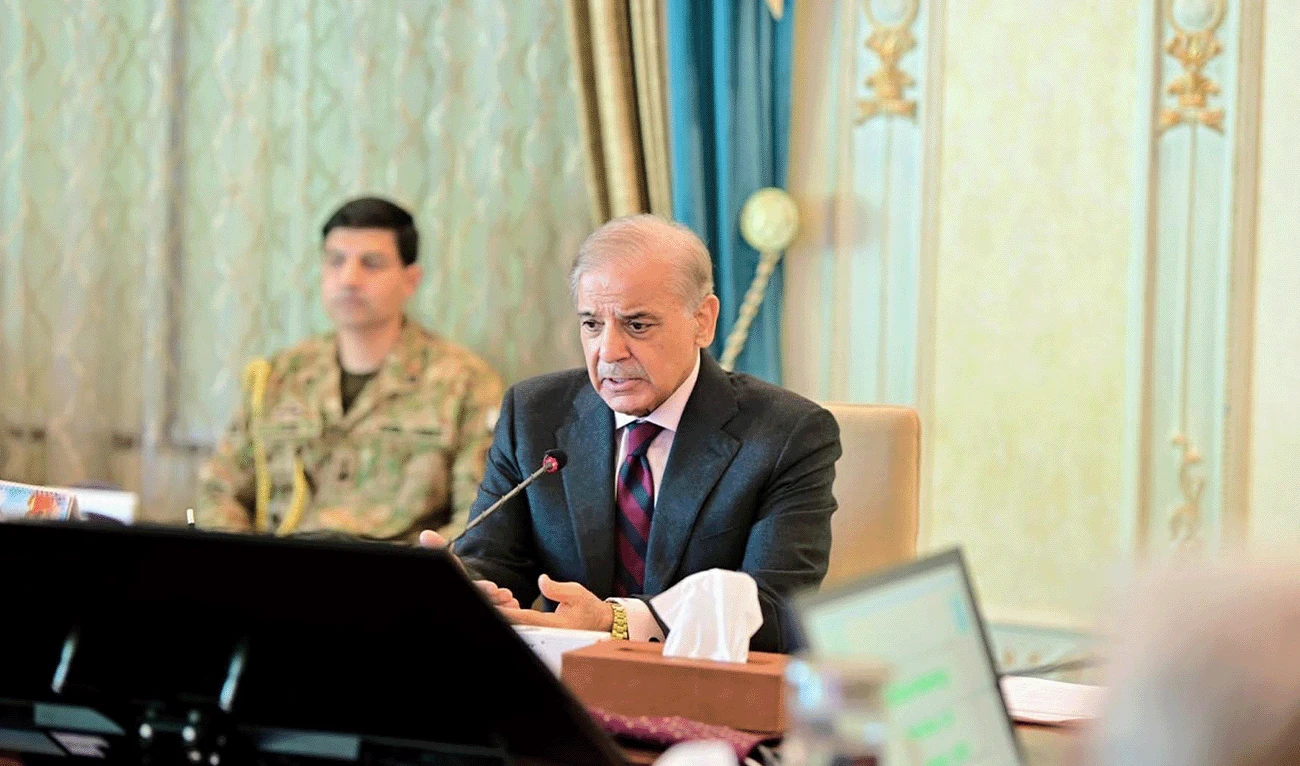
Prime Minister Shehbaz Sharif has directed his administration to increase Pakistan’s exports to an ambitious $60 billion figure by 2028-29. The initiative gathered steam after Pakistan narrowly averted a sovereign default in 2023 after its foreign reserves plummeted and it faced a balance of payments crisis. Islamabad has since then sought to curb its reliance on international financial institutions and foreign borrowing by generating sustainable domestic revenues, expanding its industrial footprint and resolving domestic energy bottlenecks.
During a meeting of the National Assembly Standing Committee on Economic Affairs on Wednesday, officials said Pakistan’s total exports reached $40.4 billion in fiscal year 2025-26. Out of these, $30.4 billion comprised merchandise and $10 billion as services exports. However, Pakistan’s import bill reached $80.9 billion the same year, prompting the country to post a staggering trade deficit of $40.5 billion.
Foreign remittances of $41.6 billion in FY26 helped cushion the external account. However, the government is aggressively pushing policy shifts to fix the trade gap, which officials at the committee meeting said are critical to improve the economy.
“Because our relations with the Middle East were improving, we expected foreign direct investment (FDI) to come from the Middle East, especially from Saudi Arabia,” Shafiq Ahmed Shahzad, the commerce ministry’s joint secretary, told a meeting of the committee on Tuesday.
Pakistan has sought closer defense and diplomatic cooperation with Gulf and regional countries as the US-Iran war heightened regional tensions. Islamabad and Riyadh signed a bilateral defense pact in September 2025 and in August this year, a trilateral one that also involves Turkiye.
According to Shahzad, foreign direct investment from the Middle East, relocation of industries from China and exports from the copper and gold mining project in Balochistan, Reko Diq, are the main factors which would help Pakistan achieve its $60 billion exports target.
Expected to begin production in 2028, the copper-gold mine is central to Pakistan’s hopes of boosting mineral exports and attracting foreign investment into its underdeveloped mining sector.
Shahzad told participants of the meeting that the government has introduced tax concessions, tariff rationalization and subsidized financing to improve exporters’ competitiveness. Measures include abolishing the super tax on export-oriented companies, removing an additional one percent advance income tax on export proceeds, scrapping the 0.25 percent Export Development Surcharge, and cutting withholding tax on export proceeds from two percent to 1.25 percent, he added.
Additionally, he said a concessional 0.25 percent tax rate for information technology and IT-enabled services exports has been extended until 2029. Pakistan’s IT exports reached $4.6 billion in FY 2025-26. With officials hoping Pakistan’s estimated three million freelancers will establish formal businesses to further scale the country’s digital exports.
SME BOTTLENECKS
The Export Finance Scheme allocation was also expanded to Rs1.5 trillion ($5.3 billion) which allowed exporters to access financing at six percent, well below the central bank’s policy rate of 12 percent, officials said.
Despite these measures, officials said small and medium-sized enterprises (SMEs) in Pakistan present a major bottleneck to increase exports. Pakistan has around 18,000 exporters, of which 17,000 are SMEs. However, they contribute only 21 percent of the total export value.
Although the government earmarked Rs300 billion ($1.08 billion) for SME financing — up from Rs92 billion [$332 million] in 2025 — officials revealed that only around Rs5 billion [$18 million] had been disbursed so far.
Committee members raised concerns over commercial banks continuing to demand heavy collateral from small businesses, despite government directives to move toward cash-flow-based lending.
Officials said that beyond tax and monetary relief, Pakistan is pursuing wider foreign market access under its Strategic Trade Policy Framework (2026–2031). Key efforts include negotiating a free trade agreement with the Gulf Cooperation Council (GCC), an economic partnership agreement with the UAE and broader trade arrangements with South Korea and Vietnam.
The parliamentary committee commended the recent export performance. However, it emphasized that rigorous coordination, implementation and monitoring are vital to achieve the export target of FY2028-29 to reduce reliance on external loans.