- Army spokesperson says Daesh won’t be able to establish ‘permanent footprint’ in Pakistan
- No organized terrorist infrastructure operational in Pakistan today, Maj Gen Iftikhar reiterates
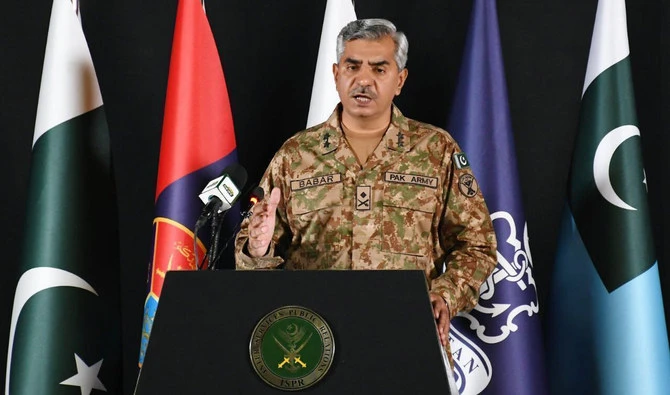
ISLAMABAD: A spokesperson for the Pakistani military, Major General Babar Iftikhar, said on Monday the country continued to have “very positive” military ties with the United States and he was "quite optimistic" about how relations between the armies of the two nations would shape up under the incoming government of President-elect Joe Biden.
In 2018, outgoing US President Donald Trump’s administration quietly started cutting scores of Pakistani officers from coveted training and educational programs that have been a hallmark of bilateral military relations for more than a decade. In his first tweet of 2018, Trump slammed Pakistan, saying the country has rewarded past US aid with “nothing but lies & deceit.”
Washington also announced plans in January 2018 to suspend up to roughly $2 billion in security assistance to Pakistan.
“As far as military to military contact is concerned, I’ve said this before: that it’s still on, it’s there and it’s very positive,” the army spokesperson said at a press conference. “So InshAllah, things are looking up and we are quite optimistic about how things will be from here on.”
Responding to a question about the presence of the Daesh militant group in Pakistan, which took responsibility for this month’s killing of 11 Hazara Shia miners in Balochistan province, Iftikhar said there was “external support" to create a Pakistan wing of Daesh.
“But let me assure that this [Daesh] presence is not much,” the major general said. “It's there, they’re trying, there are splinter groups of different organizations which keep taking that [Daesh] name just to gather some ... credibility but Alhamdulillah, we are taking care of that. And they’ll not be able to establish any kind of permanent footprint over here with the way our operations are going. So it’s not a big issue.”
“In Pakistan, there is no organized terrorist infrastructure operational, compared to the past,” the military spokesperson said. “We’re not out of the woods yet but we’re almost there.”
Around 371,000 intelligence-based actions had been conducted in the last three years against militant groups and their abetters, leading to a 35 percent reduction in major terrorism incidents in 2020 compared to 2019, the military spokesperson said. Terror incidents, he added, which had hit an annual peak of 90 in the year 2013 had now fallen to around 30, while law-enforcement agencies had averted more than 50 percent militant threats last year.