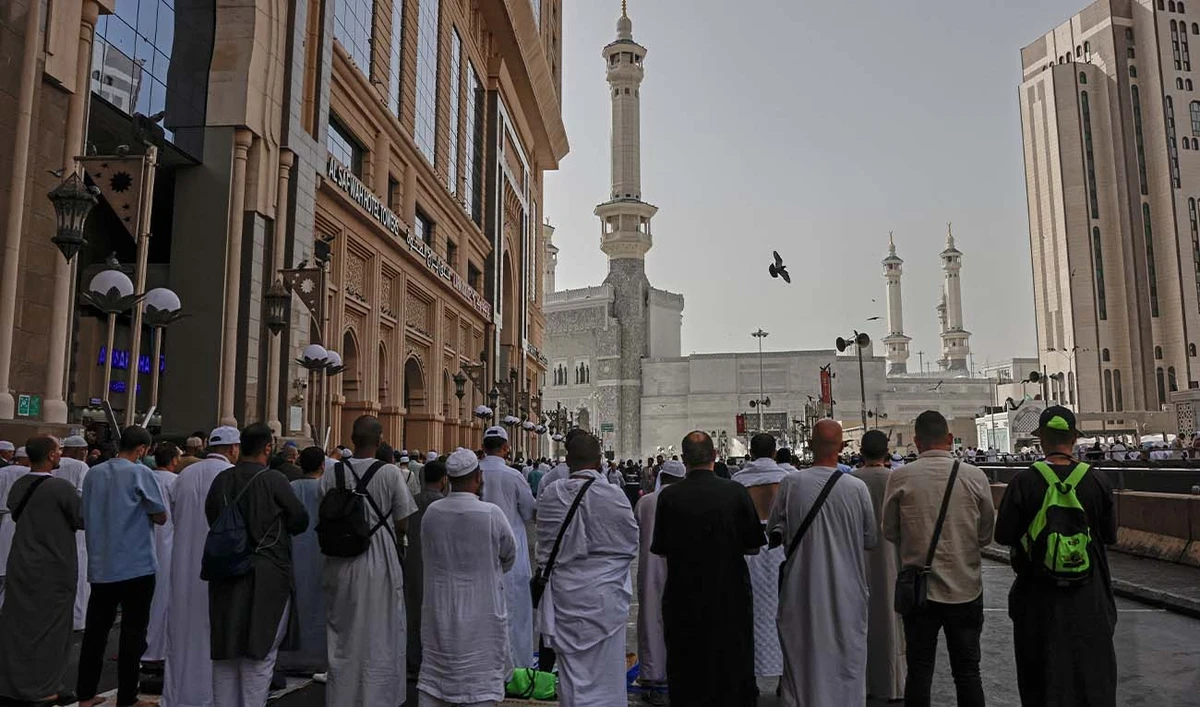
- The initiative is to help intending pilgrims plan their finances in advance and systematically
- Government has given relevant institutions two months to draft rules for proposed scheme
ISLAMABAD: Pakistan has approved the development of an interest-free Hajj savings plan to help prospective pilgrims spread the cost of the annual pilgrimage over time, the religious affairs ministry said on Friday, as rising expenses make advance financial planning increasingly important.
The proposed Shariah-compliant scheme will allow Pakistanis to make regular monthly deposits through digital channels, choose their preferred savings period, transfer funds to family members and withdraw money without deductions. The government has yet to announce eligibility criteria, savings terms or a launch date.
“The main objective of the Hajj Savings Plan is to provide intending pilgrims with an opportunity to plan their finances for Hajj expenses in a timely and organized manner, cope with rising inflation and make preparations for the sacred journey easier,” Religious Affairs Secretary Abrar Ahmed Mirza said in a statement.
Prime Minister Shehbaz Sharif approved a joint proposal submitted by the Ministry of Religious Affairs, the Ministry of Finance and the Central Directorate of National Savings, clearing the way for the three institutions to develop the scheme.
The approval was discussed at a meeting chaired by Mirza at the religious affairs ministry on Friday.
Mirza directed the relevant institutions to prepare the scheme’s rules and regulations within two months, in line with the approved proposal.
He also instructed officials to include provisions for similar savings schemes for Umrah and other religious pilgrimages, potentially extending the facility beyond the annual Hajj pilgrimage.
Unlike Hajj, which takes place on specific dates each year and is obligatory once in a lifetime for Muslims who are physically and financially able, Umrah can be performed throughout the year.
The ministry said the proposed digital system would help modernize financial planning for Hajj, in line with the government’s broader efforts to digitize pilgrimage arrangements.
The initiative comes as Pakistan prepares for Hajj 2027 under a multi-year policy framework, with an annual quota of 179,210 pilgrims allocated by Saudi Arabia. The quota is divided between government and private operators on a 60:40 basis.